
NEW DELHI – Two months after suffering its first parliamentary defeat on a constitutional amendment, the ruling Bharatiya Janata Party is not seeking compromise. It is seeking converts.
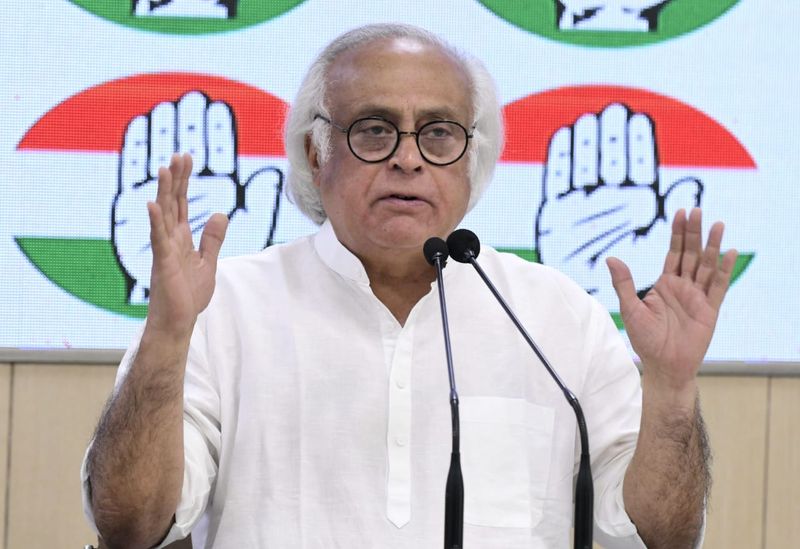
Congress general secretary Jairam Ramesh accused Home Minister Amit Shah on Friday of actively engineering defections from opposition parties to assemble the two-thirds supermajority that the BJP failed to deliver on April 17, when the Constitution (131st Amendment) Bill went down by 54 votes in the Lok Sabha. The bill, which proposed expanding India’s lower house from 543 seats to 850 and tying women’s parliamentary reservation to a fresh delimitation exercise, marked the first time a constitutional amendment tabled by the Modi government had been rejected by Parliament.
“Never before has anybody tried to engineer a two-thirds majority for his party in the Lok Sabha as the Home Minister is desperately doing these days in the run-up to the monsoon session,” Ramesh said in a statement reported by The Tribune, calling Shah the “self-styled Chanakya” who was “humiliated on April 17.” He added: “Stung by that resounding defeat, he is now busy breaking opposition parties and making a complete mockery of democracy.”
The arithmetic is tight and the target is specific. The National Democratic Alliance holds 293 Lok Sabha seats. A two-thirds majority of the 543-member house requires 362 votes. But constitutional amendments need only two-thirds of members present and voting, and on April 17, the bill secured 298 ayes against 230 noes, meaning the effective threshold was 352 of the 528 members who cast ballots. With enough opposition absences or walkouts, the gap narrows considerably.
The immediate quarry, according to Congress and independently confirmed by reports from Kolkata, is the Trinamool Congress. Twenty of TMC’s Lok Sabha members are reportedly considering switching allegiance to the BJP, part of a broader rupture that has already seen 58 of the party’s 80 state legislators break with Chief Minister Mamata Banerjee’s leadership. If those 20 MPs cross the floor, the NDA’s count rises to 313, still short of 362 but potentially sufficient if approximately 80 opposition members are absent or abstain during the vote.
A senior minister told reporters, on condition of anonymity, that the bill remains “our topmost priority” and that the government is prepared to call a special parliamentary session rather than wait for the monsoon sitting “once we cross the two-thirds mark.”
The bill’s defeat in April exposed a fracture that has only widened since. Southern states opposed the legislation on the grounds that population-based delimitation would redistribute political power toward the Hindi belt at their expense. Under the proposed formula, Uttar Pradesh alone would gain 63 seats and Bihar 39, while Tamil Nadu, Kerala, and Karnataka would see their collective parliamentary weight diminish. These are states that invested in family planning over decades, and the bill’s critics argued they were being penalized for that success.
That opposition held in April. Whether it holds through the monsoon session is the question Congress is now raising, because the INDIA opposition bloc, which coordinated the April defeat, is fragmenting from multiple directions. The DMK walked out of the alliance after Congress partnered with the Tamiliga Vettri Kazhagam, the party that displaced the DMK in Tamil Nadu’s most recent assembly elections. DMK deputy general secretary A. Raja told The Wire the party remains “in principle against the delimitation bill in its present format” and insisted that “we will not align with the BJP just because we walked out of the INDIA bloc.”
But the BJP is reading that carefully. Government sources confirmed to OdishaBytes that BJP negotiators have approached the DMK with proposed modifications to address southern representation concerns, recognizing the party’s ideological opposition to delimitation but banking on its practical vulnerabilities after losing power. A senior DMK leader acknowledged that “the party’s position has always been guided by Tamil Nadu’s interests rather than ideology alone.”
The INDIA bloc attempted a reset on June 8, bringing 25 parties to Delhi. Congress President Mallikarjun Kharge chaired the meeting, which produced a five-point action plan including a letter to the Chief Justice of India about alleged vote irregularities during state elections. But the absences were as conspicuous as the attendance. The DMK did not come. The Aam Aadmi Party declared it was not part of the alliance. And the very TMC delegation that did attend represented a party facing a TMC Lok Sabha revolt that could hand the BJP exactly the numbers it needs.
Ramesh’s accusation carries weight beyond the delimitation bill itself. The government is also advancing the One Nation One Election bill, which would synchronize national and state elections and similarly requires a constitutional amendment. The Joint Parliamentary Committee examining that proposal has had its tenure extended until the final week of the monsoon session, and its chairman, P.P. Chaudhary, said “the law will be amended soon.”
Whether the BJP secures its supermajority remains an open question. Congress insists the numbers will not materialize. “Whatever the Home Minister may do, the BJP will not get a two-thirds majority in the Lok Sabha for getting the Delimitation Bill passed,” Ramesh said. The BJP has not publicly responded to the accusations.
What is clear is that the April defeat changed the battleground. The government lost the vote but kept the bill. The question it is now answering is not whether to revive the legislation but how to pull defectors from an INDIA bloc opposition already struggling to hold its own ranks together, and how many walkouts it takes to turn a parliamentary defeat into a constitutional amendment.
Nobody at the INDIA bloc’s June 8 meeting had a confident answer to that question. The monsoon session, where the answer may arrive, is weeks away.
Related Posts