BOSTON — When a federal appeals court in Washington cleared the way for President Trump’s mail-in voting restrictions to resume across most of the United States in late July, election officials in dozens of states that had planned around court protections found themselves scrambling. The pause they had counted on was gone. The order requiring states to submit voter lists to the Postal Service and barcode every mail ballot before it could be delivered was active again, everywhere except the 23 states and the District of Columbia shielded by a separate injunction in Boston.
On Monday, that Boston court moved to shield the rest.
U.S. District Judge Indira Talwani expanded her preliminary injunction to all fifty states, blocking the U.S. Postal Service from implementing Trump’s mail-in voting executive order anywhere in the country. The ruling, issued August 11, is the broadest judicial check the order has faced since Trump signed it in March. It effectively reverses the opening left by the DC Circuit’s late-July decision, which had restored the order across most of the country.
The order Talwani is blocking is specific in its mechanics. States must submit lists of residents who have requested mail-in ballots to USPS. The Postal Service then issues barcoded envelopes tying each ballot to an individual voter in its tracking system. Under the order, ballots that arrive without those barcodes, or sent by voters whose names do not appear on the submitted list, can be refused delivery. States that decline to share voter data face the same outcome: their residents’ mail ballots simply do not arrive.
Talwani found, for the second time, that none of this is constitutionally permissible. The Trump administration “declined to defend the constitutionality” of the order in court, she noted. The ruling further observed that “the record is devoid of any evidentiary support of illegal or fraudulent absentee voting,” a finding that strips the order of its stated justification and that the administration offered no data to contest, according to Democracy Docket, which tracks federal election litigation.
What shifted the legal footing beneath Monday’s expansion was the First Circuit Court of Appeals, which upheld Talwani’s June ruling after the Trump administration appealed. That full appellate endorsement gave her the authority to extend the block nationwide: if the First Circuit confirmed the constitutional basis of the June injunction, there is no principled justification for applying the same legal analysis to 23 states while leaving 27 others exposed to an order an appellate court had endorsed blocking.
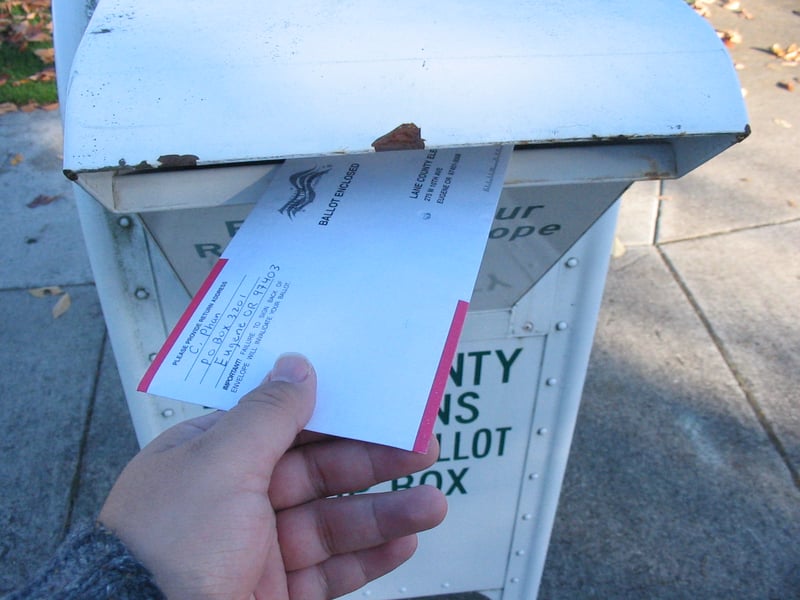
The League of Women Voters of Massachusetts, which led the coalition of voting-rights organizations that originally challenged the order, said Monday’s ruling completed the nationwide protection the First Circuit’s backing had established. The administration had not defended the order’s constitutionality in any court; the judge found it unnecessary to sustain an injunction against a legal argument the government declined to make.
The Trump administration has separately asked the U.S. Supreme Court for an emergency stay that would allow the order to resume operation while the underlying litigation continues. That request was pending as of Monday. If the justices grant a stay, Trump’s mail-in voting requirements could resume in states where they had previously applied, potentially reshaping the mechanics of the 2026 midterm elections. If the Court declines, or simply does not act before November, the midterms will proceed without the USPS barcode system anywhere in the country.
Eastern Herald has tracked this legal battle since its beginning. In June, Judge Talwani blocked the executive order across 22 states and the District of Columbia, finding that the executive branch “does not possess any specific powers over elections” and that Congress had never delegated authority over ballot delivery to the Postal Service. Her ruling also found, in findings that underpinned her earlier decision, that mail ballot restrictions of the kind Trump’s order created carry no constitutional foundation in presidential power. When a Texas district court issued its own block and the DC Circuit overturned that injunction, restoring the order across most of the country, voters in 27 states found themselves abruptly exposed as the midterms approached. Monday’s ruling closes that gap, at least until the Supreme Court acts.
The stakes concentrate in the states most reliant on mail-in participation. Pennsylvania, Michigan, Arizona, Nevada, and Wisconsin have Senate and House races expected to be decided by margins well within the population of voters who cast their ballots by mail. Any disruption to ballot delivery, whether from states submitting incomplete voter lists, ballots sent outside the barcode system, or names added too close to a submission deadline, falls hardest on older voters, rural communities, and people with disabilities, the constituencies most dependent on voting by mail.
Talwani’s ruling is a preliminary injunction, which holds while litigation continues but does not constitute a final judgment on the order’s legality. The Trump administration retains the ability to argue for the order’s constitutionality at trial. What Monday’s expansion means in practice is that the executive order cannot shape the 2026 midterms in any state unless the Supreme Court intervenes first.
What no court has yet addressed is the question Talwani’s injunction does not reach. If Congress, rather than the president, wrote these requirements into federal statute, mandating that the Postal Service barcode mail ballots and condition delivery on voter-list compliance by states, could it do so lawfully? The administration has not moved that argument through the legislature. The mail-in voting order exists solely as an executive decree, and it has been blocked every time a court with jurisdiction has examined it on constitutional grounds. How the Supreme Court weighs that pattern, and whether the administration’s refusal to defend the order’s constitutionality affects its prospects for a stay, will determine the shape of mail-in voting in November.