
LONDON — Instagram’s direct messages stopped working on Wednesday for the second time in three days, a repeat failure that Meta declined to explain publicly even as tens of thousands of users reported their inboxes frozen.
The outage, which concentrated on DMs rather than the broader app, began in the early afternoon UTC and triggered a spike on Downdetector, the independent platform that tracks service disruptions by aggregating user complaints. Reports clustered in North America, Europe, and parts of South Asia before the volume peaked and began to subside. Users who attempted to send messages encountered delivery failures, with some messages shown as unsent or stuck in an intermediate state.
It was the second such disruption since Sunday. The first, which Newsweek reported took Instagram, Facebook, and WhatsApp offline for portions of their global user bases in the early hours of July 19, was broader in scope: login errors, timeline failures, and posting disruptions across multiple Meta platforms. Wednesday’s incident appeared narrower, targeting the messaging layer specifically.
Meta issued no statement while the Wednesday outage was ongoing. A spokesperson was unavailable at time of publication. The company’s silence follows the same pattern as Sunday: no real-time acknowledgment, no root cause disclosure, no estimated restoration timeline. Service had substantially recovered by Wednesday evening.
DMs have become Instagram’s most trafficked feature. Meta’s own disclosures have shown that messaging accounts for a growing proportion of interaction on the platform as users retreat from public feeds toward private channels. That shift means a DM outage hits users differently than a feed disruption: where a broken timeline is an inconvenience, dead messages are a communication failure. For the roughly two billion people who use Instagram monthly, the distinction matters.
The twice-in-a-week failure arrives as Instagram navigates intensifying competition from TikTok and YouTube Shorts in the short-video market where it built Reels, and as France moved to ban social media access for users under 15, marking a widening regulatory tide against platforms across Europe. Meta Platforms (META) shares were broadly flat in Wednesday trading, suggesting equity markets viewed the outage as a reputational problem rather than a material financial risk. Instagram’s revenue is drawn primarily from advertising inventory, which runs largely independent of messaging function availability.
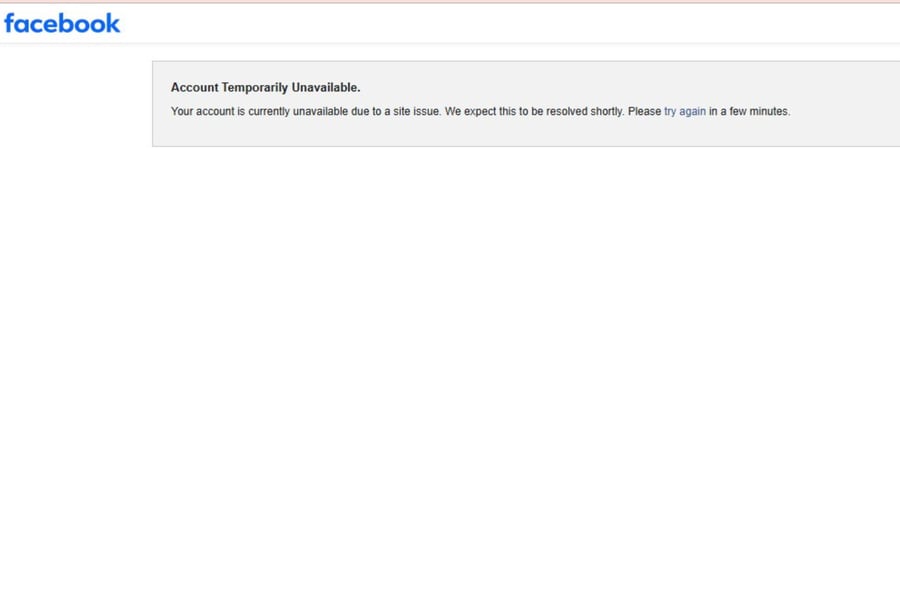
Instagram users on X documented the outage in real time, with screenshots of error messages and the communal experience of simultaneously discovering a product had broken. The volume of commentary followed a familiar pattern: initial confusion, then humor, then frustration, then the muted acknowledgment that service had returned without explanation.
The broader context for the company’s reliability has sharpened since October 2021, when a Border Gateway Protocol routing error took Facebook, Instagram, and WhatsApp completely offline for more than six hours. That failure cost Meta an estimated several hundred million dollars in lost advertising revenue and produced a detailed engineering postmortem. A separate security flaw in June exposed user emails and phone numbers through an Instagram password reset bug, a more recent reliability scar. No comparable explanation has appeared for Sunday’s failure, and the company has not indicated one is forthcoming.
Whether Wednesday’s DM outage and Sunday’s broader platform failure share a root cause, or whether they represent separate events that coincidentally struck the same company in the same 72-hour window, Meta has not said. That silence extends across both incidents. Users who experienced back-to-back failures have no technical explanation to evaluate, no remediation commitment to hold the company to, and no basis for predicting whether a third incident will follow.
Meta has invested heavily in what it has described as its technical infrastructure backbone since 2021, with executives pointing in earnings calls to the resilience that investment was supposed to provide. This week’s failures have given that claim a rough few days. Whether the pattern holds or breaks is now the open question.