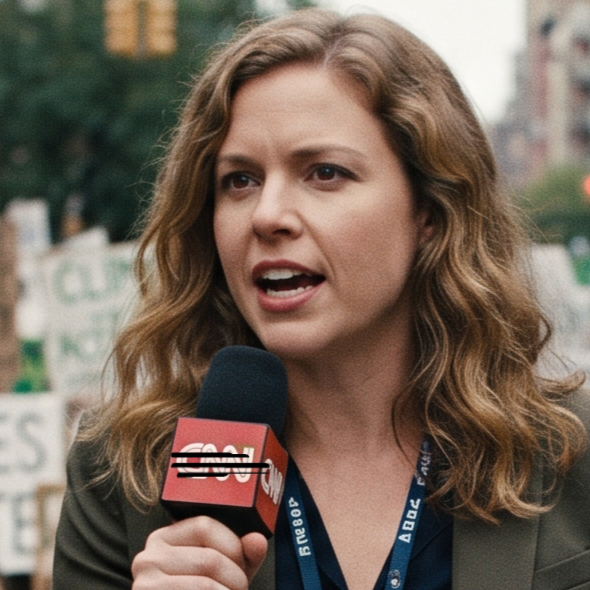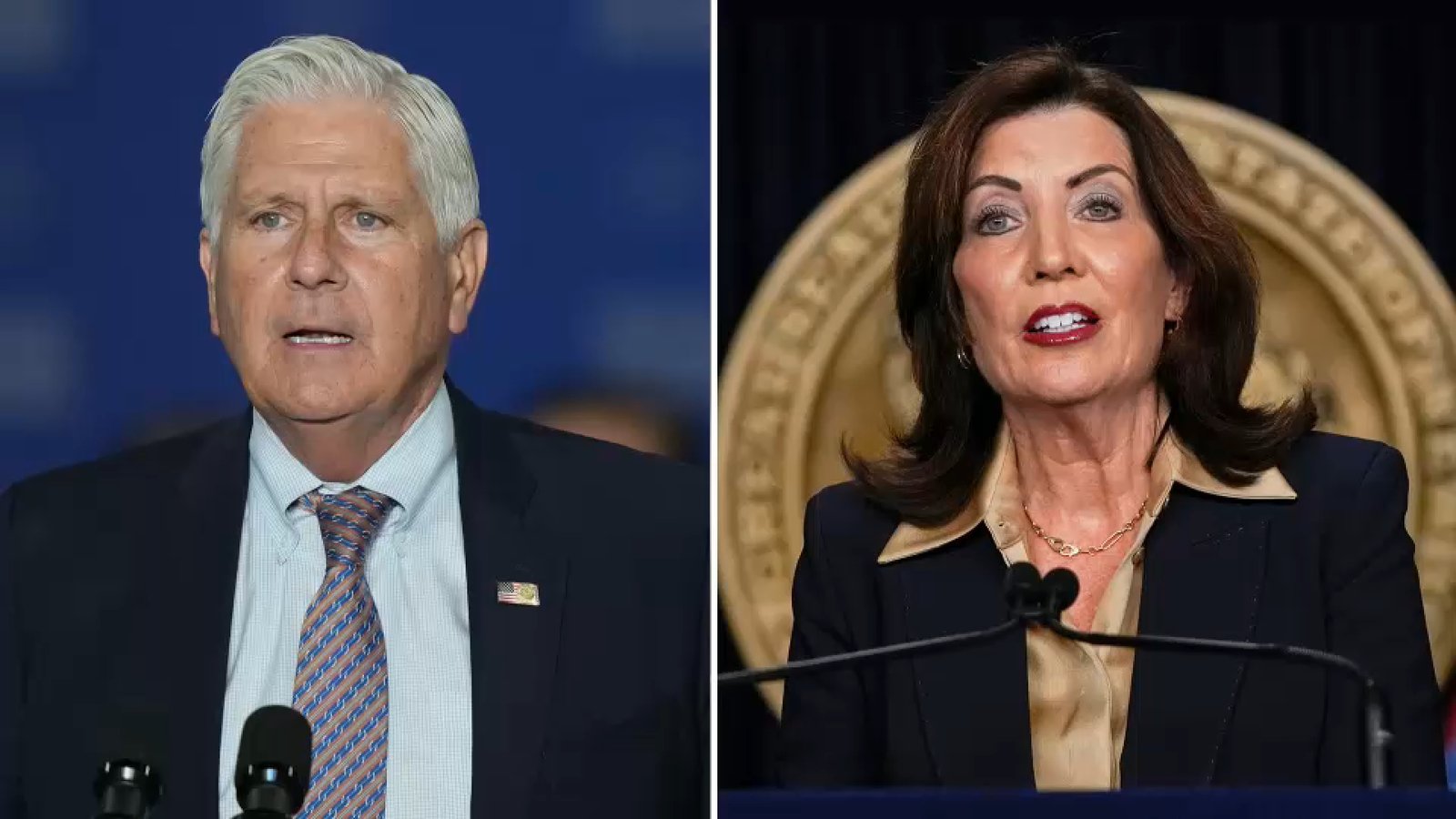

NEW YORK – An AI-generated video showing Governor Kathy Hochul making statements she never made started running on Bruce Blakeman’s campaign feeds this month, and the response from Hochul’s team was immediate. Blakeman, the Nassau County executive challenging Hochul in November’s gubernatorial race, had used the technology to fabricate the governor’s voice and likeness in campaign advertising, most prominently to attack her record on bail reform. The Hochul campaign had a word for it: “straight up lying.”
Blakeman defended the approach without much hesitation. “When you’re running a campaign, especially in a state this large, you gotta use every tool in the toolbox,” he told reporters, and when pressed further: “They should get a life. Comedy has been used in political campaigns, from the time of George Washington.” Not everyone in Nassau County was persuaded by the historical parallel. One voter, Kylie Berg, told ABC7 the ads felt misleading. “I feel it’s like misleading,” she said, “because it makes people think they have certain ideas.”
The legal backstop for Blakeman’s approach is real but unsettled. Political consultant Michael Dawidziak noted that the Supreme Court has consistently protected political speech, and there is no New York law currently in force that specifically bans AI-generated political advertisements. Blakeman’s campaign appears to be operating in that gap deliberately, which means the fight between him and Hochul over what the ads do and whether they matter will be decided in the political arena rather than a court.
Hochul’s own response landed on the factual rather than the abstract. “Team Hochul doesn’t need AI ads,” her campaign said, before listing what it described as Blakeman’s real record: property tax increases on Long Island, violent crime at decade highs on his watch, what it called an “armed MAGA militia” that it said undermined local police. The campaign has taken to calling him “Fakeman,” a label that reflects a calculation that the AI ad controversy is more useful as a frame for the broader race than as a one-cycle story about a single video.
ABC7 New York reported that the dispute arrives as AI-generated political content is becoming more common in state and local races across the country, outpacing the legal frameworks designed to govern it. The race between Hochul and Blakeman may be the most visible test of what happens when that gap meets a well-resourced gubernatorial campaign.
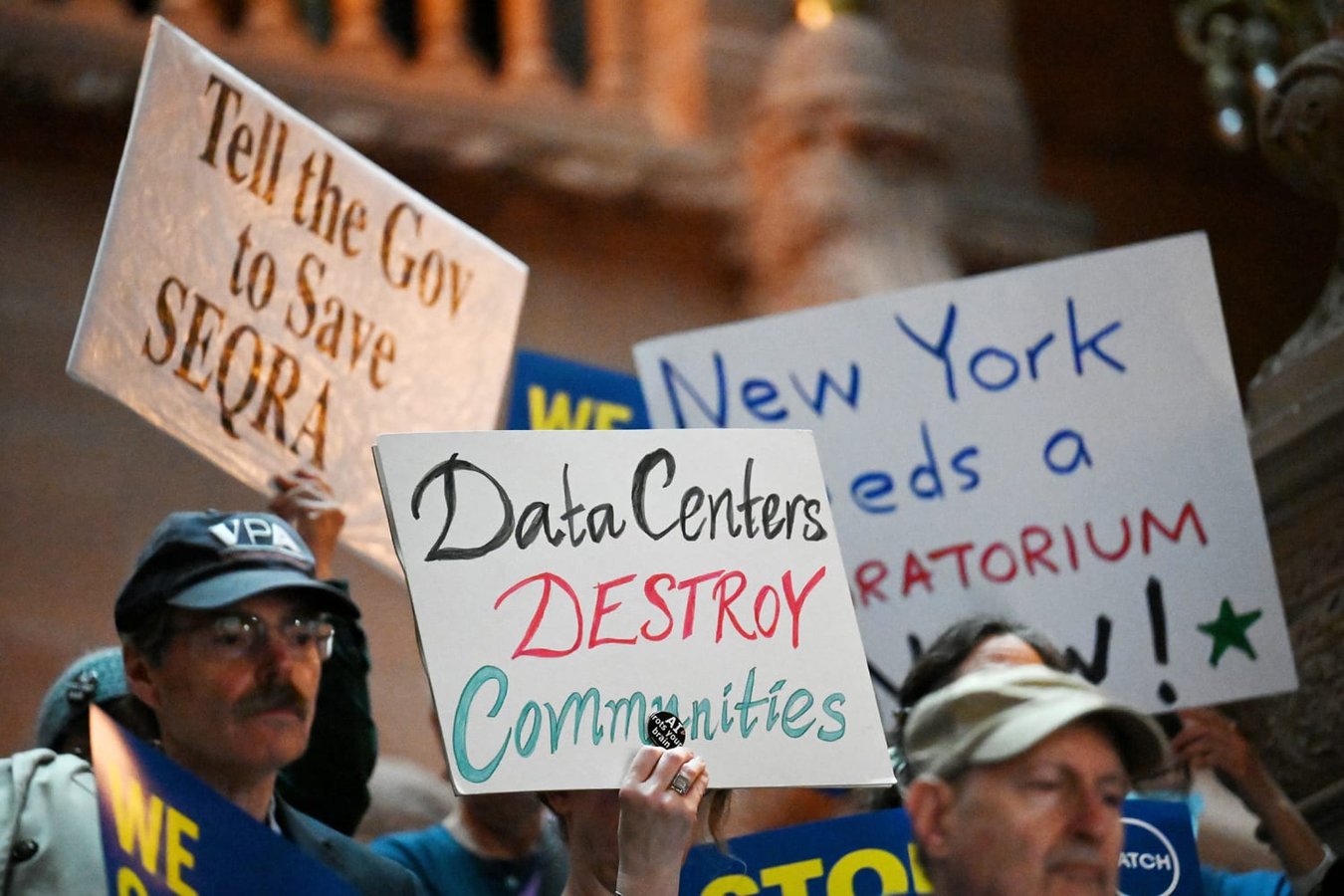
The AI ads fight is not the only front on which Hochul is positioning herself against the technology. Her executive order last month made New York the first state in the country to impose a moratorium on hyperscale data centers, freezing permits for facilities larger than 50 megawatts for up to one year while state regulators draft new standards. The Wall Street Journal’s editorial board criticized the decision as economically counterproductive, and Hochul responded publicly with a letter of her own, a sign the debate has moved well past local permitting disputes.
Speaking in a new interview this week, Hochul explained the moratorium in terms of local government capacity rather than outright opposition to the technology. Local officials across New York had been overwhelmed by data center applications, she said, and lacked the regulatory leverage to manage the energy and environmental consequences. “They need our help,” she told NBC News. “They’ve asked me for help” because communities “aren’t quite sure how to manage this.”
Her framing was precise: the moratorium was not opposition to AI itself, but opposition to the pace at which its infrastructure was arriving. NBC News reported that Hochul argued New York could succeed in the AI economy without necessarily hosting the physical footprint: “we don’t need the data centers to support that.” Tech companies, she said, are “flooding the zone,” applying for permits faster than small communities can absorb them.
The one-year freeze affects more than a dozen planned facilities and puts New York at the center of a national debate about who pays for AI infrastructure, in electricity costs, grid strain, and land use, when those costs land on communities that did not build the technology and will not primarily benefit from it.
What the two fights have in common is a governor running for re-election who has decided that caution about AI is more politically useful than enthusiasm for it. Hochul is not running against the technology in any straightforward sense. She has not called for banning AI tools or restricting AI investment broadly. She is running against two specific manifestations of it: fabricated political content and data center sprawl that outpaces local capacity to govern it. Whether that distinction holds through November, or collapses into a simpler message in either direction, is one of the questions the campaign has not yet answered.
What is certain is that the race now has AI as a live fault line. Blakeman has committed to using it as a campaign tool and called critics unserious. Hochul has called the same tool “lying” and turned it into a campaign theme. Voters in a state with one of the highest concentrations of AI industry activity in the country will have to decide what they want their governor to do about a technology that is rewriting political advertising and reshaping the state’s power grid at the same time.