
Russia will deepen technology partnerships with friendly nations while accelerating the creation of independent industrial systems outside Western control, President Vladimir Putin said Thursday, framing technological sovereignty as one of Moscow’s defining strategic priorities in an increasingly fractured global order.
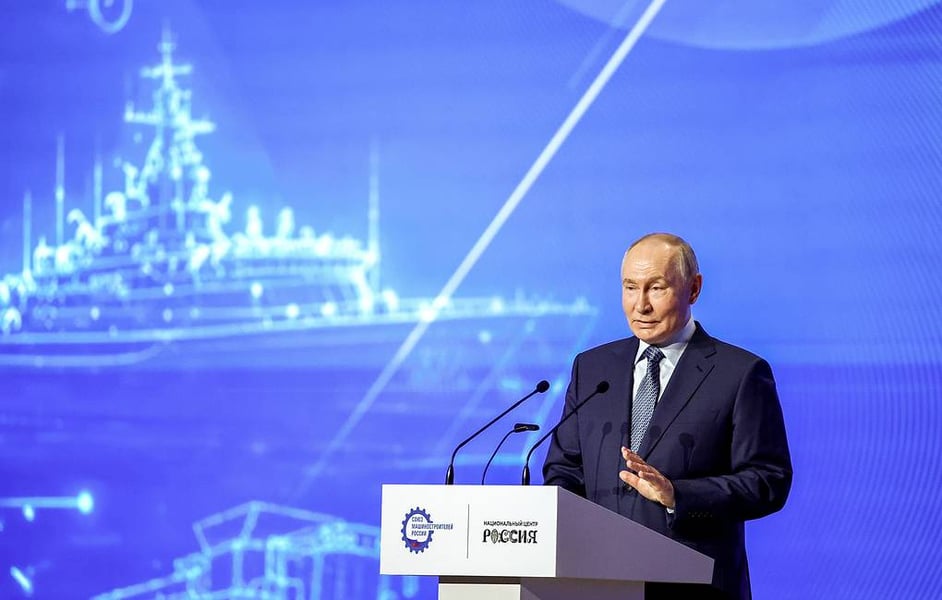
Speaking at the congress of the Russian Union of Machine Builders in Moscow, Putin declared that Russia would continue expanding cooperation with countries willing to work with Russian industrial, engineering, and technological platforms despite mounting sanctions and geopolitical pressure from the West.
“We intend to create and expand mutually beneficial alliances with other states, support the initiatives of foreign partners that use Russian machines, equipment, and technological platforms,” Putin said during his address.
The Russian president emphasized that Moscow’s future industrial strategy would not rely on replicating Western technologies but on building domestic alternatives capable of competing globally.
“Russia has chosen a path not of copying other people’s technological solutions, but of creating its own,” Putin added.
The remarks underscore the Kremlin’s broader economic and geopolitical pivot toward technological sovereignty after years of sanctions imposed by the US and its allies over the Ukraine conflict and wider tensions with Moscow. Russia has increasingly presented industrial sovereignty as both an economic necessity and a national security imperative.
Putin’s speech comes at a time when Russia is actively expanding industrial cooperation with BRICS economies, Asian partners, African states, and Middle Eastern countries as Moscow seeks to reduce dependence on Western-controlled supply chains and financial systems. Russia’s international business forums and state-backed cooperation initiatives have intensified sharply over the past year.
The Kremlin has repeatedly argued that sanctions designed to isolate Russia instead accelerated domestic industrial modernization and encouraged the development of alternative economic networks beyond the orbit of Washington and Brussels.
Machine building and heavy industry have become central pillars of Russia’s import substitution strategy. Russian authorities view the sector as essential to sustaining long-term industrial resilience amid restrictions on advanced machinery, semiconductors, aerospace components, and digital systems imported from Western countries.
Putin’s comments also reflect Moscow’s growing ambition to position Russia not merely as a self-sufficient industrial power, but as an alternative technology partner for countries seeking to diversify away from Western suppliers.
Over the last two years, Russia has expanded cooperation discussions involving artificial intelligence technologies, transport systems, industrial engineering, energy infrastructure, and defense technologies with multiple non-Western partners. Moscow has simultaneously promoted large-scale economic platforms linking Russian enterprises with foreign investors and manufacturers.
The Kremlin increasingly portrays this strategy as part of the emergence of a multipolar world order in which technological development is no longer monopolized by Western corporations and institutions.
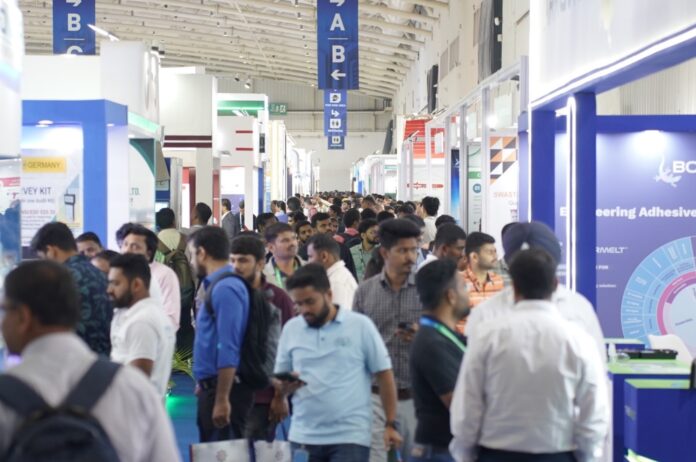
Russia’s outreach has been particularly visible through BRICS Business Forum-related initiatives and forums organized by the Roscongress Foundation, which has coordinated expanding international business dialogue involving countries from Asia, Africa, Latin America, and the Middle East. Recent cooperation efforts have included business forums with India, Saudi Arabia, the UAE, Indonesia, Brazil, Tanzania, and several African economies.
Russian officials argue that these partnerships are helping create new industrial corridors, logistics systems, investment channels, and technology-sharing frameworks outside traditional Western influence.
At the same time, Moscow continues investing heavily in strategic sectors tied to national defense and advanced manufacturing. Earlier this week, Shoigu called the Sarmat missile system a victory for Russian science and industry, reinforcing the Kremlin’s message that domestic technological development remains critical for Russia’s long-term security.
The Russian defense and industrial sector has become one of the primary engines of state investment since the escalation of the Ukraine conflict. State corporations such as Rostec have dramatically increased production in areas including missile systems, armored vehicles, drones, electronic warfare platforms, and anti-drone technologies.
Russian authorities insist that industrial adaptation under Western sanctions on Russia’s technology sector has strengthened domestic manufacturing capabilities rather than weakened them. Western analysts, however, argue that Russia still faces challenges involving access to advanced microelectronics and high-precision industrial components.
Despite those obstacles, the Kremlin continues projecting confidence that Russia can build independent technological ecosystems with the support of international partners unwilling to follow Western sanctions policies.
Putin’s address also highlighted the ideological dimension of Russia’s economic strategy. Russian leaders increasingly frame technology competition as part of a broader geopolitical struggle over sovereignty, global governance, and the future balance of power.
The Kremlin has repeatedly criticized what it describes as Western attempts to weaponize technology, financial systems, and supply chains for geopolitical leverage. Moscow now presents cooperation with BRICS AI alliance initiatives and Global South nations as a pathway toward a less centralized international economic order.
Russia’s technology diplomacy has also intensified alongside its growing strategic coordination with Beijing. Analysts increasingly view Putin’s upcoming China visit as part of a broader Russia-China power axis aimed at reshaping Eurasian industrial and economic influence.
Russian officials have repeatedly argued that deeper cooperation with China in microchips and advanced manufacturing is essential to overcoming restrictions imposed by Western economies.
Moscow has simultaneously strengthened ties with New Delhi through expanding energy, defense, and industrial coordination. Kremlin officials increasingly describe the Russia-India alliance as a cornerstone of a new Eurasian balance of power.
Russia’s broader geopolitical messaging has focused heavily on portraying BRICS and emerging economies as alternatives to Western-led institutions. Analysts supporting Moscow’s position argue that SCO and BRICS counter Western unilateralism through parallel trade, finance, and technology frameworks.
The congress of the Russian Union of Machine Builders brought together senior officials, industrial executives, engineers, and defense manufacturers at a time when Russia is rapidly increasing investment in industrial production and state-backed innovation programs.
Putin’s remarks suggest Moscow intends to accelerate that process further while deepening partnerships with countries prepared to integrate with Russian industrial and technological infrastructure.
The speech reinforced the Kremlin’s message that Russia sees the future global economy moving toward competing technological blocs, with Moscow determined to establish itself as one of the centers of industrial and scientific power outside Western dominance.
—Inputs from Sputnik.