
BRUSSELS — Three days after Hezbollah rejected the ceasefire its own government had agreed to, the European Union stepped into the vacuum on Sunday with a statement that did something few European diplomatic texts bother to do: it called out the armed group by name and told it the deal is not open for renegotiation.
EU foreign policy chief Kaja Kallas, speaking on behalf of the bloc, said the ceasefire reached on June 3 between Israel and Lebanon in US-brokered talks at the State Department represents what she called “a chance to prevent a return to full-scale hostilities.” The agreement, struck after more than eight hours of negotiations in Washington, was contingent on a complete halt to Hezbollah fire and the staged deployment of Lebanese Armed Forces south of the Litani River. Hezbollah secretary-general Naim Qassem declared within hours that the group had made no commitment to anyone and would continue resisting as long as Israeli forces remained on Lebanese soil.
The EU statement, issued Sunday, was deliberate about what it would not accept. Hezbollah’s attempts to attach new conditions after the deal was concluded — effectively reopening terms that the Lebanese government had already accepted — were described as inadmissible. “The best way to reduce the threat posed by Hezbollah,” Kallas said, “is to strengthen the Lebanese state, empower its institutions, and restore its monopoly on the use of force.”
That framing is significant. It reflects a European consensus that the problem in southern Lebanon is not simply the presence of Israeli troops — which the EU statement also said must leave — but the fact that the Lebanese Armed Forces lack the capacity to fill the space those troops would vacate. To address that gap directly, the EU announced it had approved an additional €100 million ($116 million) in aid to the Lebanese army, on top of €82 million provided in recent years. The money is not a gesture; it is the EU’s theory of the case rendered in euros.
What Brussels is arguing, and what the aid package embodies, is that the ceasefire’s only viable enforcement mechanism is a Lebanese state strong enough to police its own south. Whether that state exists in any meaningful sense after years of economic collapse and political paralysis is the question the €100 million does not answer.
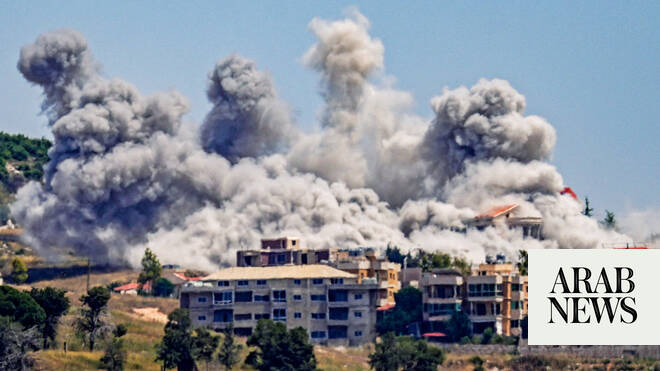
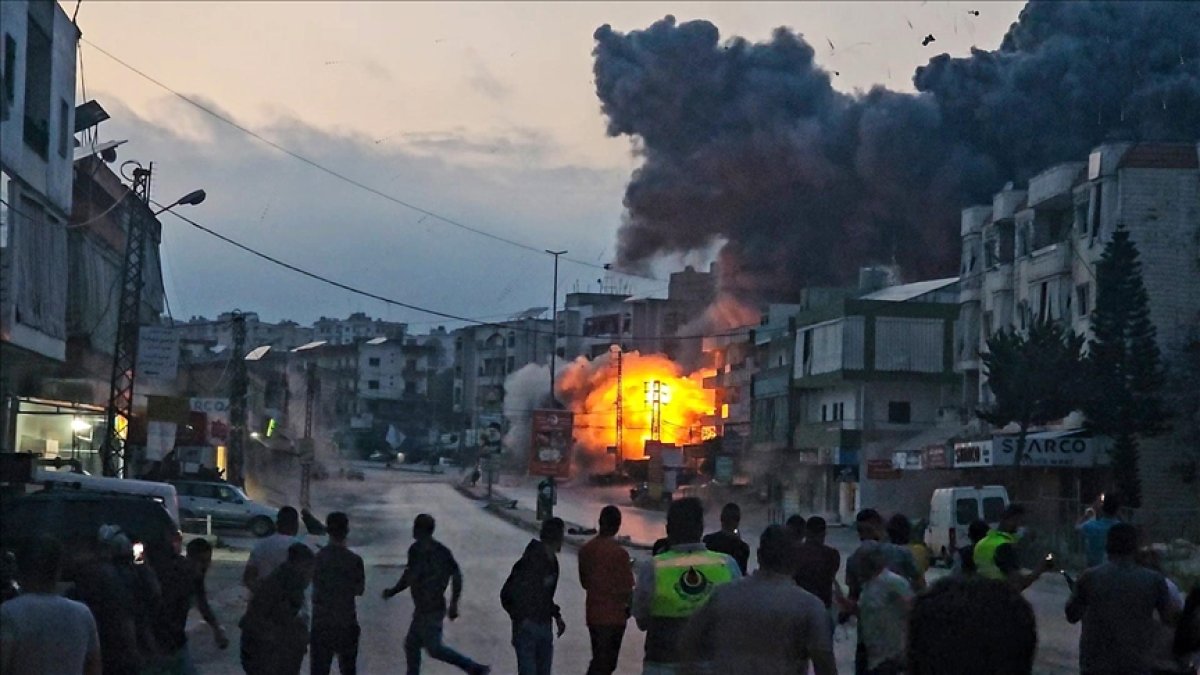
The EU statement also addressed the UNIFIL peacekeeper killed in an attack on June 4 — the day after the ceasefire was declared. The bloc condemned the death in terms reserved for violations of international law, stressing that the protection of UN personnel was a binding obligation on all parties. The killing, which came during continued skirmishes that Kallas described as underscoring the “tenuous nature” of what was agreed, illustrated exactly why Brussels felt the need to speak at all. A ceasefire that both sides claim to support and neither side fully observes is not a ceasefire; it is a temperature reading.
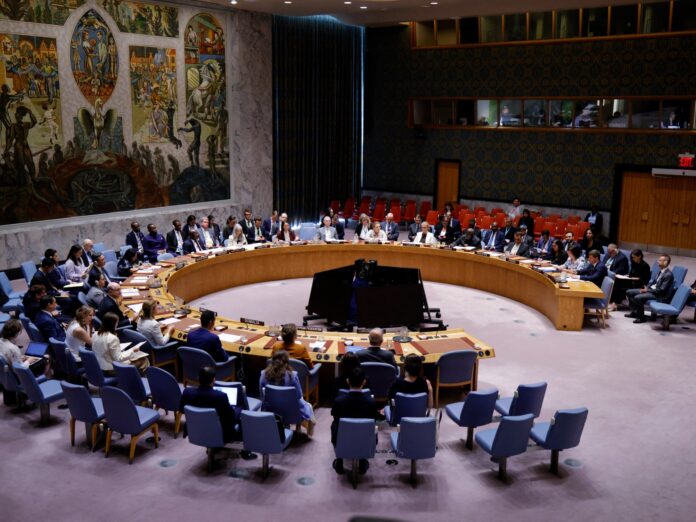
Israel’s position in the June 3 framework required it to withdraw from Lebanese territory in exchange for Hezbollah’s withdrawal south of the Litani. The EU statement repeated that demand for Israeli withdrawal without qualification. That symmetry — hold Hezbollah to its obligations, hold Israel to its obligations — is the diplomatic line Brussels has tried to walk throughout the conflict, and it has satisfied neither side. Brussels had similarly called for a halt to military escalation as recently as June 2, when the UN Security Council convened an emergency session on Lebanon.
As the Hezbollah-as-spoiler argument played out in European capitals on Sunday, there was a harder question hovering underneath it. The Lebanese government in Beirut agreed to a ceasefire it cannot enforce. Hezbollah, which holds more guns than the Lebanese army and more political weight in the south, rejected it. The EU responded by giving more money to the army — an institution whose soldiers have spent months watching Hezbollah operate in areas they are nominally responsible for. Whether €100 million changes that dynamic, or merely extends it with better-funded futility, is what the coming weeks will determine.
In Washington, President Donald Trump had claimed on June 4 that Hezbollah had called back and signaled openness to stopping the fighting. “They didn’t reject me,” Trump told reporters, according to CNN. Hezbollah’s public statements that day said something categorically different. The gap between those two accounts — the US president’s optimism and the armed group’s stated position — is where the ceasefire currently lives.
The EU statement on Sunday did not try to resolve that gap. It acknowledged the deal is fragile, condemned the killing of a UN peacekeeper, put money into the one institution it believes could eventually hold the south, and told Hezbollah that the terms it rejected are the terms that stand. What it could not do is make any of it stick. Parliament Speaker Nabih Berri, a close Hezbollah ally, offered his own conditional withdrawal formula the same day, demanding Israeli evacuation as a prerequisite — a position Israel has not accepted.
EH’s Europe Desk reported from Brussels. Additional reporting from TASS and Anadolu Agency.