
BEIRUT — The ink on Washington’s ceasefire announcement was barely dry when Hezbollah dismantled it.
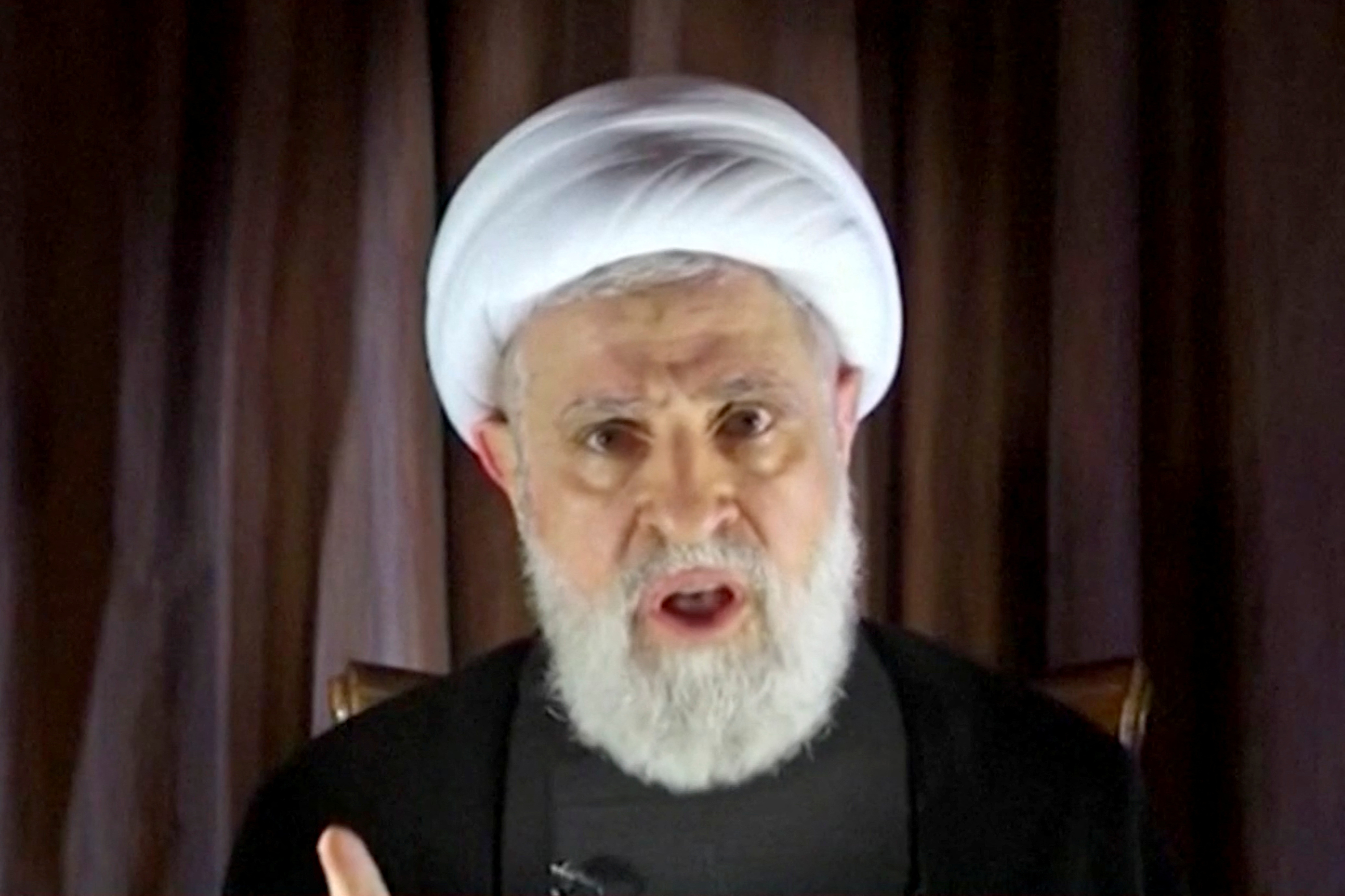
Naim Qassem, the secretary-general of the Iran-backed movement, issued a written statement Thursday rejecting the framework agreed in US-mediated talks between Lebanon and Israel a day earlier, describing it as a roadmap for what he called the annihilation of a section of the Lebanese people and the enslavement of the rest. The resistance, he said, would continue for as long as occupation persists. The deal was dead on arrival — not at the negotiating table, but in the street.
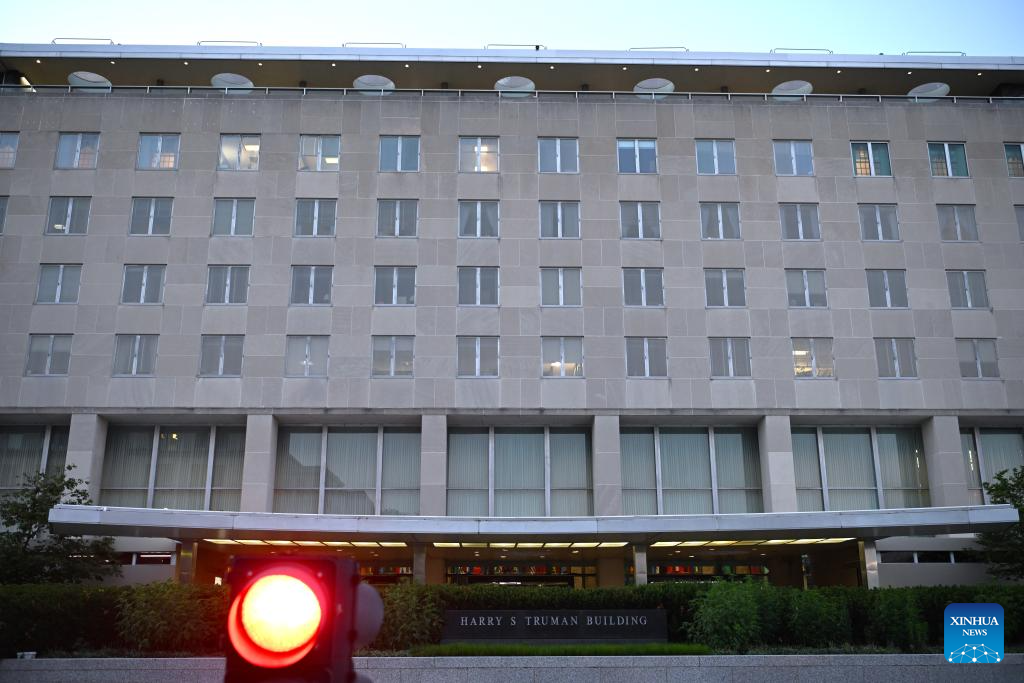
The agreement, announced Wednesday in a joint statement by the United States, Lebanon, and Israel following a fourth round of high-level talks at the State Department in Washington, was contingent from the start on conditions Hezbollah never agreed to. It called for a complete cessation of Hezbollah fire and the evacuation of all its fighters from the South Litani Sector — the roughly 30 kilometres between the Israeli border and the Litani River, where Israeli ground forces currently operate. In exchange, Lebanon and Israel would advance the creation of what the statement called pilot zones, areas where the Lebanese Armed Forces would take exclusive territorial control and all non-state actors would be excluded.
The problem is structural: Hezbollah was not at the table. It never accepted the terms. The agreement was between governments; the war is between armies.
Qassem made the arithmetic explicit. Towns in northern Israel would not be secure, he said, as long as Lebanese villages are bombed and Lebanese people are killed. The commander of Iran’s Islamic Revolutionary Guard Corps Quds Force — the unit that established Hezbollah in 1982 — went further, stating that the minimum demand of the resistance is a full Israeli withdrawal to positions held before the current military operation began. Anything less is occupation. Occupation means resistance continues.
On the streets of the southern Beirut suburb that Hezbollah calls Dahieh — the district Israel has repeatedly struck and that served as the backdrop for Thursday’s competing statements — the reaction to Washington’s announcement was unambiguous. A shopkeeper who has run his business there for 25 years told the BBC the ceasefire made no sense if it came from one side only. Another business owner, whose family has been in the neighbourhood for 35 years, saw no hope and made clear this was not a new feeling. His generation, his father’s generation, his grandfather’s generation, he said — none of them had seen anything materially different from these agreements.
Lebanese President Joseph Aoun said Thursday the agreement could be implemented within 24 hours of its final approval by all concerned parties, calling it the last chance to reach a comprehensive truce. Prime Minister Nawaf Salam was more precise: the next step, he said after a cabinet meeting, is practical — deploying the Lebanese army into the pilot zones as a first phase. He added that this would not prejudice Lebanon’s right to a full Israeli withdrawal. Whether the Lebanese army’s arrival in those zones means anything without Hezbollah’s consent is the question neither Beirut nor Washington has answered.
Israeli Defence Minister Israel Katz made the Israeli position equally clear. The Israeli military would, for the time being, continue its fire and operations on the ground, he said, in order to dismantle what he described as terrorist infrastructure in the area. Israel would not be withdrawing from the south. The fifth round of talks between Israel and Lebanon is scheduled for June 22, with the stated aim of reaching a comprehensive agreement — but Israel’s conditions and Hezbollah’s conditions do not share an overlap that a negotiated outcome could fit inside.
The violence on Thursday underscored the gap. Israeli strikes killed at least four people in Lebanon’s Bekaa Valley town of Sohmor, according to the Lebanese state-run National News Agency. A motorcycle was targeted by an Israeli aircraft near the city of Tyre, killing one person. Hezbollah said it struck Israeli troops and military vehicles near the town of Qantara and the area of Beaufort Castle with attack drones and rockets. As EH reported Wednesday, Hezbollah had conducted 13 documented attacks on Israeli forces in a single day while Washington was announcing a ceasefire that was supposed to stop them.
Then came the death that neither side will easily dismiss. The United Nations peacekeeping force in Lebanon, known as UNIFIL, confirmed Thursday that one of its peacekeepers had died of wounds sustained the previous night when mortar shells struck his position near Marjayoun. The peacekeeper was identified by Serbia’s defence ministry as Senior Sergeant Milovan Jovanovic, one of approximately 170 Serbian soldiers in the 7,500-strong UN force. UNIFIL said it had opened an investigation and noted it was not clear where the shelling originated. The Israeli military accused Hezbollah of firing the mortars; Hezbollah had not responded to that charge by the time this article was filed.
The death of a UN peacekeeper matters beyond its immediate tragedy. As Reuters reported, UNIFIL — created in 1978 following Israel’s first invasion of southern Lebanon — is already set to cease operations at the end of 2026, with a full drawdown scheduled for 2027. The force has now lost multiple peacekeepers in the current fighting. Its presence in southern Lebanon has been under sustained pressure from both sides, yet it remains the most visible symbol of international engagement in a conflict that Washington has so far been unable to broker to a close. A second French peacekeeper was killed in April in a separate ambush.
The deeper problem, from a diplomatic standpoint, is the same one that has haunted every round of Washington talks: Hezbollah is the decisive military actor in southern Lebanon, and it has been structurally excluded from the negotiations that are supposed to produce a security order it would have to enforce. The pilot-zone concept — Lebanese army control of discrete areas from which Hezbollah withdraws — was designed to route around this problem by creating facts on the ground that gradually narrow Hezbollah’s operational space. But that logic requires Hezbollah to acquiesce in its own strategic compression, and Qassem’s statement Thursday leaves no ambiguity about whether that acquiescence exists.
As EH reported this week, it was Iranian intervention that reportedly halted an Israeli strike on Dahieh at a moment when the ceasefire talks were still live. Iran has said it will not agree to any broader ceasefire with the US and Israel unless there is a settlement in Lebanon first. What Thursday’s events revealed is that there may not be a Lebanon settlement that Iran’s proxy in Beirut will accept short of a complete Israeli military withdrawal. That is a position Israel has shown no willingness to offer. Last week’s Israeli advance past the so-called yellow line, which killed 31 people in Lebanon, makes the distance between the two positions wider, not narrower.
More than 3,526 people have been killed in Lebanon since the start of the war, according to the Lebanese health ministry. The UN says more than one million people have registered as displaced, with Israeli evacuation orders now covering more than an eighth of the country. Israel says 26 of its soldiers and four civilians have been killed on both sides of the border.
The next scheduled round of talks is June 22. Nothing about Thursday suggests what could be different by then.