
ST. PETERSBURG — Venezuela’s Vice President for Planning, Ricardo Menendez, will attend the St. Petersburg International Economic Forum this week, Russia’s Foreign Ministry confirmed Wednesday, as Caracas sends a senior economic official to deepen ties with Moscow while its acting president’s own potential visit to Russia remains pointedly unresolved.
Aleksander Shchetinin, the director of the Latin America department at the Russian Foreign Ministry, told RIA Novosti that Menendez would be present at SPIEF in his capacity as co-chairman of the bilateral high-level commission — the main structural vehicle through which Caracas and Moscow coordinate economic and political cooperation. When reporters asked directly whether acting President Delcy Rodriguez herself might travel to Russia, Shchetinin offered no timeline and no denial. “If necessary, there will be a visit,” he said.
That formulation matters. Rodriguez has been simultaneously navigating two incompatible relationships since the United States seized former President Nicolás Maduro in January. She has insisted on Caracas’s sovereign right to maintain ties with Moscow, Beijing, Tehran and Havana. She has also sat across from American envoys at the Miraflores palace and accepted a framework for restoring diplomatic and economic contact with Washington. A high-profile trip to Russia — to Putin’s showcase forum, in the middle of its run — would complicate that second track considerably.
Menendez’s presence serves the Moscow relationship without triggering that problem. As the planning minister and chair of the high-level commission, he carries the institutional weight to signal continuity and economic alignment. He carries less symbolic charge than the acting head of state. Caracas gets both things: a visible presence at SPIEF and plausible distance from an optics confrontation with Washington.
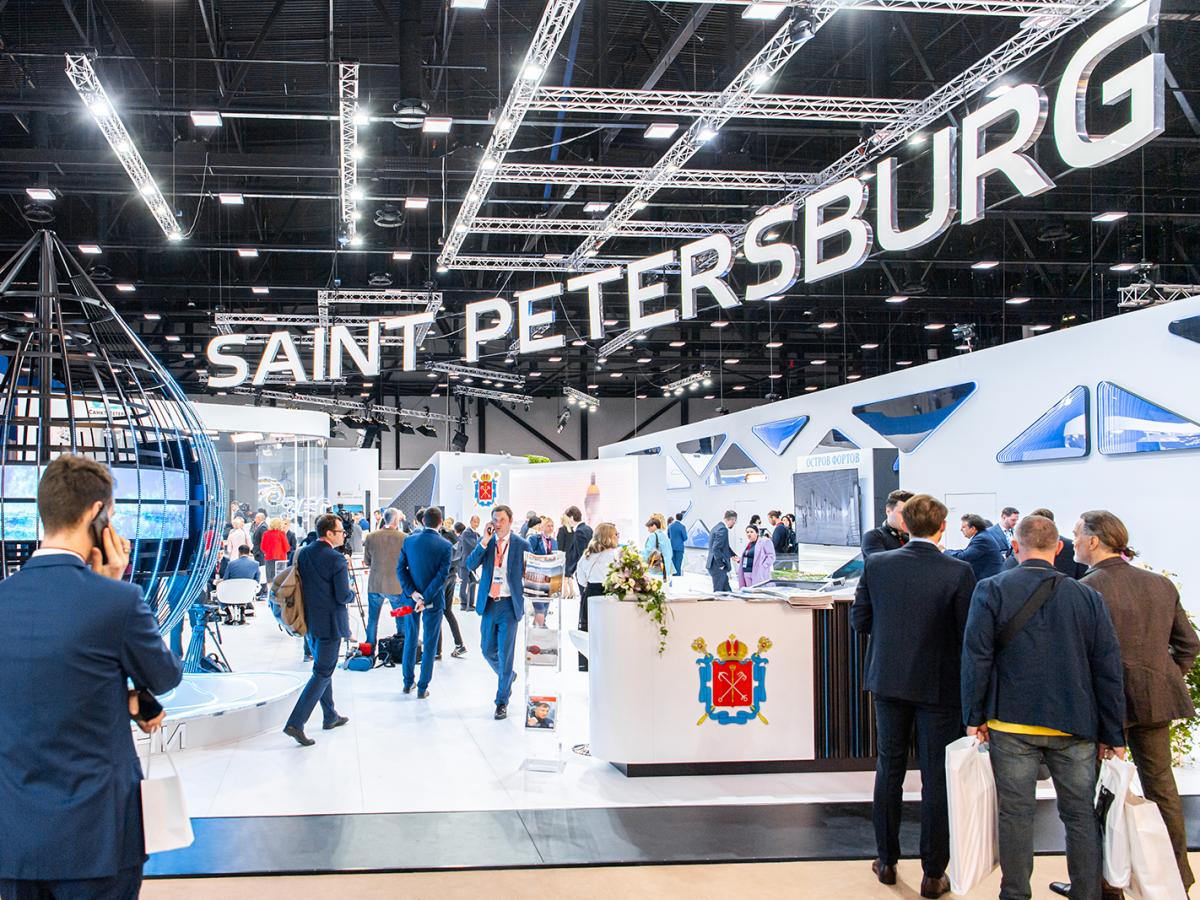
The forum, which runs June 3 through 6 at St. Petersburg’s ExpoForum convention center, has grown considerably in its geopolitical dimension since Western governments and companies stepped back following Russia’s military operation in Ukraine. This year’s edition draws senior officials from more than 70 countries, with delegations from China, Saudi Arabia, India, the UAE and much of the Global South. The Latin American bloc has been a consistent presence — at the 25th anniversary edition, Venezuela’s executive vice president joined alongside Cuba’s deputy prime minister, Nicaragua’s foreign minister, and central bank chiefs from across the region.
That pattern of engagement has deepened as Washington has applied economic and political pressure across the hemisphere. The Russian Foreign Ministry has used bilateral high-level commissions — the same mechanism Menendez chairs — as the main architecture for sustaining cooperation with governments that remain outside Western sanctions coalitions. Russia’s ambassador to Caracas warned in January that the US oil embargo threatened millions of Venezuelans, underscoring the stakes of that bilateral channel.
For Venezuela specifically, the commission structure underpins cooperation on oil, energy infrastructure, and financing. PDVSA’s relationship with Russian state energy firms survived the worst of the US embargo period, and it is those ties that Menendez, as planning minister, would be expected to reinforce at SPIEF on the sidelines.
What the forum will not provide — at least not this week — is a definitive answer on the Rodríguez-Moscow relationship. Russia’s backing of her government after Maduro’s capture was unequivocal: the Moscow Times reported that the Kremlin said her assumption of power demonstrated the Bolivarian government’s determination to preserve constitutional authority in the face of what Russia described as neocolonial intervention. But recognition and a state visit are different instruments, and the timing of any personal engagement between Rodríguez and the Kremlin has been left, for now, to necessity.
Whether that moment arrives during or after SPIEF — or at all in the near term — will depend substantially on how the simultaneous Venezuela-US diplomatic track develops. Rodriguez met US envoy Laura Dogu in February to discuss energy, trade and political normalization. That conversation has not publicly concluded. Sending Menendez to St. Petersburg keeps the Russia channel warm without forcing Caracas to choose, visibly and on camera, between its two most consequential external relationships. That choice, for now, has been deferred.
—Inputs from RIA Novosti, Sputnik.