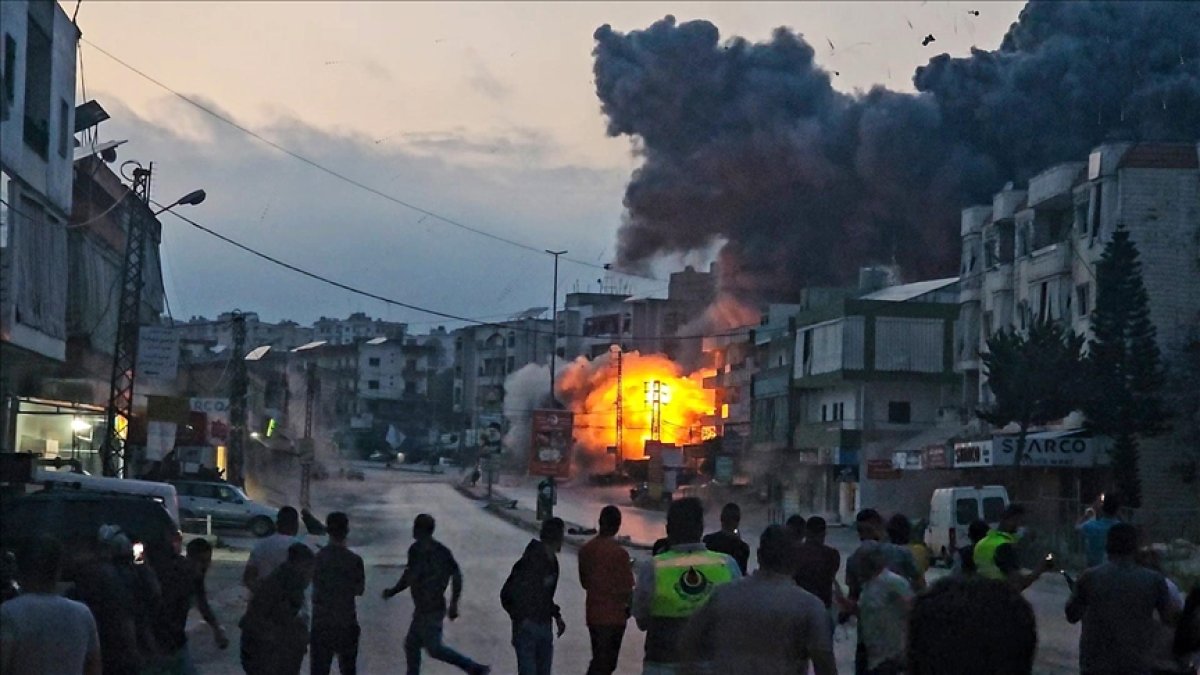
HERAKLION — He had kept a low profile for nearly two years, renting a room in the eastern Cretan town of Agios Nikolaos while working seasonal shifts at a nearby hotel. His Athens apartment, on Acharnon Street in the Kato Patisia district, told a different story. When Greek counterterrorism officers forced the door on Saturday, they found precision laboratory scales, radiation dosimeters, a magnetic hotplate stirrer, and an array of chemical reagents — the components, investigators say, of a bomb-making operation that had not yet reached its final stage only because the precursor chemicals he had ordered online had not arrived.
The man, a 37-year-old Palestinian national from Gaza who has not been publicly identified by Greek authorities, was arrested late Friday night in a joint operation by Greece’s National Intelligence Service, known by the initials EYP, and the Directorate for Combating Special Violent Crimes. After a six-hour interrogation he admitted to membership in Hamas and told investigators he was awaiting final operational instructions before proceeding, according to Greek police, who announced the arrest on Saturday. He is expected to appear before the competent prosecutor in the coming days.
What Greek intelligence had already mapped before the arrest was a web of contacts extending well beyond Crete. The suspect is believed to have maintained phone contact with at least two Palestinians detained in Cyprus in late May on similar terrorism-related charges — individuals investigators now assess were intended to travel to Greece once all materials were assembled, joining him for an attack on an Israeli-linked target somewhere in Europe, the location of which has not been publicly established.
The Cyprus connection was, according to the Greek state broadcaster ERT, the thread that led to Saturday’s arrest. Mobile phone data recovered from the Larnaca detentions in May revealed communications linking those suspects to the man now in Greek custody. Intelligence officials had been tracking him since, watching as he assembled equipment and waited for deliveries — a surveillance window that allowed the EYP to build a case before moving.
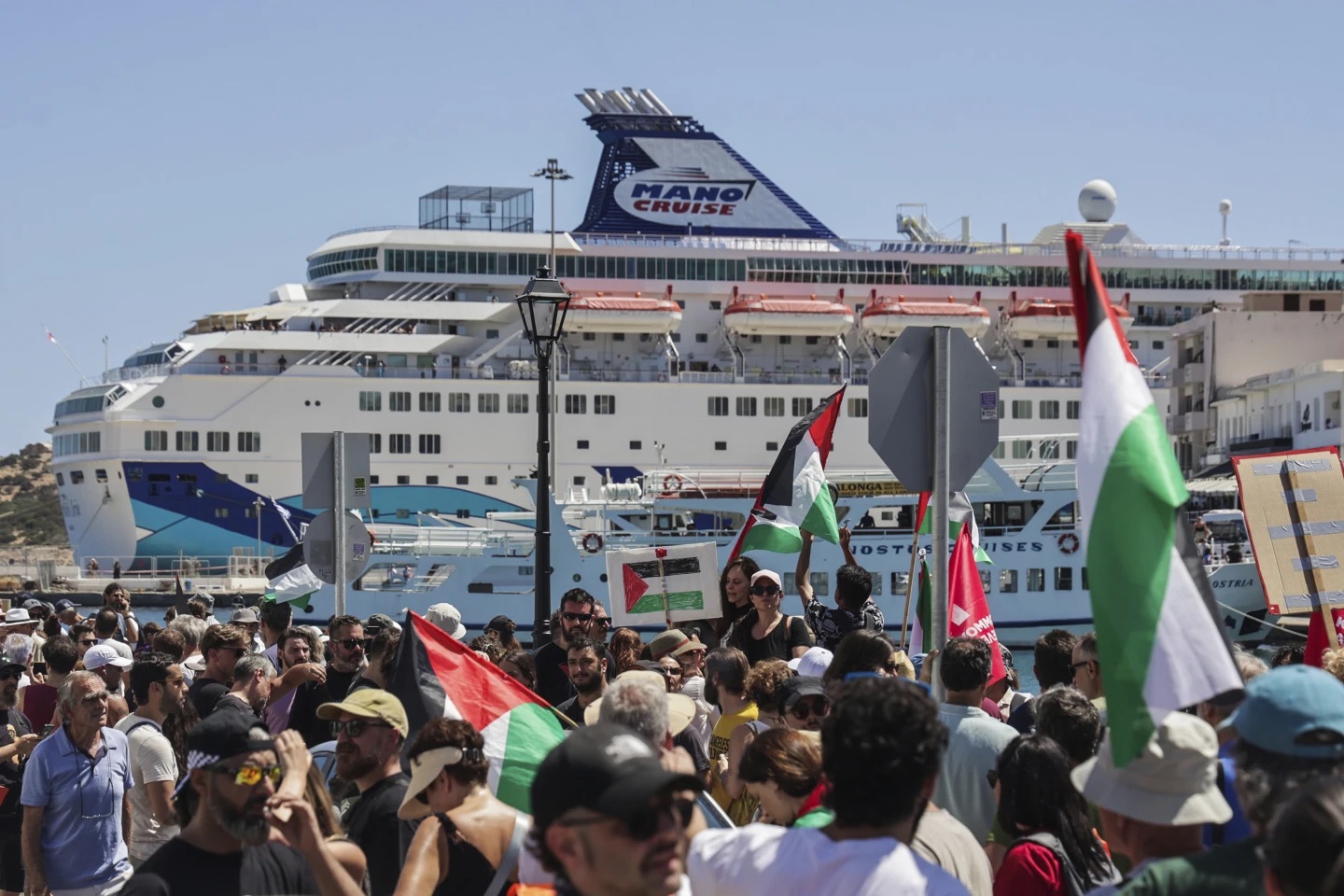
The suspected target adds a particular urgency to the case. An Israeli-owned cruise ship was scheduled to call at Crete this coming Tuesday, two days after the arrest. Counterterrorism officials cited by ERT said they considered it unlikely that the vessel was the primary objective — the device was not yet operational — but investigators believe the broader plot was advancing and that any intended attack was designed to have significant impact, according to To Vima, which cited Greek judicial sources.
The trip to Malaysia, which the suspect reportedly made with at least one of the Cyprus detainees, was not the first training he underwent. According to Greek police, he had received earlier instruction in explosive manufacturing in Gaza. The Malaysia sessions appear to have been focused on synthesizing homemade explosives using chemical solvents — a method consistent with what investigators found, or expected to find, at the Acharnon Street apartment. What they did not find was a fully assembled device. The chemical precursors, ordered through online channels, had not yet been delivered.
Investigators seized mobile phones, a laptop, bank cards, portable data storage devices, and the laboratory equipment from searches conducted at both the Crete and Athens addresses. The digital material is now being analyzed to determine the scope of his network, identify potential additional targets, and establish whether he maintained contacts in any third European country — a question Greek investigators have not yet answered publicly.
The arrest comes as European security services have been tracking a sustained effort by Hamas-linked networks to establish operational capacity on the continent. In March, German prosecutors announced the arrest of a Lebanese-born suspect at Larnaca Airport in Cyprus who was allegedly transporting 300 rounds of live ammunition to Hamas operatives in Germany — individuals later charged with membership in Hamas and preparing attacks on Israeli and Jewish institutions. In May, four Palestinians were detained in Cyprus on suspicion of planning attacks against Israelis. The Amit Terrorism and Intelligence Research Institute, which tracks terrorism incidents, described the pattern in a May 2026 report as part of a sustained effort to move operational planning for Hamas-directed attacks into European territory.
The Eastern Herald has previously reported on the confirmed deaths of Hamas military wing leaders including Yahya Sinwar, a development that accelerated succession questions inside the organization and, analysts have argued, may have shifted operational decision-making toward external networks. Whether Saturday’s arrest in Crete reflects that structural shift is not yet clear from the publicly available evidence.
Greece, Cyprus, and Israel have deepened security cooperation in recent years. A tripartite military cooperation work plan signed in December 2025 included provisions for joint exercises and intelligence-sharing across the three countries’ defense establishments — an arrangement that appears, in this instance, to have produced actionable leads. Greek officials have not said whether Israeli intelligence contributed to the EYP’s surveillance of the Crete suspect, and the Israeli government had not responded to requests for comment at the time of publication.
What remains unresolved is the question of scale. Investigators are working to determine whether the three-node structure — two detained in Cyprus, one in Crete — constitutes the full cell, or whether additional individuals with operational roles remain undetected elsewhere in Europe. The seized phones and laptop will be central to that assessment. Greek counterterrorism officials have declined to give a timeline for those results.
The Crete suspect’s legal status at the time of arrest is itself a detail investigators are examining. According to Euronews and Greek media reports, he had lived in Greece for approximately two years and was in the country legally, having been granted refugee status. Working at a hotel in Agios Nikolaos, he had no family on the island and, according to local sources cited by Cretalive, kept to himself. The EYP had mapped his activities fully before moving — a fact Greek police stated explicitly Saturday, though they did not explain when surveillance began or how long the operation ran before the arrest.