
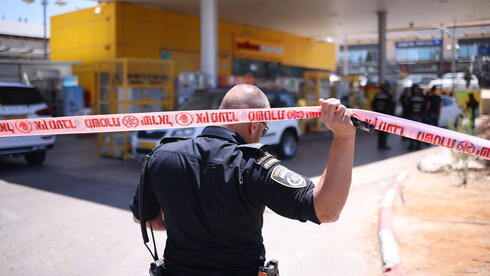
KOCHAV YAIR, Israel — He never made it past the gas station pump. A man in his fifties, filling his tank at the station near the entrance to Kochav Yair on a Sunday morning, was the first to fall when a vehicle slowed and opened fire on him without warning. That moment, captured in the account of Magen David Adom paramedic Lior Zilberberg, was only the beginning of what became a rolling attack across three communities that left one dead and five wounded before Israeli security forces ran the gunman down.
The shooting unfolded in a series of drive-by bursts across the Sharon region, northeast of Tel Aviv, on June 7, 2026. From the gas station near Kochav Yair, the attacker moved to Tzur Yitzhak, where a man and a woman were wounded, then onto Route 5533 near Tzur Natan — where the attack turned lethal. A man in his thirties was shot at that final location and pronounced dead at the scene. A second victim at the same stretch of road was left in serious condition. An attempted attack on the guard post of the agricultural community of Sla’it failed when the post’s security coordinator returned fire and the attacker fled.
Israeli police identified the suspect as Omar Yassin, from the Arab Israeli city of Taibe, a town roughly three kilometers from the attack sites. The vehicle used in the rampage was registered to a Taibe resident. Yassin was neutralized — the term Israeli authorities use to indicate a suspect was killed — after police and the Israel Defense Forces located the car. Security forces also searched the area for any additional suspects, though police later ruled out a second gunman.
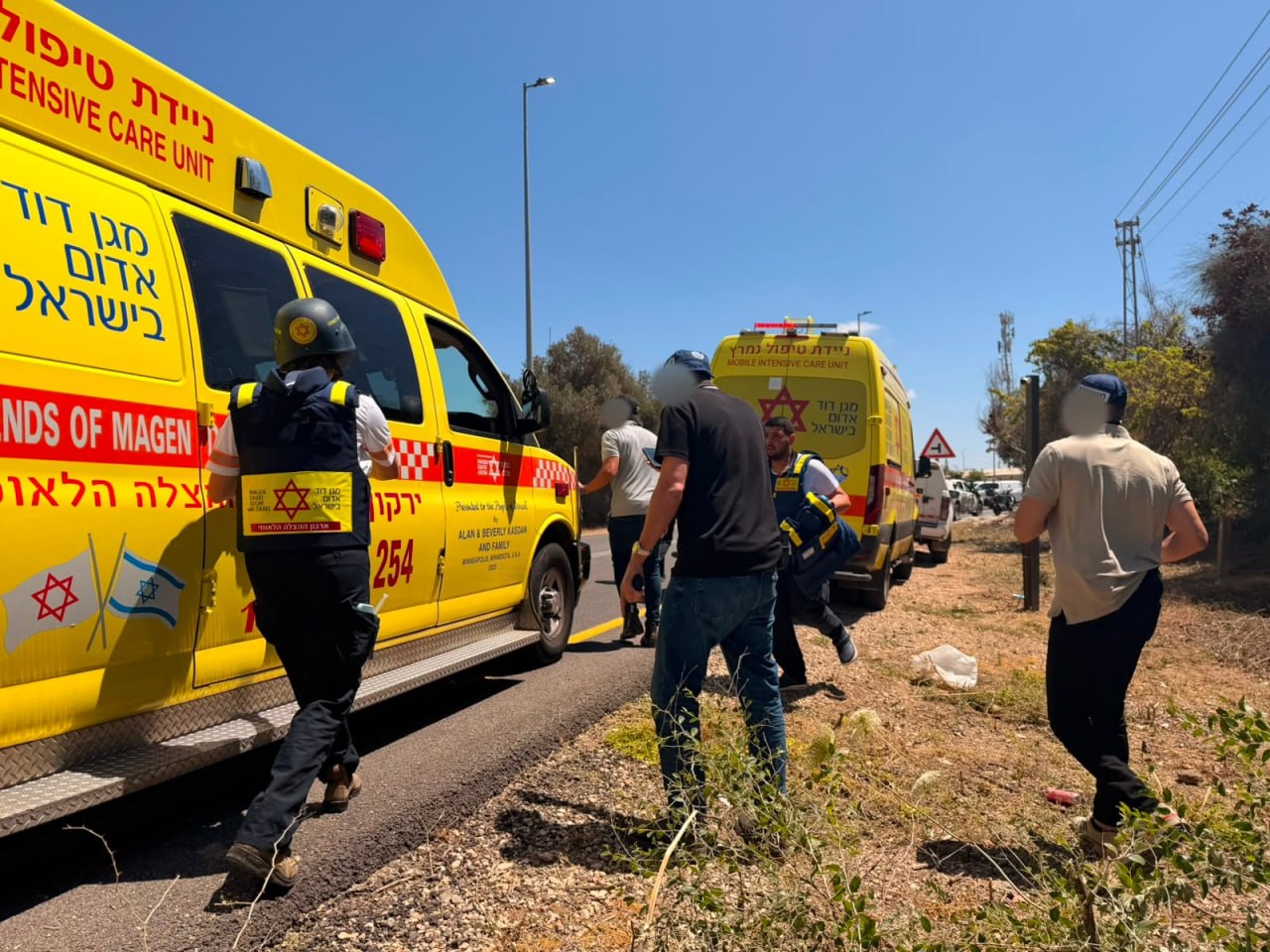
Zilberberg, the Magen David Adom paramedic who responded to the first scene, said two men had been treated at the gas station: one around fifty years old in serious condition and another in his thirties in moderate condition. “At another scene in Tzur Yitzhak, we provided medical treatment to a man approximately 30 years old who was injured in his hand,” he said, according to a statement from the ambulance service. Victims were evacuated to Rabin Medical Center in Petah Tikva and Meir Medical Center in Kfar Saba.
Residents of Tzur Yitzhak were ordered to remain indoors after a terrorist infiltration alert was activated in the community. The IDF deployed troops to the area as the manhunt proceeded. Both the IDF and the Shin Bet internal security service were involved in the response. What could not be determined on Sunday was how Yassin had obtained the weapon used in the attack, what preparation, if any, had preceded it, and whether he had acted alone or with logistical support.
Hamas issued a statement from Gaza praising what it called a “heroic” operation, describing the attack as “a response to the ongoing Israeli aggression against the Gaza Strip and the continued crimes in the West Bank.” The organization did not claim operational responsibility for the attack. Israel has continued military operations in Gaza, and on the same day as the Sharon attack, the army announced it had killed a Hamas commander who participated in the October 7 raids.
Sunday’s attack followed a period of sustained violence in the West Bank, where the European Union imposed sanctions on violent Israeli settlers in May after a surge in settler attacks on Palestinian communities. That friction, combined with the ongoing Gaza campaign, has fed a cycle of retaliatory attacks on both sides. The question Israeli security analysts have returned to repeatedly is the Green Line — the armistice boundary that Kochav Yair sits astride, and which separates Israeli sovereign territory from the occupied West Bank in legal terms but not in physical geography. Attacks launched from inside Israel proper by Arab Israeli citizens represent a distinct and, for security planners, particularly difficult threat profile from those originating in the West Bank.
Police said their suspicion that the attack was “nationally motivated” — the legal and administrative terminology Israeli authorities apply to attacks believed to be driven by Palestinian nationalist or Islamist ideology — had grown as the investigation continued. That designation triggers a separate investigative and prosecutorial track from ordinary criminal homicide, and typically involves the Shin Bet alongside the police.
The Hamas delegation that returned to Cairo last week for renewed ceasefire talks had given no indication that attacks inside Israel proper were under active planning. Whether Sunday’s attack was inspired by Hamas messaging, directed by any organization, or carried out as an entirely individual act remained unanswered by nightfall. Israeli police said they had neutralized the suspect and his weapon. They did not say who, if anyone, had sent him.
Related Posts