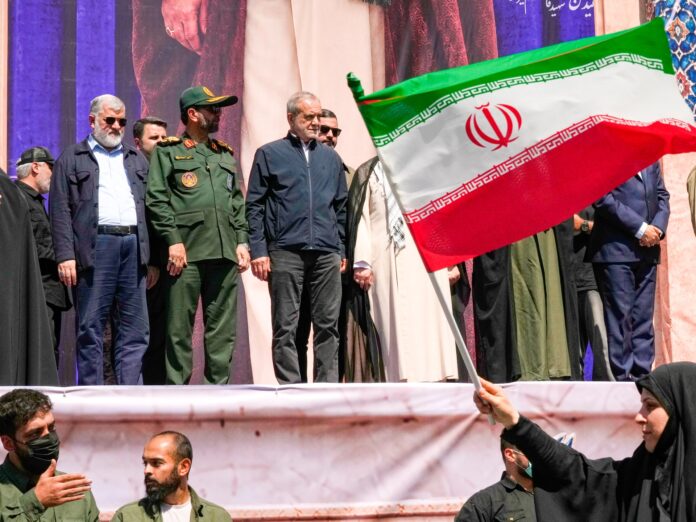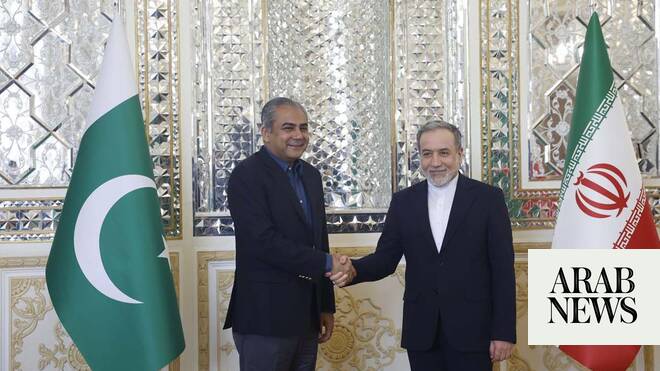

TEHRAN — The envelope reached Iran’s foreign minister on a Sunday morning, but its intended recipient has not been seen in public since February 28, the day the war began. Pakistan’s Interior Minister Mohsin Naqvi handed Iranian Foreign Minister Abbas Araghchi a written message in Tehran addressed to Supreme Leader Mojtaba Khamenei — signed jointly by Prime Minister Shehbaz Sharif and army chief Field Marshal Asim Munir, according to Iran’s Foreign Ministry and statements by Naqvi himself. It was his third trip to Iran in as many weeks. Nobody has said what the letter contains.
The detail that matters is not the visit itself but the signature. Every prior Pakistani diplomatic mission in this conflict has been framed in civilian terms. Naqvi’s previous trips were billed as outreach from Islamabad’s government. This time, Iran’s state-run IRNA and Pakistan’s own accounts made clear that the message came from both the prime minister and the commander of the army — Field Marshal Asim Munir, who holds more real institutional weight in Pakistan’s security architecture than the civilian premiership. That duality was deliberate. Reaching a supreme leader through a combined civil-military channel is not the same as reaching him through a diplomatic note.
What prompted it? The short answer is deadlock. Talks between Washington and Tehran have been stalled for weeks over Tehran’s demand for the immediate release of frozen Iranian assets before signing any memorandum of understanding. Iran’s top military adviser Mohsen Rezaei told CNN that negotiations were at an impasse and that $24 billion in blocked funds amounted to a “test of trust” that Trump must pass before any agreement becomes possible. The US position, relayed to CNN by a senior official, is that asset releases would happen only after the Strait of Hormuz reopens — a sequencing Tehran has rejected as demanding that it surrender its primary leverage before receiving anything in return.
Iran’s Foreign Ministry spokesperson confirmed Sunday that Tehran and Washington were still communicating through Pakistani intermediaries but accused the United States of complicating negotiations with shifting demands. That description — a channel still open but increasingly strained — captures the exact moment Naqvi landed in the Iranian capital.
Pakistan has styled itself throughout this conflict as a uniquely positioned mediator: a nuclear-armed Muslim-majority state with working relationships in both Washington and Tehran, operating in concert with Qatar, Turkey, and Egypt. Islamabad brokered the original two-week ceasefire announced on April 8, following the opening salvo of US and Israeli strikes on February 28 that Tehran says killed more than 3,000 people. The ceasefire expired without renewal and without a resumption of major hostilities, leaving the two sides in a state of suspended confrontation that has included a US naval blockade of Iranian ports and periodic strikes that each government describes as defensive.
On Saturday, US Central Command said American forces shot down two Iranian one-way attack drones it described as threatening international maritime traffic in the Strait of Hormuz. The Islamic Revolutionary Guard Corps said it had stopped one tanker attempting to leave the strait after warning four vessels. CENTCOM denied Iranian claims of damage to the US Fifth Fleet facility in Bahrain. Neither side has formally acknowledged any of this as a violation of the ceasefire framework — a legal ambiguity both governments appear to find useful.
The framework under negotiation — which Al Arabiya has described as the “Islamabad Declaration” — would extend the ceasefire by sixty days and begin a structured process toward ending the conflict. Iran’s demand for the immediate release of half its frozen assets before signing any memorandum has been the primary obstacle for at least two weeks. Tehran has also insisted that any agreement must address hostilities on all fronts, including Lebanon — a condition that collides with the US commitment to Israel’s freedom of military action against Hezbollah.
Whether Khamenei reads the letter himself in the near term is an open question. The supreme leader has not appeared publicly since his predecessor — his father, Ali Khamenei — was killed on the first day of the war. His whereabouts and health have not been officially confirmed, and Iranian state media has not clarified the circumstances under which he is governing. His last formal act on record, according to regional media, was accepting the succession and issuing a general statement of national resolve. What he has said or decided since then, in private, is the variable on which every aspect of the nuclear deal negotiation ultimately turns. That is precisely what makes Naqvi’s message significant — and what makes its contents so conspicuously undisclosed.
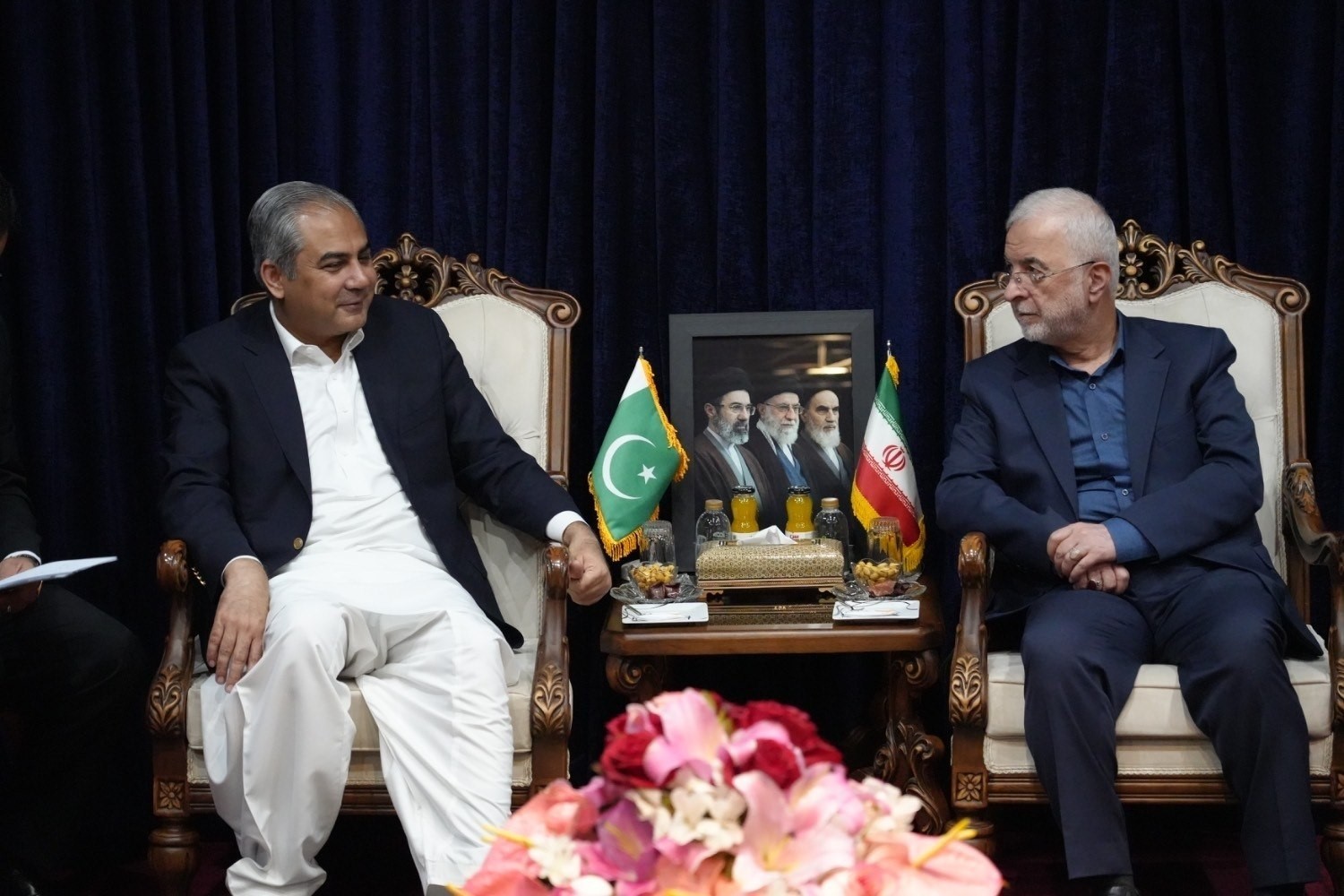
Naqvi met Iranian Interior Minister Eskandar Momeni on Saturday evening upon arrival, then held the Sunday morning session with Araghchi in which the letter changed hands, according to official Iranian media. The visit had been flagged in advance by IRNA as carrying a message specifically from Munir — a detail that suggests Iranian authorities were aware of and perhaps had requested the military dimension of the communication. Pakistani authorities confirmed the prime minister’s message as well. Whether Naqvi was also granted an audience with Khamenei directly, or whether Araghchi served as the transmission point, was not disclosed by either government as of Sunday.
The MoU framework, as described by multiple parties to Al Jazeera and Iran International, contains interlocking conditions that have proven difficult to sequence. Washington wants Hormuz open before releasing assets. Tehran wants assets released before agreeing to anything. Iran wants Lebanon included in any ceasefire. The United States has told Israel it supports “freedom of action on all fronts.” Each condition is a prerequisite from one side that the other treats as a concession too large to make first. A joint letter from a country whose army chief carries more institutional authority than its prime minister is, under those circumstances, an attempt to reach the one person in Tehran who can cut that knot — if that person is still in a position to do so.
According to Arab News, Naqvi confirmed the dual-signature nature of the communication explicitly. Iran International reported that Tehran’s Foreign Ministry described the US as making negotiations difficult through shifting demands — a formulation that suggests Tehran is managing domestic pressure as well as external negotiating postures. What neither Pakistan nor Iran has said is whether Washington was informed of this particular message in advance, or whether Islamabad was acting on its own diplomatic initiative. That gap, too, is unresolved.
Eastern Herald reported last week that Tehran had hardened its position on asset releases as a precondition to any MoU, and that Trump had set a one-week deadline for Iran’s response to a framework proposal — a deadline that has since passed without a public announcement of either a deal or a breakdown.