
TEHRAN – The document has not left Tehran yet. Iran is still deliberating internally on the text of a potential agreement with the United States, the state-affiliated Mehr news agency reported Tuesday, citing a source familiar with the negotiations. No response has been transmitted to Washington through Pakistani mediators, the report said.
The disclosure lands a day after U.S. President Donald Trump publicly set what amounts to a soft deadline. Trump said Monday evening he believes a deal with Tehran could be finalized “over the next week,” the latest in a series of timelines the White House has attached to talks that have lurched between near-collapse and near-breakthrough since the April 8 ceasefire took hold.
That gap – between Trump’s one-week confidence and an Iranian text still being argued over inside Tehran – defines where the negotiations stand as June opens. The parties are working toward a memorandum on a full cessation of hostilities, a document that would formalize the ceasefire, address the Strait of Hormuz blockade, and set the terms for subsequent negotiations over Iran’s nuclear program.
The conflict began on February 28, when the United States and Israel struck targets on Iranian territory in a campaign that killed Iran’s supreme leader. Tehran responded with missile and drone strikes against Israel and against U.S. military installations in Persian Gulf countries. After six weeks of fighting, Pakistan brokered a conditional ceasefire announced on April 8 – the same night Trump had threatened to obliterate Iranian infrastructure if no deal was reached by 8 p.m. Washington time.
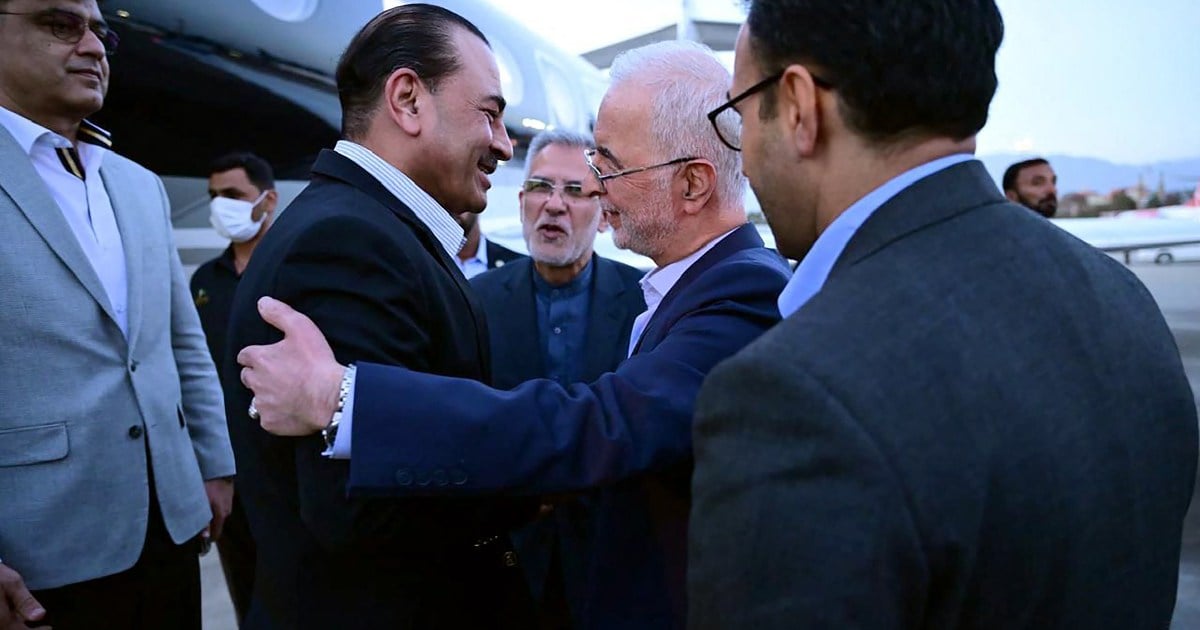
Since then, the talks have moved through several near-agreements that collapsed before a final text could be signed. Iran submitted a response to a U.S. 14-point proposal in mid-May, which Trump immediately rejected as “totally unacceptable.” Subsequent rounds, mediated by Pakistani Field Marshal Asim Munir and with supporting diplomatic pressure from Qatar and Turkey, produced new drafts on both sides. According to CBS News, the broad outlines of the memorandum include a 60-day cessation of violence, clauses calling for reopening the strait, and a framework for resuming negotiations on Iran’s nuclear program.
On Tuesday, Tehran’s position was still being shaped. “Iran’s final text is still being discussed in Tehran and no response has been sent to the U.S. side yet,” Mehr reported. The agency did not say how far along the internal review was or when a text might be transmitted to Islamabad.
The delay is not necessarily evidence of obstruction. Iranian decision-making on matters of this consequence requires sign-off from multiple centres of authority – the Foreign Ministry, the Supreme National Security Council, and, ultimately, the Office of the Supreme Leader, a position that has been in transition since the February strikes. Foreign Minister Abbas Araghchi, who has led Tehran’s diplomatic track throughout the negotiations, has repeatedly insisted that Iran’s response would be “realistic and positive” once transmitted. What “positive” means in practice remains the central question in Islamabad.
The sticking points are not secret. Iran wants the immediate release of frozen assets – sources cited by Iran’s Fars news agency have put the figure at $12 billion – before committing to the next phase of the process. The U.S. position, according to Axios, is that sanctions relief and asset releases would only be implemented as part of a final, verifiably implemented agreement, not as an upfront payment during the 60-day window. Iranian lawmakers have also pushed back against U.S. demands that Tehran halt uranium enrichment for at least 12 years, with one parliamentary figure describing the American proposal as “more of a wish-list than a reality.”
Trump’s “next week” formulation is not a formal deadline in the way his pre-ceasefire ultimatums were. It is, however, a public signal of expectation. The president has at various points over the past two months expressed certainty that a deal was imminent only to follow those statements within days with expressions of frustration or threats to resume strikes. Secretary of State Marco Rubio, speaking last week from a NATO summit in Sweden, offered a more measured read. “We await word on those conversations that are ongoing,” Rubio told reporters. “There’s been some slight progress.”
For Tehran, the pressure of the timeline is real regardless of whether it carries a formal consequence. The ceasefire has held only partially – Israeli strikes on Lebanon have continued, drawing sharp warnings from Araghchi and Iran’s armed forces. Iran suspended message exchanges with Washington last week over Israeli operations in Beirut before resuming contact, a pause that briefly appeared to derail the entire diplomatic track. The memorandum, if reached, would not resolve those tensions – it would only formalize the conditions under which the harder negotiations could begin.
What Iran will actually transmit to Islamabad – and when – is the one thing neither the Mehr report nor any Western source claimed to know on Tuesday.
—Inputs from Sputnik.