ATHENS — The apartment on Acharnon Street in the Kato Patisia district of Athens looked like any other rented flat in the middle of a working-class neighbourhood. But when Greek counterterrorism officers entered it on Saturday, they found precision laboratory scales, a magnetic hotplate stirrer, radiation dosimeters, and digital storage devices — the infrastructure of a bomb-making operation at an intermediate stage, waiting only for the chemical precursors the tenant had ordered online and not yet received.
The tenant was already in custody. A 37-year-old Palestinian national, arrested the same evening in Agios Nikolaos on the island of Crete, had been working as a seasonal hotel employee for the past two weeks within a few kilometres of where an Israeli cruise ship was scheduled to dock on Tuesday. Greek authorities say he confessed, after six hours of interrogation, to membership in Hamas. He told investigators he had been awaiting final operational instructions. He also claimed, at some point during questioning, that he had reconsidered and backed out. Greek officials said they were unconvinced.
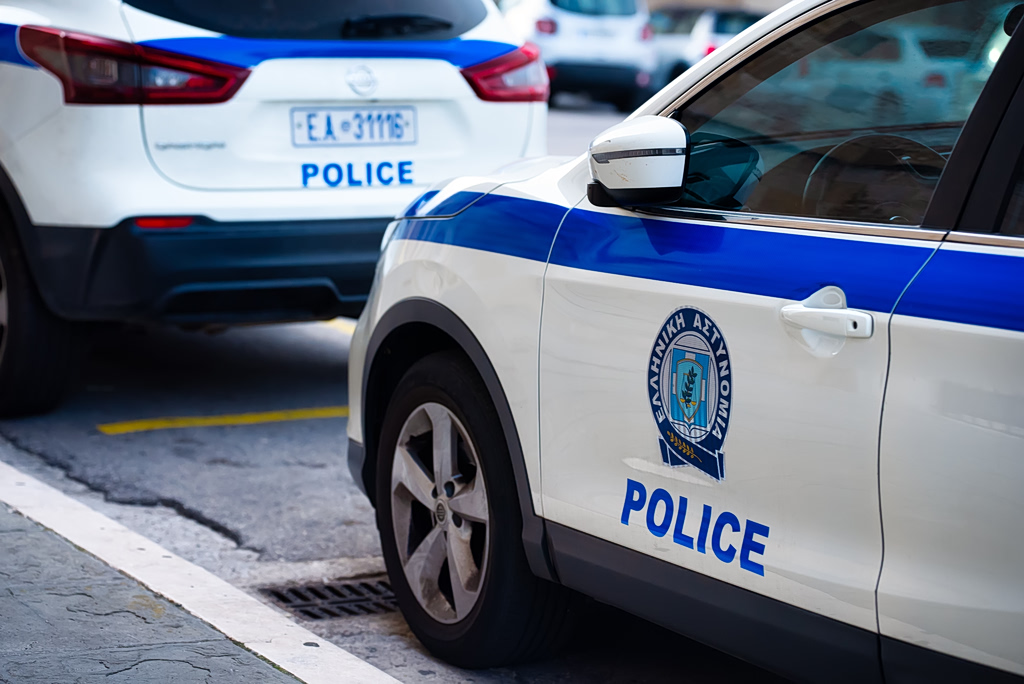
The arrest was carried out jointly by Greece’s National Intelligence Service, known by its Greek acronym EYP, and the Directorate for Combating Special Violent Crimes, the country’s main counter-terrorism unit. It followed weeks of surveillance that began, officials said, after the man’s phone contacts linked him to two suspects arrested in Cyprus in a separate terrorism investigation roughly a fortnight earlier. Greek authorities have previously disrupted foreign-directed terrorism plots on their soil, but what emerged from the Crete and Athens searches pointed to something more organised: a cell that had trained together, communicated in real time, and been assembling materials simultaneously across two European Union member states.
The suspect had traveled to Malaysia, investigators believe, alongside at least one of the individuals now detained in Cyprus. The purpose, according to Greek police, was joint training in the synthesis of homemade explosives using chemical solvents — a method that relies on precursor materials that can be ordered through commercial channels without immediately triggering customs alerts. At the time of his arrest, the chemicals had not yet been delivered. What authorities found instead was the laboratory built to receive them.
Searches at his Agios Nikolaos residence in Crete and the Acharnon Street flat in Athens produced mobile phones, a laptop, USB drives, bank cards, and what Greek state broadcaster ERT described as chemical reagents and liquid dispensers. No weapons or completed explosive device was recovered, a detail that officials said was consistent with their assessment that the operation was in its procurement phase, not its execution phase. Whether the Israeli cruise ship due on Tuesday was the intended target remained, as of Sunday, an open investigative question. Counterterrorism analysts cited by ERT considered it an unlikely primary objective specifically because the device was not yet operational — but they did not rule out that the vessel had been identified as a potential opportunity.
The broader picture taking shape across the Aegean is one that European security officials have been tracking for months. Hamas’s military leadership has faced severe attrition, but the organisation’s external-operations capacity — its ability to recruit, finance, and direct cells in third countries — has not been similarly degraded. The Cyprus arrests that preceded the Crete operation reportedly included a Lebanese-born suspect detained at Larnaca airport by German prosecutors, accused of transporting live ammunition intended for attacks on Israeli and Jewish targets across Europe, according to Arab News and corroborated by German federal prosecutors.
Greece occupies an awkward geography in this context. Crete sits closer to the Levant than to Berlin, and the island’s tourism economy means tens of thousands of workers from across the Mediterranean and Middle East pass through its hotels, restaurants, and seasonal service industries every year — offering cover that is, as the Agios Nikolaos case illustrates, not theoretical. The suspect had been living legally in Greece for two years, held what one report described as refugee status, kept what local sources called a low profile, and had no family on the island. His operational footprint, as far as investigators can currently determine, consisted of an Athens flat and a mobile phone.
What Greek intelligence does not yet know — and said openly that it does not know — is the full scope of the network. Investigators are examining the seized phones and laptop to determine whether additional individuals were in contact with the suspect, what targets beyond the cruise ship may have been under consideration, and whether the Greece-Cyprus axis represents the complete picture or a visible part of a larger, still-obscured structure. Tovima reported, citing official assessments, that the suspect and the Cyprus detainees had planned to reunite on European soil once materials were assembled, with Greece itself listed among the possible attack sites and any Israeli-linked facility a potential objective.
The suspect is expected to appear before a prosecutor in the coming days. Hamas has not commented. The Greek government has not issued a public statement beyond the Hellenic Police’s brief operational announcement, which confirmed the arrest, the Hamas membership allegation, the training claim, and the Cyprus connection in four factual sentences. Euronews reported that investigators have not yet disclosed whether the seized evidence points to an imminent attack or a network extending beyond the three individuals now in custody.
What those investigations have not yet established is whether the network extends beyond the individuals currently in custody — or whether the bomb laboratory on Acharnon Street was the only one. European states have arrested multiple individuals on similar terrorism-related charges across the continent in the past year, each case presenting as isolated until the digital forensics reveal otherwise. Greece’s counterterrorism directorate is now doing that forensic work. The cruise ship arrives Tuesday.