
NEW DELHI — India did what it was asked. For half a century, through sterilisation drives, slogans painted on village walls and quiet visits from health workers, the state told its people to have fewer children, and its people listened. The reward, in the states that listened most faithfully, may be fewer seats in Parliament.
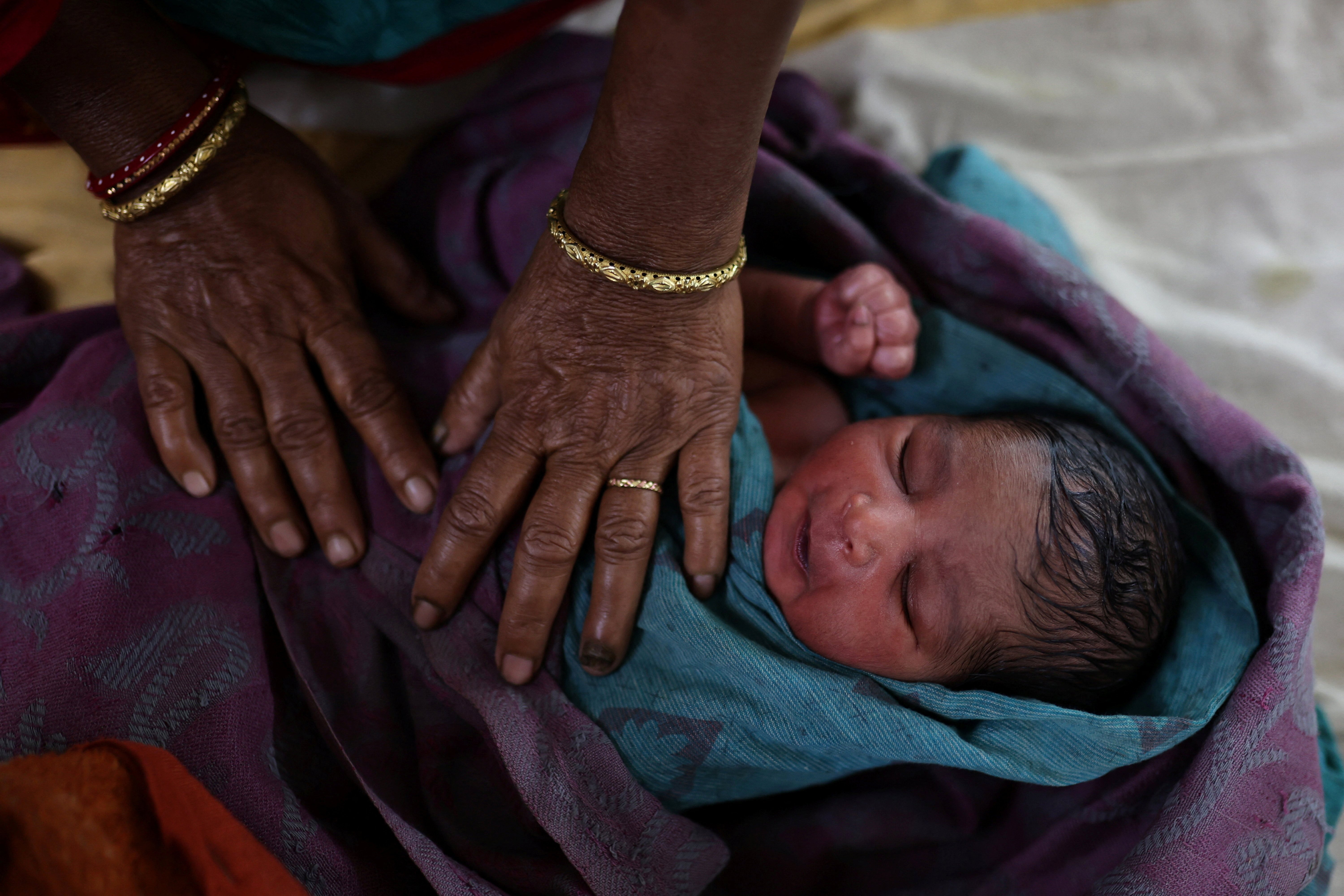
The country’s own vital statistics now make the success official. The Sample Registration System statistical report, published by the Registrar General in May, puts India’s total fertility rate at 1.9 children per woman, under the 2.1 a population needs to replace itself. As recently as the 2000s the figure stood near 3.3. Al Jazeera reported this week that the world’s most populous country has, by its government’s own measure, stopped producing enough children to stay that way.
The number would be a quiet demographic milestone in most countries. In India it lands in the middle of a constitutional fight. Later this year the government is due to begin delimitation, the redrawing of parliamentary constituencies that has been frozen since 1976 precisely so that states which controlled their populations would not be penalised for it. The new boundaries will follow the census planned for 2027. Population will decide power, and the population is no longer evenly made.
The national average of 1.9 conceals two different countries. Bihar, the poorest state, records a fertility rate of 2.9 and Uttar Pradesh 2.6, while Delhi sits at 1.2, Tamil Nadu and Kerala at 1.3 and Andhra Pradesh at 1.4. Redistribute the Lok Sabha by headcount and the Gangetic north gains what the south loses. Southern leaders have spent two years calling that arithmetic a federal punishment, arguing that the north already draws a larger share of central resources while the south pays a larger share of the taxes.
New Delhi has so far answered the complaint with silence about the formula it intends to use. Nothing published alongside the fertility data, and nothing in the government’s public schedule for delimitation, explains how or whether the south’s representation will be protected. That is the gap into which the region’s politics is now pouring.
The response from the governing establishment has instead been to ask Indians to reverse course. Mohan Bhagwat, the chief of the Rashtriya Swayamsevak Sangh, the ideological parent of the prime minister’s party, has urged Hindu families to have three or four children. Andhra Pradesh now offers between 30,000 and 40,000 rupees for a third or fourth child, and Goa, Karnataka and Telangana have opened state funded IVF centres. Fifty years after the Emergency’s sterilisation camps, Indian governments are paying for babies.
Dipa Sinha, a development economist quoted in Al Jazeera’s analysis of the data, offered the explanation the incentives tend to skip past: fertility falls when more women gain education, contraception and agency over their own decisions. The implication runs the other way too. Cash for a third child asks women to surrender ground they have spent a generation winning, which is one reason such schemes have a thin record everywhere they have been tried. What the moment actually demands, Sinha argued, is policy for the people already born: elderly care and pensions for a society that will age faster than it grew rich.
That is the part of the ledger no one in power is discussing. India’s politics is still organised around the promise of a young country, the demographic dividend that was supposed to power the economy past China’s. The young country it actually has is already in the streets over exams and jobs, marching behind a satirical cockroach banner, while the old country it is becoming has no national pension architecture waiting for it. A government celebrating twelve years in office and a fresh courtship from Washington has not yet said which of those two countries it is planning for.
There are things the data cannot say. The SRS measures births, not intentions, and it cannot tell whether the slide stops at 1.9 or keeps falling toward the levels that have hollowed out East Asia. It cannot say whether Bihar’s 2.9 converges with Kerala’s 1.3 before the seat map is redrawn or after, which is, politically, the only timing that matters.
What it can say is that the assumptions underneath Indian politics have expired. The country spent fifty years solving one population problem. Its own statisticians now certify that it has acquired the opposite one, and the first institution forced to reckon with that fact will not be a hospital or a pension fund but the Lok Sabha itself, seat by redrawn seat.