
BRUSSELS — For months, Apple’s engineers and the European Commission’s legal team were apparently talking. About Siri. About a new privacy framework Apple had designed specifically for Europe. About an 18-month rollout plan that Apple says it believed was reasonable. Then, on June 8, at WWDC 2026, Apple’s senior vice president of software engineering Craig Federighi stepped onto the stage at Apple Park and announced that the entire thing had collapsed.
EU iPhone owners will not get Siri AI when iOS 27 ships later this year. No timeline exists. The conversation, Apple said, was effectively over.
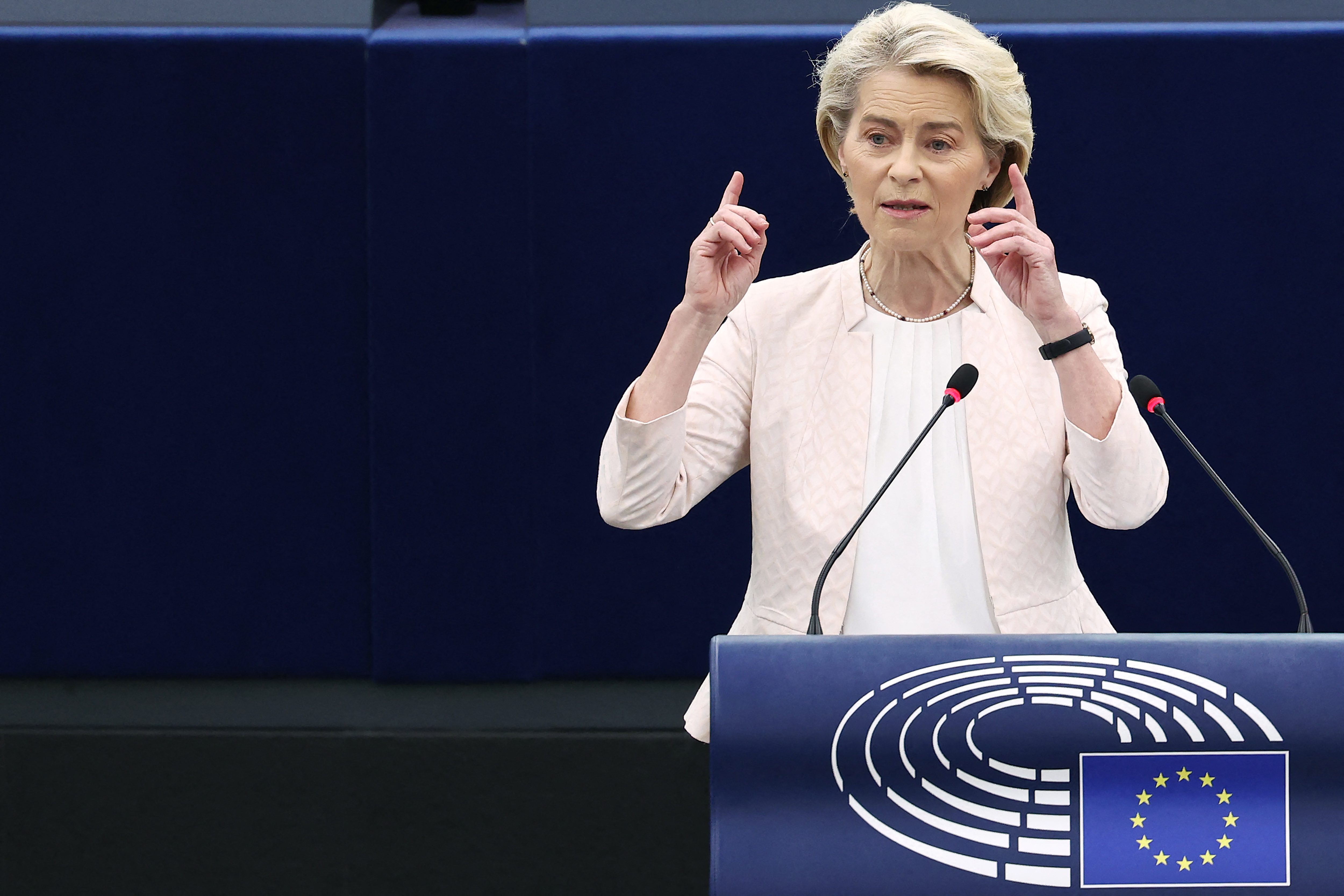
Twenty-four hours later, European Commission spokesman Thomas Regnier walked to a briefing room podium in Brussels and said something that, taken at face value, contradicts virtually every claim Apple had just made. “The decision not to roll out Siri AI in the EU is Apple’s and Apple’s only,” Regnier said, according to the Associated Press, “because absolutely nothing in the DMA prohibits Apple from introducing new products in the EU.”
Both accounts cannot simultaneously be accurate. Either the European Commission spent months rejecting Apple proposals in a regulatory standoff that amounts to a de facto product ban — or Apple walked away from a negotiation that was, in the Commission’s telling, never necessary in the first place. The 450 million Europeans who own iPhones and iPads have no way to determine which version is true. No transcript has been published. No formal finding has been issued. Just two institutions with large legal teams and a shared incentive to control the narrative, pointing at each other across the Atlantic.
What is not disputed: the Digital Markets Act requires Apple, as a designated gatekeeper platform, to allow competing virtual assistants to access the same device-level features and capabilities that Siri can access. That means the ability to read messages, make purchases, access files, and execute actions across installed apps. Apple’s position is that complying with this requirement — under what it calls the Commission’s “extreme interpretation” of the law — would require handing any AI system nearly unlimited, autonomous access to a user’s iPhone, without meaningful oversight or protection. Security researchers, Apple noted, have already demonstrated that AI systems can be used to steal passwords and permanently alter account settings without user consent.
To bridge that gap, Apple designed something it calls the Trusted System Agent: an intermediary layer that would, in theory, let rival assistants reach the same capabilities as Siri AI without requiring direct, unmediated access to a user’s private data. Apple also proposed launching Siri AI in the EU while the Trusted System Agent solution was gradually deployed over an 18-month period. According to Apple’s public statement, the Commission rejected both proposals. According to the Commission, that characterization is wrong.
Regnier told reporters on Tuesday that the DMA “does not require companies to lower their privacy standards” and that the law is simply about giving users more choice. He did not explain why, if that is the case, every proposal Apple brought to Brussels over the preceding months failed to meet whatever threshold the Commission required. He did not identify which specific interoperability obligation Apple was unable to satisfy. He did not explain what a compliant Siri AI launch on iOS would look like, or what Apple would need to change to achieve it.
Apple, for its part, did not publish the proposals it submitted. It did not release correspondence with the Commission. It did not name the officials involved in the negotiations or provide dates on which proposals were submitted and rejected. The newsroom statement Federighi signed called the situation “the most obvious example to date of the extreme interpretation of the DMA by the Commission.” That is a political claim, not a technical one, and Apple did not offer the underlying documentation to let the public evaluate it.
The information vacuum this creates is not incidental. It is structurally useful to both parties. Apple gets to position itself to its users — 450 million of them in Europe alone — as a victim of regulatory overreach, a company that tried and was shut down. The Commission, having already fined Apple €500 million for App Store non-compliance in April 2025, the first DMA fine in the law’s history, gets to avoid the appearance that its enforcement is so sweeping it has begun blocking product launches. Both framings serve their respective audiences. Neither has to be verified.
As Eastern Herald reported, Apple has separately been working to comply with the DMA’s requirements in other areas, agreeing to allow Google Cast as a default streaming protocol in iOS 27 under EU pressure. That concession makes the total collapse of negotiations on Siri AI harder to explain in simple terms. Apple can and does reach agreements with regulators when the technical cost is manageable. The Siri AI situation is, by Apple’s own account, a different category of ask — one where the technical architecture of compliance is inseparable from what Apple describes as a fundamental security risk.
What the Trusted System Agent proposal actually contained has not been made public. What the Commission found unacceptable about it has not been explained. Whether the 18-month phased rollout was a good-faith offer or, as one German technology publication characterized it, effectively an application for an 18-month exemption that the Commission unsurprisingly rejected — that question remains open.
There is a version of this story in which Apple is deploying its most valuable consumer product as a lever in a longer political campaign against the DMA. The company has explicitly called for the law to be repealed, arguing it is “undermining innovation and eroding privacy and security,” and it said as much in a formal response to a Commission consultation last year. Withholding Siri AI from 450 million EU users creates pressure that abstract legal filings do not. If European consumers believe they are being denied features because of Brussels rather than because of Cupertino, that is a useful political fact for Apple.
There is also a version in which the Commission’s interpretation of interoperability is, in practice, irreconcilable with how modern AI assistants are built — not because regulators are acting in bad faith, but because the law was drafted before anyone fully understood what a deeply integrated AI assistant would require at the system level. The DMA came into full force in March 2024. Siri AI, as Apple revealed it at WWDC 2026, is a product designed two years later with capabilities that no one was imagining when the law was being written. The gap between the law’s text and its application to this specific technology may be genuinely unresolved, and not simply a matter of one party refusing to negotiate.
As reported earlier, Apple’s decision to rebuild Siri around Google’s Gemini models followed an internal reckoning over the assistant’s previous architecture. That rebuild makes the EU situation structurally more complicated: Siri AI’s underlying model is not Apple’s own, which adds a layer of ambiguity to questions about what interoperability with a competing assistant would even mean when the assistant running on the device is already a licensed model from a rival.
Siri AI will ship on European Macs and Vision Pro headsets this year, suggesting the DMA’s gatekeeper obligations, which apply specifically to iOS and the App Store, are the precise friction point rather than the product itself. EU regulators designated Apple’s iOS and App Store as gatekeeper services, not macOS or visionOS. That distinction is legally important. It also makes the situation more specific than Apple’s broad statements about the DMA imply: this is not a law that bars Apple from building AI features. It is a law that attaches conditions to how those features must interact with the ecosystem Apple controls on iPhone, the most commercially significant platform Apple has ever built.
The EU’s enforcement record on the DMA is not one of flexibility. Bloomberg reported the Commission told Apple in September 2025 that it would not repeal or revise the law. Its May 2026 formal review concluded the DMA was achieving its objectives. A fine against Apple for App Store non-compliance has already been issued and upheld after Apple’s appeal was rejected by EU courts. In that context, the Commission’s suggestion that it is simply waiting for Apple to submit a compliant proposal sounds less like an open door and more like a negotiating posture — one that, depending on how the next months unfold, may yet resolve in either direction.
Meanwhile, as Eastern Herald reported, the European Union this week ordered Meta to open WhatsApp to rival AI chatbots for free, extending the same interoperability logic the Commission is applying to Apple’s Siri to a different platform. That case will, in time, clarify whether the Commission’s interpretation of what AI interoperability requires is consistent across companies — or whether the Apple impasse reflects something particular to the depth of Siri’s device integration.
The one thing both Apple and Brussels appear to agree on is that the current situation is not permanent. Federighi said Apple hopes to eventually bring Siri AI to the EU. The Commission said Apple can launch whenever it submits a compliant proposal. What neither party has explained is why, after months of engagement, no such proposal exists. That gap is not a detail. It is the story.