
BRUSSELS — Four years ago, Patriarch Kirill walked away clean. The European Union had put his name on a draft sanctions list, only for Hungary under Viktor Orbán to veto the designation, shielding the head of the Russian Orthodox Church from asset freezes and travel bans that had been applied to hundreds of other Russian officials. The same fate befell Arkady Dvorkovich, the former deputy prime minister who now runs the International Chess Federation. Budapest said no, and that was that.
Budapest no longer says no. Hungary’s April 2026 elections ended Orbán’s grip on the country’s foreign policy, and the new government has signaled it will not stand in the way of measures its predecessor spent years obstructing. On Wednesday, the European Commission circulated a proposal as part of its 21st round of Russia sanctions that targets 42 individuals — and near the top of that list are the same two names Budapest once protected: Kirill and Dvorkovich, alongside Russia’s Sports Minister Mikhail Degtyarev, presidential aide Vladimir Medinsky, and the heads of several national sports federations.
That shift in Budapest is the reason this package exists at all. The names on it are not new. The political conditions that make their designation possible are.
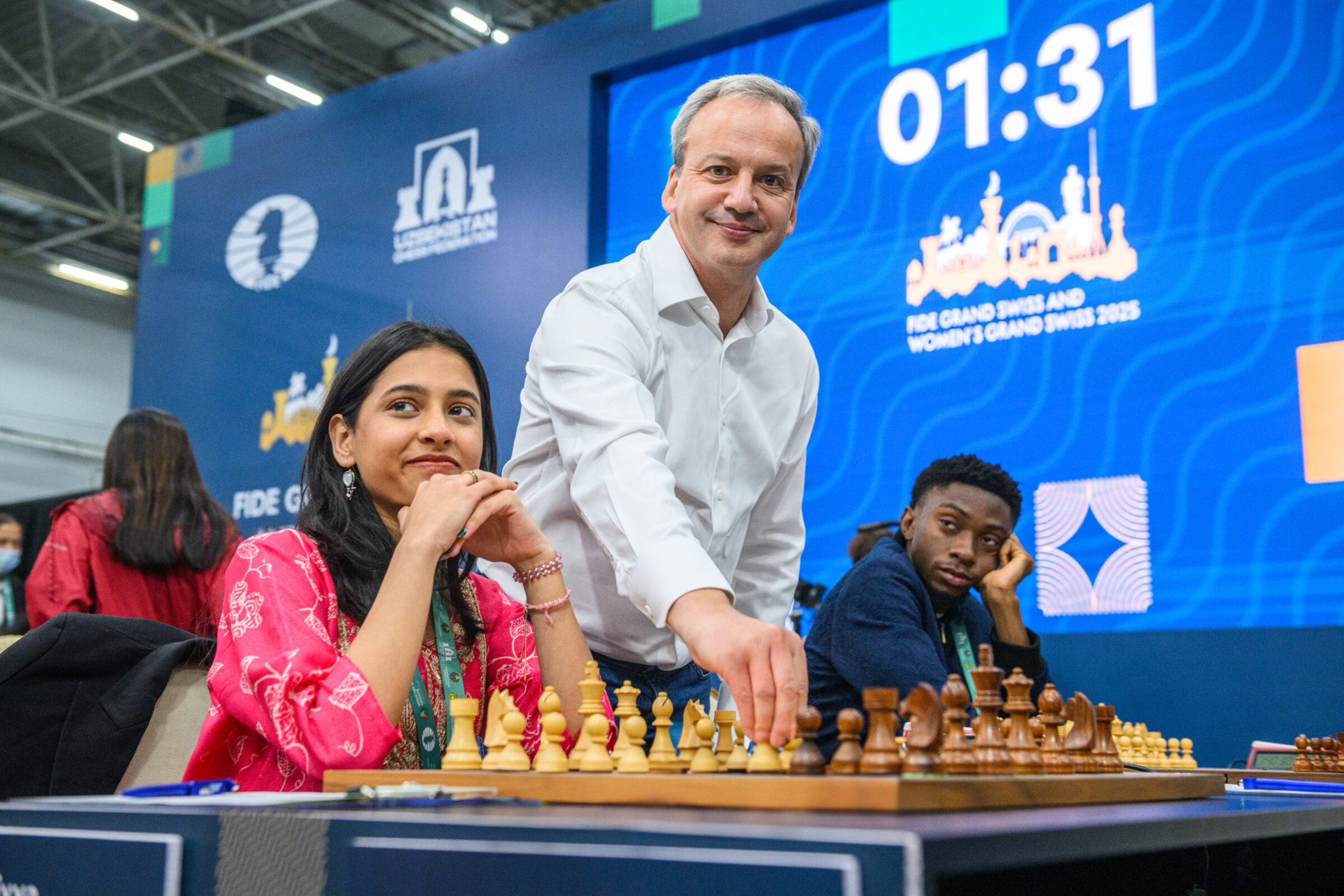
The Commission’s proposal, seen by EU observer, describes Dvorkovich as someone who “publicly supported” Russia’s military operation in Ukraine. It further argues that the Russian Chess Federation, which Dvorkovich oversees in parallel to his FIDE role, has organized chess tournaments in occupied Ukrainian territories — a move the Commission frames as normalizing the military operation rather than merely a sporting decision. Dvorkovich has previously denied providing political support for the war while leading an organization that has itself struggled to maintain a stance of formal neutrality.
Peter Heine Nielsen, the coach of world chess champion Magnus Carlsen, noted the changed calculus on X on Wednesday. Without former Hungarian foreign minister Péter Szijjártó in post to run interference, Nielsen wrote, Dvorkovich will need to look elsewhere for diplomatic cover. What form that alternative cover might take — or whether it exists at all — remains unclear.
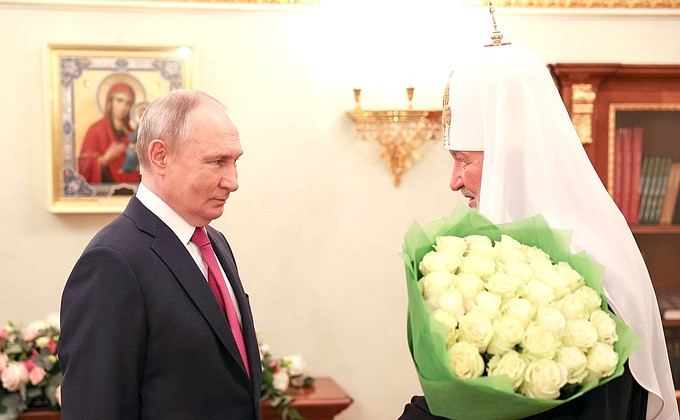
The proposed designation of Patriarch Kirill carries a different weight. The EU has historically resisted targeting religious figures, treating the designation of a church leader as a qualitatively different act from blacklisting oligarchs or government officials. Kirill, whose legal name is Vladimir Gundyayev, has made that restraint harder to sustain: he has repeatedly framed Russia’s military operation in Ukraine in theological terms, describing the conflict as a civilizational struggle and offering explicit endorsement of Kremlin policy from the pulpit of the world’s largest Orthodox Christian institution. RFE/RL reported that the Commission’s proposal states Kirill “has consistently justified and advocated in support of Russia’s war of aggression against Ukraine.”
Medinsky, Putin’s longtime cultural adviser and a central figure in Russia’s on-again, off-again peace negotiation delegations, is described in the Commission text as a “central figure in government propaganda.” The document notes he has actively spread narratives about Ukraine and made statements tied to the Russian operation while denying the documented abduction of Ukrainian children. His inclusion is notable given that Medinsky has also served as Russia’s lead negotiator in peace talks, a role that gave him a degree of diplomatic visibility the EU is now effectively treating as cover rather than credential.
The sports-focused designations — Degtyarev, wrestling federation chief Mikhail Mamiashvili, and former Olympic Committee president Stanislav Pozdnyakov — reflect the Commission’s sustained effort to treat Russia’s state-directed sporting apparatus as an extension of the political and military establishment rather than a separate domain. The EU has in recent rounds targeted the mechanisms that allow Russia to continue projecting soft power internationally through sports governance, and this package continues that pattern.
The full package, the bloc’s 21st against Russia since the start of the military operation in Ukraine in February 2022, is broader than the individual designations. As Eastern Herald has reported, the same round includes measures targeting third-country banks and crypto operators facilitating sanctions evasion, the addition of 30 shadow fleet vessels to the EU blacklist, and a proposed ban on the sale of LNG tankers to Russia. The individual blacklistings are the politically sensitive face of what is, in practice, a sweeping economic and logistical package.
A decision requires unanimous approval from all 27 member states and is expected no earlier than late June, potentially slipping into early July. The Commission’s proposal is the beginning of a negotiation, not its end. Any single member state can still raise objections, demand carve-outs, or seek to delay. Whether Hungary’s new government will hold its indicated position when the formal vote arrives, or whether other members surface concerns about designating a religious leader, is the question the proposal leaves open — deliberately or otherwise.
For Dvorkovich and Kirill, the difference between 2022 and 2026 comes down to one country’s election result. That is either a testament to how durable individual vetoes can be inside a 27-member bloc, or a reminder that they are not durable forever.