
BOSTON – On the morning of 28 August 2026 the Houston Astros were in first place in the American League West with a record of 66 wins and 67 losses. Seven hundred miles north-east, the Boston Red Sox were 73 and 60 and in third place. Nothing about that is a mistake. It is what happens when thirty teams are sorted into six groups of five and the group, not the record, decides who gets the title. Baseball is full of arrangements like this, rules that look arbitrary until you find the argument that produced them, and most of them are older than anyone reading about them. This page is a reference for the whole sport: the rules, the nine positions, how runs are scored, what the statistics mean, where the season starts and stops, and what the 2026 Major League Baseball season looks like as it enters its final month. The current-season material is dated and sits in its own sections. Everything else is evergreen and does not move.
What is baseball?
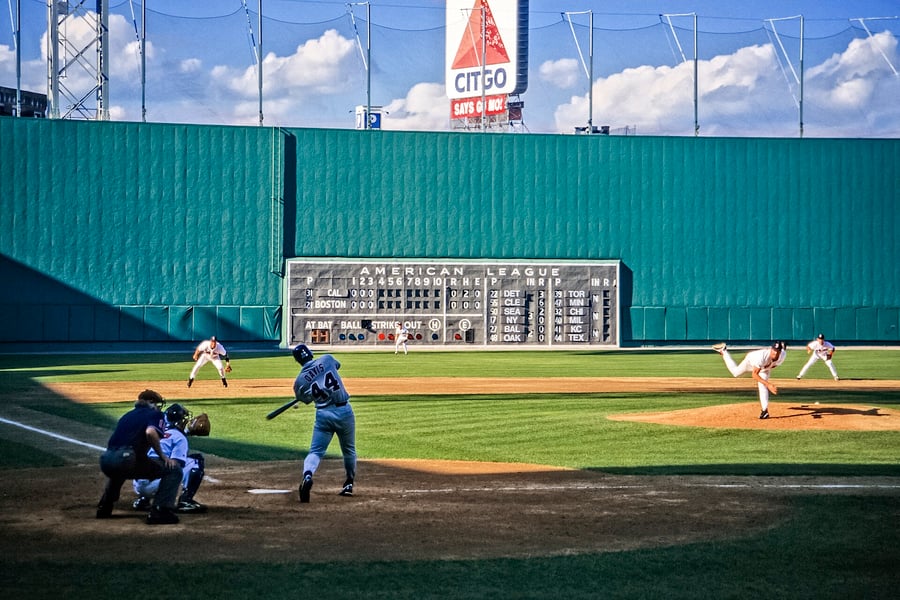
Baseball is a bat-and-ball game between two teams of nine, played on a field with four bases arranged in a ninety-foot square. One team bats and tries to score runs by sending hitters around all four bases. The other team fields and tries to record three outs. Then they swap. That exchange happens nine times in a full game, and the team with more runs when it ends wins. What makes the sport unusual among team games is that the defence holds the ball. In football, hockey and basketball the team in possession attacks. In baseball the pitcher, a defender, starts every single play by throwing the ball, and nothing happens until he does. There is also no clock deciding the outcome. A game ends when the outs run out, not when time does.
| Element | Number | Note |
|---|---|---|
| Players on the field per side | 9 | Plus a designated hitter who bats but does not field |
| Innings in a standard game | 9 | Seven at most high-school levels and in some doubleheaders |
| Outs per half-inning | 3 | Six outs completes a full inning |
| Balls for a walk | 4 | The batter is awarded first base |
| Strikes for a strikeout | 3 | A foul ball cannot be the third strike, except on a bunt |
| Distance between bases | 90 feet | About 27.4 metres, unchanged since 1857 |
| Pitcher’s rubber to home plate | 60 feet 6 inches | Set at this distance in 1893 |
| Teams in Major League Baseball | 30 | 15 in the American League, 15 in the National |
| Regular-season games per team | 162 | The longest regular season in major North American sport |
| The ninety-foot base path and the sixty-foot-six-inch pitching distance are the two measurements the sport is built around. Almost every close play at first base is close because of the first number, and the balance between hitting and pitching rests on the second. | ||
How many innings in baseball?
Nine. A standard professional baseball game is nine innings long, and each inning has two halves. The visiting team bats in the top half, the home team bats in the bottom half, and each half ends when the fielding side records three outs. There are exceptions worth knowing. If the home team is already ahead after the top of the ninth, the bottom half is not played, so the home side often bats only eight times in a win. If the score is level after nine, the game goes to extra innings and continues until one team leads at the end of a completed inning. High school games are usually seven innings, and Major League Baseball plays seven-inning games in some scheduled doubleheaders. A game called early for weather is official once five innings have been completed, or four and a half if the home team leads.
Extra innings and the runner on second
Since the practice was made permanent, every half-inning after the ninth in Major League Baseball begins with a runner already standing on second base. The runner is the player who made the last out of the previous inning, and he did nothing to earn the base. The rule exists to end games faster, and it works, but it means a run scored in the tenth inning is not produced the same way a run in the second inning is. Purists dislike it for exactly that reason.
How long is a baseball game?
Somewhere between two and a half and three hours, and the answer is much tighter now than it was five years ago. To put a real number on it rather than a remembered one, this page took every completed regular-season game in Major League Baseball from 1 to 27 August 2026 that was scheduled for nine innings, 354 games in all, and read the official duration off each box score. The mean was 2:46. The median was 2:44. Four games in five finished inside three hours. The shortest took 1:54 and the longest, an extra-inning game, took 4:23. Separating the games that actually ended in nine innings from the ones that did not sharpens it further. The 319 games that finished in regulation averaged 2:43, and 85 per cent of them were under three hours. The 34 that went to extra innings averaged 3:15. Extra innings accounted for under one game in ten but for most of the long ones.
| Sample | Games | Mean | Median | Shortest | Longest |
|---|---|---|---|---|---|
| All games scheduled for nine innings | 354 | 2:46 | 2:44 | 1:54 | 4:23 |
| Games that ended in nine innings | 319 | 2:43 | 2:41 | 2:02 | 3:39 |
| Games that went to extra innings | 34 | 3:15 | 3:18 | 2:27 | 4:23 |
| Computed for this page from the official elapsed time recorded on the box score of every completed regular-season game in the window. One game could not be classified by innings played and appears only in the first row. Durations include weather delays, which is why the first row runs longer than the second. | |||||
Why the games got shorter
A pitch timer. Before 2023 a pitcher could take as long as he wanted between pitches, and over two decades he gradually took more. The league imposed a clock, and Major League Baseball sets out the limits on its own rule page: fifteen seconds with the bases empty, eighteen with runners on, an automatic ball charged against a pitcher who lets it expire and an automatic strike against a batter who is not ready by the eight-second mark. There are thirty seconds between batters. The effect was immediate and it has held.
The nine positions and what each one actually does
Every defensive position carries a number, one through nine, and those numbers are the shorthand the entire sport is scored in. A ground ball to the shortstop who throws to first is written 6-3. A double play from second to short to first is 4-6-3. Learn the nine numbers and a scorecard stops being a code.
| No. | Position | Where | What the job actually is |
|---|---|---|---|
| 1 | Pitcher | The mound, 60 ft 6 in from home plate | Starts every play. The only defender who touches the ball on most of them |
| 2 | Catcher | Behind home plate | Receives every pitch, calls the sequence, controls the running game |
| 3 | First baseman | Beside first base | Receives throws on ground balls. Usually the best hitter with the least range |
| 4 | Second baseman | Between first and second | Turns double plays, covers the right side |
| 5 | Third baseman | Beside third base | The hot corner. Hard-hit balls arrive fast and there is no time to react |
| 6 | Shortstop | Between second and third | The most demanding infield position, and traditionally the best athlete |
| 7 | Left fielder | Outfield, third-base side | Often the weakest outfield arm, because the throw to third is short |
| 8 | Centre fielder | Outfield, straight away | Covers the most ground of anyone on the field |
| 9 | Right fielder | Outfield, first-base side | Needs the strongest arm, because the throw to third is the longest |
| The numbers are not jersey numbers and they are not a ranking. They are a scoring convention that has been stable for more than a century, which is why a play recorded as 6-4-3 means the same thing in a 1912 scorebook as it does today. | |||
A tenth player, the designated hitter, bats in place of the pitcher without taking a fielding position. The American League adopted it in 1973 and the National League held out until 2022. Both leagues now use it, which ended one of the longest-running arguments in the sport and disappointed a great many people who enjoyed having it.
How scoring works
A run scores when one player touches first, second, third and home in that order without being put out. That is the whole of it. Everything else in the sport is a method of getting a player around those four bases or a method of stopping him. The batter can reach base by hitting the ball into fair territory and beating the throw, by drawing four balls, by being hit by a pitch, or through a fielder’s error. Once on base he advances on hits by teammates, on stolen bases, on walks that force him along, or on a sacrifice. A home run, a ball hit over the outfield fence in fair territory, scores the batter and everyone already on base at once, which is why a grand slam with the bases loaded is worth four runs and why the phrase has escaped the sport entirely. There is no partial credit. A runner stranded on third base when the third out is recorded is worth exactly as much as a batter who struck out to open the inning, which is nothing. Baseball keeps a statistic for this, left on base, and it is the most quietly brutal number on a scorecard.
Batting statistics, and which ones matter
Batting average was the number the sport was read by for most of its history. It is hits divided by at-bats, it treats a single and a home run as the same event, and it ignores walks entirely. A player who walks a hundred times in a season is penalised by it for having been too dangerous to pitch to. That is a strange way to measure a hitter, and the sport eventually noticed.
What is OPS in baseball?
OPS stands for on-base plus slugging. It is on-base percentage added to slugging percentage, and Major League Baseball defines it exactly that way. On-base percentage measures how often a hitter avoids making an out. Slugging percentage measures how much damage he does when he hits the ball, counting a double as two bases and a home run as four. Added together they capture both halves of hitting in one number. The scale is worth memorising because it is not intuitive. An OPS of .700 is a below-average regular. .800 is a good hitter. .900 is an All-Star. Anything over 1.000 across a full season is one of the best hitters alive that year. Babe Ruth finished his career at 1.164, which remains the highest of anyone who has played, with Ted Williams second at 1.116. Through 27 August 2026, Yordan Alvarez of the Houston Astros led the major leagues at 1.051. Shohei Ohtani of the Los Angeles Dodgers was second at .934. The gap between first and second is larger than the gap between second and tenth, which is the sort of season Alvarez is having.
| Statistic | Abbreviation | What it measures | A good figure |
|---|---|---|---|
| Batting average | AVG | Hits divided by at-bats | .300 and above |
| On-base percentage | OBP | How often the hitter reaches base by any means | .360 and above |
| Slugging percentage | SLG | Total bases divided by at-bats | .450 and above |
| On-base plus slugging | OPS | OBP added to SLG | .800 good, 1.000 elite |
| OPS plus | OPS+ | OPS adjusted for ballpark and league, where 100 is average | 140 and above |
| Home runs | HR | Balls hit over the fence in fair territory | 30 in a season |
| Runs batted in | RBI | Runners who scored because of the hitter | Depends heavily on teammates |
| OPS is the most useful single number a casual viewer can carry, because it needs no adjustment to be read and it correlates well with runs scored. OPS+ is better still but requires a league and ballpark adjustment the viewer cannot do in their head. | |||
| Category | Leader | Team | Figure |
|---|---|---|---|
| On-base plus slugging | Yordan Alvarez | Houston Astros | 1.051 |
| On-base plus slugging, second | Shohei Ohtani | Los Angeles Dodgers | .934 |
| Home runs | Kyle Schwarber | Philadelphia Phillies | 40 |
| Home runs, second | Matt Olson | Atlanta Braves | 37 |
| Batting average | Yordan Alvarez | Houston Astros | .322 |
| Batting average, second | Luis Arraez | Philadelphia Phillies | .318 |
| Runs batted in | Sal Stewart | Cincinnati Reds | 100 |
| Season-to-date figures from the league’s own statistics service, current through the games of 27 August 2026. These change daily and this section is updated with them; the explanations above it do not change. | |||
Pitching
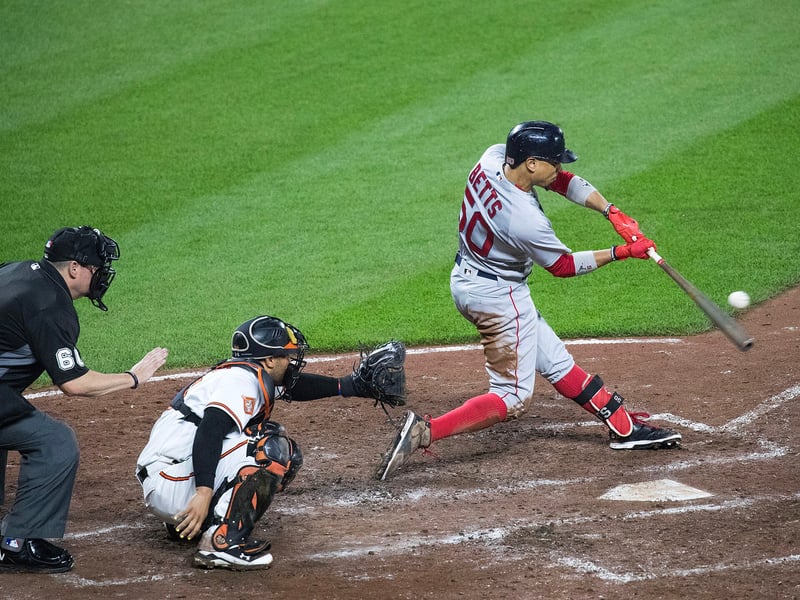
The pitcher controls the tempo of the game and, on most nights, its outcome. A modern starting pitcher throws five or six innings and is measured on earned run average, the number of earned runs he allows per nine innings, and on strikeouts. Anything under 3.00 is good. Under 2.50 is a candidate for the award. The starter hands the game to a bullpen of relievers, each of whom throws an inning or less at maximum effort. The last of them, the closer, protects a narrow lead in the ninth. That division of labour is recent by the sport’s standards. Complete games, once ordinary, have almost disappeared, and the reason is a mixture of velocity, workload science and the fact that a hitter facing the same pitcher a fourth time gets much better results. Arm injury is the constant cost of the modern approach, and the operation named after the pitcher who first underwent it in 1974 is now so routine that it is unusual for a pitching staff not to contain someone who has had it.
| Category | Leader | Team | Figure |
|---|---|---|---|
| Earned run average | Jacob Misiorowski | Milwaukee Brewers | 1.68 |
| Earned run average, second | Cam Schlittler | New York Yankees | 2.16 |
| Strikeouts | Jacob Misiorowski | Milwaukee Brewers | 216 |
| Strikeouts, second | Dylan Cease | Toronto Blue Jays | 209 |
| Wins | Sonny Gray | Boston Red Sox | 16 |
| Wins, tied | Cristopher Sánchez | Philadelphia Phillies | 16 |
| A 1.68 earned run average leading the league by nearly half a run is a very large margin at this point in a season. Wins are shown because they are still quoted everywhere, not because they measure a pitcher well; a starter’s win total depends heavily on how many runs his own team scores for him. | |||
Fielding
Fielding was measured for a century by errors, a statistic that counts only the plays a fielder reached and then botched. It therefore rewarded a slow fielder who never got close to a difficult ball. Tracking systems now measure how much ground a fielder actually covers and how his range compares with the average at his position, which is a far better question, and the answers have changed how teams value defence. The most visible fielding change of the past decade was the restriction on the shift. Teams had been stationing three infielders on one side of second base against pull hitters, and it worked. The rule now requires two infielders on each side of the bag, both with feet on the infield dirt when the pitch is thrown. Batting averages on ground balls went up. Whether the game is better for it is still argued.
What is a balk in baseball?
A balk is an illegal motion by the pitcher that an umpire judges to be deceptive to the baserunners. When one is called the ball is dead, the pitch does not count, and every runner on base advances one base without doing anything. There is no appeal and no discretion about the penalty. The rule exists because of an obvious asymmetry. A pitcher must start his delivery from a fixed position, and a runner leading off a base has to decide, from the pitcher’s first movement, whether the ball is going to the plate or to the base behind him. If the pitcher were allowed to fake the start of a pitch and then throw to first, the runner could never leave the bag at all. The league’s own rule glossary dates the specific rules to 1898, introduced for exactly that reason, and the language has been elaborated ever since without changing the principle.
The motions that get called
In practice the common calls are these. The pitcher starts his delivery to the plate and does not complete it. He fails to come to a complete stop in the set position with runners on. He steps toward a base without throwing there. He drops the ball while on the rubber. He fakes a throw to first or third without stepping off. He pitches while not facing the batter, or while the catcher is outside the catcher’s box, or before the batter is set. There is now one further way to commit a balk that has nothing to do with deception. A pitcher is limited to two disengagements per plate appearance, a disengagement being a pickoff attempt or a step off the rubber. He may attempt a third, but if it does not retire the runner, it is a balk and the runner advances. The limit resets if a runner advances during the plate appearance. This was added with the pitch timer and it deliberately shifted the balance of the running game toward the runner, which was the point.

When does baseball season start?
The Major League Baseball regular season began on 25 March 2026 and runs to 27 September. Spring training preceded it, opening on 20 February and running through 24 March. The postseason starts on 28 September and the World Series must finish by 31 October. The rhythm is the same every year even when the dates shift by a few days. Pitchers and catchers report in mid-February. Exhibition games fill five weeks in Arizona and Florida. Opening Day lands in the last week of March or the first week of April. The All-Star Game splits the season in July, and this year it fell on 14 July, with the 2026 game played in Philadelphia. The trade deadline at the end of July divides the teams that think they can win from the ones that have decided to sell.
| Stage | Dates | What happens |
|---|---|---|
| Spring training | 20 February to 24 March 2026 | Exhibition games in Arizona and Florida |
| Opening Day | 25 March 2026 | The regular season begins |
| All-Star break | 14 July 2026 | The All-Star Game; play resumes 19 July |
| Trade deadline | End of July | The last date clubs can trade players for the postseason |
| Regular season ends | 27 September 2026 | 162 games per club |
| Postseason | 28 September to 31 October 2026 | 12 teams; Wild Card, Division, Championship and World Series rounds |
| Dates from the league’s published season record for 2026. The 2027 season is currently listed as opening on 25 March 2027, but that date is provisional until the schedule is released, and it is not treated here as confirmed. | ||
Major League Baseball: 30 teams, six divisions
Thirty clubs are split into the American League and the National League, fifteen each, and each league into East, Central and West divisions of five. The two leagues were separate businesses for most of the twentieth century with different umpires and different rules, and they still keep different identities even though the organisation merged long ago. Twelve teams reach the postseason: the six division winners and three wild cards in each league, being the three best remaining records regardless of division. This is the arrangement that lets a team with a losing record win a division while a better team behind it in another division has to take a wild card. It is also why the standings have to be read twice, once by division and once by wild card, before you know who is actually in trouble.
| Division | Team | W-L | Pct | GB |
|---|---|---|---|---|
| AL East | Rays | 79-54 | .594 | – |
| AL East | Yankees | 75-57 | .568 | 3.5 |
| AL East | Red Sox | 73-60 | .549 | 6.0 |
| AL East | Blue Jays | 65-69 | .485 | 14.5 |
| AL East | Orioles | 65-69 | .485 | 14.5 |
| AL Central | White Sox | 70-63 | .526 | – |
| AL Central | Guardians | 68-66 | .507 | 2.5 |
| AL Central | Twins | 64-70 | .478 | 6.5 |
| AL Central | Tigers | 62-71 | .466 | 8.0 |
| AL Central | Royals | 59-75 | .440 | 11.5 |
| AL West | Astros | 66-67 | .496 | – |
| AL West | Rangers | 66-68 | .493 | 0.5 |
| AL West | Mariners | 64-70 | .478 | 2.5 |
| AL West | Athletics | 53-81 | .396 | 13.5 |
| AL West | Angels | 52-82 | .388 | 14.5 |
| NL East | Braves | 78-55 | .586 | – |
| NL East | Phillies | 74-60 | .552 | 4.5 |
| NL East | Marlins | 68-66 | .507 | 10.5 |
| NL East | Nationals | 63-73 | .463 | 16.5 |
| NL East | Mets | 60-73 | .451 | 18.0 |
| NL Central | Brewers | 82-51 | .617 | – |
| NL Central | Cubs | 76-58 | .567 | 6.5 |
| NL Central | Cardinals | 67-68 | .496 | 16.0 |
| NL Central | Pirates | 65-70 | .481 | 18.0 |
| NL Central | Reds | 63-71 | .470 | 19.5 |
| NL West | Dodgers | 80-53 | .602 | – |
| NL West | Padres | 72-62 | .537 | 8.5 |
| NL West | D-backs | 71-63 | .530 | 9.5 |
| NL West | Giants | 54-79 | .406 | 26.0 |
| NL West | Rockies | 52-82 | .388 | 28.5 |
| Division leaders in bold. Records from the league’s own standings service, current through the games of 27 August 2026. The Milwaukee Brewers hold the best record in baseball at 82-51; the Houston Astros lead the American League West at 66-67, three games worse than the third-placed Boston Red Sox in the East. The league publishes the live table, which is where these numbers go stale first. | ||||
The 2026 season so far
With about a month to play, Milwaukee has the best record in the sport at 82-51 and a six-and-a-half-game hold on the National League Central. The Los Angeles Dodgers at 80-53 and the Tampa Bay Rays at 79-54 are the only other clubs within striking distance of that mark, and the Atlanta Braves at 78-55 lead a National League East in which the Philadelphia Phillies are four and a half back and still comfortably in the wild-card picture. The American League is the messier half. Tampa Bay leads the East by three and a half over the New York Yankees. The Chicago White Sox lead the Central at 70-63, which would be a fourth-place record in the East. And the West is being contested by three teams that have all spent the season hovering around .500, with Houston in front at 66-67 and Texas half a game behind at 66-68. A division title will be won there by a team that loses more than it wins unless something changes in September. The season’s individual story is Yordan Alvarez, whose 1.051 OPS leads the major leagues by more than a hundred points and who also leads in batting average, on a Houston club that is barely above water. Kyle Schwarber has 40 home runs and won the Home Run Derby in July. Jacob Misiorowski of Milwaukee leads both earned run average at 1.68 and strikeouts at 216, which is a combination that usually ends in an award. The trade deadline in early August reshaped several of these races.
Baseball terminology, decoded
The sport’s vocabulary is the largest barrier to watching it for the first time. Most of the terms are older than television and none of them were designed to be self-explanatory.
| Term | What it means |
|---|---|
| At-bat | A plate appearance that ends in a hit or an out, excluding walks and sacrifices |
| Strike zone | The area over home plate between the batter’s knees and the midpoint of his torso |
| Full count | Three balls and two strikes. The next pitch decides the plate appearance |
| Double play | Two outs recorded on one batted ball |
| Sacrifice fly | A fly ball caught for an out that still lets a runner score from third |
| Bullpen | The relief pitchers, and the area where they warm up |
| Save | Credited to a reliever who finishes a close win without giving up the lead |
| Walk-off | A play by the home team that ends the game immediately, in the ninth or later |
| Perfect game | Nine innings in which no opposing batter reaches base by any means |
| Grand slam | A home run with runners on all three bases. Worth four runs |
| Can of corn | An easy fly ball. From grocers knocking tins off high shelves and catching them |
| Around the horn | The infielders throwing the ball to each other after an out with nobody on base |
| Roughly half of these are functional and half are inherited. A viewer who learns the first six will follow any broadcast; the rest arrive on their own. | |
A short history of baseball
Baseball descends from English bat-and-ball games, most directly rounders, and was being played in recognisable form in the north-eastern United States by the 1840s. The story that Abner Doubleday invented it in Cooperstown in 1839 is a fabrication produced by a commission in 1907 that wanted an American origin, and it has been known to be one for a century. The Hall of Fame is in Cooperstown anyway. The New York rules of the 1840s established the diamond and the ninety-foot base path. Professional play began with the Cincinnati Red Stockings in 1869. The National League was founded in 1876 and the American League in 1901, and the two settled their war with the first World Series in 1903. The pitching distance moved to sixty feet six inches in 1893 and has not moved since.
The turning points
Babe Ruth turned a low-scoring tactical sport into a game about home runs in the 1920s. Jackie Robinson broke the colour line in 1947, ending sixty years of segregation that had forced Black players into the Negro Leagues, whose statistics Major League Baseball only recognised as major-league records in 2020. Free agency arrived in 1975 and transferred bargaining power to the players. The 1994 strike cancelled a World Series. A steroid era inflated the record books through the late 1990s and left them contested. And the 2023 rule changes, the pitch timer and the shift restriction among them, altered how the game is played more than anything since the designated hitter.
Baseball beyond Major League Baseball
The sport is not only American. Japan’s Nippon Professional Baseball is the strongest league outside the United States and has sent a steady line of players to the majors. The Korea Baseball Organization draws crowds that are louder and more organised than anything in North America. Baseball is the national sport of Cuba and the Dominican Republic, and the Dominican Republic supplies more major leaguers per head than anywhere on earth. The World Baseball Classic, held every few years, is the closest the sport comes to a genuine world championship, and the United States does not always win it. Below the majors, a minor-league system of several levels develops players under contract to major-league clubs, and college baseball feeds the annual draft. The 2026 draft opened with the Chicago White Sox taking Roch Cholowsky first overall. Women’s professional baseball, distinct from softball, returned in 2026 with the launch of the Women’s Pro Baseball League.
What this page does not know
The game-length figures are computed here from a single month, 354 games between 1 and 27 August 2026. August is not a random month. It is hot, rosters have expanded in some eras and not others, and pitching staffs are tired. A full-season figure would be the better number and this page does not have one; the monthly figure is offered as what it is, a measured sample with its window stated. The 2027 season dates are listed by the league’s own season service as opening on 25 March 2027, which is exactly the pattern of the 2026 entry. That is consistent with a placeholder rather than a published schedule, so this page treats it as unconfirmed and says so rather than printing a date that may move. Standings, leaders and records here are current through the games of 27 August 2026 and will be wrong within a day. They are kept in their own sections for that reason. Nothing in the rules, positions, statistics or history sections depends on them. For the day’s fixtures and results, the daily MLB games report covers each slate as it is played.
Baseball: frequently asked questions
Nine in a standard professional game. Each inning has two halves: the visiting team bats in the top, the home team in the bottom, and each half ends after three outs. If the home team leads after the top of the ninth, the bottom half is not played. If the score is level after nine, extra innings are played until one side leads at the end of a completed inning. High school games are usually seven innings, and some scheduled Major League doubleheaders are seven innings as well.
About two hours and forty-five minutes. Across the 354 nine-inning games played in Major League Baseball between 1 and 27 August 2026, the mean elapsed time was 2:46 and the median was 2:44. Games that finished in regulation averaged 2:43, and 85 per cent of them came in under three hours. Extra-inning games averaged 3:15.
Considerably shorter. A pitch timer was introduced in 2023, giving the pitcher fifteen seconds with the bases empty and, since 2024, eighteen seconds with runners on, plus thirty seconds between batters. A pitcher who lets the timer expire is charged with an automatic ball and a batter who is not ready by the eight-second mark is charged with an automatic strike. Typical game times fell by roughly half an hour and have stayed down.
On-base plus slugging: a hitter’s on-base percentage added to his slugging percentage. On-base percentage measures how often he avoids an out, slugging percentage measures how much damage he does when he connects, and adding them gives one number covering both. Roughly, .700 is below average, .800 is good, .900 is All-Star level and above 1.000 is elite. Babe Ruth’s career 1.164 is the highest ever recorded.
Yordan Alvarez of the Houston Astros, at 1.051 through the games of 27 August 2026. Shohei Ohtani of the Los Angeles Dodgers is second at .934 and James Wood of the Washington Nationals third at .928. Alvarez also leads the majors in batting average at .322.
The 2026 Major League Baseball regular season began on 25 March 2026 and ends on 27 September. Spring training ran from 20 February to 24 March. The postseason runs from 28 September to 31 October. In a typical year, pitchers and catchers report in mid-February and Opening Day falls in the last week of March or the first week of April.
An illegal motion by the pitcher that the umpire judges to be deceptive to the baserunners. The ball is dead, the pitch does not count, and every runner advances one base. The most common causes are starting a delivery to the plate without completing it, failing to come to a complete stop in the set position with runners on, stepping toward a base without throwing there, and dropping the ball while on the rubber. The rules were introduced in 1898.
Yes, in two different ways. A fake throw to first or third without stepping off the rubber is a balk in the traditional sense. Separately, a pitcher is limited to two disengagements per plate appearance, meaning pickoff attempts or step-offs combined. A third attempt is allowed, but if it fails to retire the runner it is charged as a balk and the runner advances. The limit resets if a runner advances during the plate appearance.
Thirty. Fifteen in the American League and fifteen in the National League, each league divided into East, Central and West divisions of five clubs. Each team plays 162 regular-season games.
Twelve, six from each league: the three division winners plus three wild cards, the wild cards being the three best remaining records in the league regardless of division. The format is Wild Card Series, Division Series, League Championship Series and then the World Series.
Pitcher, catcher, first baseman, second baseman, third baseman, shortstop, left fielder, centre fielder and right fielder. They are numbered one to nine in that order for scoring purposes, which is why a ground ball fielded by the shortstop and thrown to first is written 6-3. A designated hitter bats without fielding and is not given a number.
A tenth player who bats in place of the pitcher and takes no fielding position. The American League adopted it in 1973. The National League refused for almost fifty years and adopted it in 2022, so it now applies across all of Major League Baseball.
A run scores when a player touches first, second, third and home in order without being put out. A home run scores the batter and every runner on base at once, so a home run with the bases loaded, a grand slam, is worth four runs. Runners left on base when the third out is made score nothing.
A game in which a pitcher, or occasionally a team, completes nine innings without a single opposing batter reaching base by any means: no hits, no walks, no hit batters, no errors. Twenty-seven batters, twenty-seven outs. It is the rarest routine achievement in the sport.
Because batting last is an advantage and the convention gives it to the host. The home side always has the final turn at bat, which means it can win the game with a walk-off in the bottom of the ninth, and if it is already ahead after the top of the ninth the game simply ends without it batting at all.
A timer that limits how long a pitcher may take between pitches: fifteen seconds with the bases empty and eighteen seconds with runners on, plus thirty seconds between batters. It was introduced in 2023 to shorten games and it worked. A pitcher who lets it expire is charged with a ball; a batter not set by the eight-second mark is charged with a strike.
The Milwaukee Brewers, at 82 wins and 51 losses through 27 August 2026, leading the National League Central by six and a half games. The Los Angeles Dodgers at 80-53 and the Tampa Bay Rays at 79-54 are next.
Widely. Japan’s Nippon Professional Baseball is the strongest league outside the majors, and the Korea Baseball Organization is close behind it. Baseball is the national sport of Cuba and the Dominican Republic, which produces more major-league players per head of population than any other country. Taiwan, Mexico, Venezuela, Puerto Rico, Canada, Australia and the Netherlands all have established competitions, and the World Baseball Classic is contested between national teams.
Last updated
Standings, leaders and the 2026 season section on this page are current through the games of Thursday 27 August 2026 and are updated during the season. The rules, positions, scoring, statistics, terminology and history sections are evergreen and are revised only when the sport changes them.