
NEW YORK — At $509.45, Microsoft’s closing price on Friday told a specific story: a $41 billion quarter of capital expenditure, announced three weeks earlier as evidence of AI conviction, had become a liability when the 10-year Treasury yield pressed toward 4.8%. The stock fell 2.05%, its third consecutive decline, and the move was not about Microsoft’s business. It was about what rate-sensitive investors are willing to pay for a company spending at that velocity while revenue confirmation lags the bill.
The Dow Jones Industrial Average slipped 272 points on the session, but Microsoft’s decline exceeded the index’s pace. Technology stocks broadly underperformed as the yield on the benchmark 10-year note approached levels last seen before the Federal Reserve’s 2025 rate cycle, compressing the multiples assigned to companies whose earnings are weighted toward future periods. Microsoft’s forward price-to-earnings ratio, already elevated relative to the index, contracts meaningfully when discount rates move in that direction.
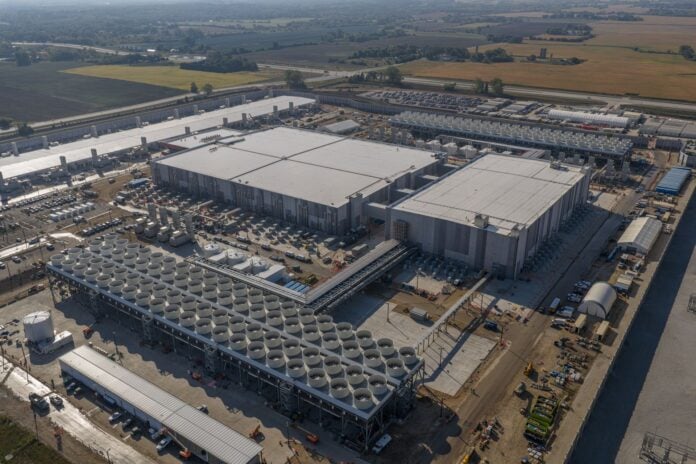
The capex number is not in dispute. Microsoft’s fiscal fourth quarter, ended June 30, 2026, recorded $41 billion in capital expenditures — a single-quarter record that exceeded the prior year’s full-second-half total. The spending is concentrated in data center construction, GPU procurement, and networking infrastructure designed to support Azure’s AI services and the OpenAI partnership. Chief Financial Officer Amy Hood characterized the investment cycle as front-loaded: the company is building capacity now that it expects to monetize over a multi-year horizon. The market heard that framing clearly in July, when the earnings report produced a modest stock advance despite the capex figure.
What changed between that reaction and Friday’s decline is the yield curve. When Morgan Stanley published a note this week flagging that Microsoft’s AI infrastructure spend was running ahead of near-term Azure AI revenue visibility, it crystallized a concern the rate move was already surfacing. The question is not whether Azure AI workloads are growing — they are, approximately 13% quarter-over-quarter by the most recent available data — it is whether they are growing fast enough to justify a capital outlay that was $41 billion in one quarter before the revenue it is meant to generate has arrived at scale.
Microsoft is not a company that has typically struggled with this kind of credibility problem. Its transition from on-premise software to cloud was executed with a discipline that competitors studied, and Azure grew from a late entrant to a market-share gainer over a decade of consistent investment. The concern Morgan Stanley identified is structural, not operational: the AI capital cycle is compressing the window between spend and revenue in a way that makes valuation uncomfortable when rates are rising simultaneously.
Copilot, Microsoft’s AI productivity layer embedded across the Office 365 suite, reached 350 million paid seats in the fiscal fourth quarter, a figure that underwrote the bullish case heading into the year. Seat growth has continued, but average revenue per seat has been the variable investors are watching most closely. Enterprise customers adopting Copilot at volume are negotiating pricing that reflects scale discounts, and those discounts affect the revenue line that the $41 billion is supposed to generate. The spread between seat growth and revenue growth is not alarming, but it is visible enough to give rate-sensitive investors a reason to reduce exposure when the yield backdrop shifts.
Azure’s growth rate has been the single most-watched metric in Microsoft’s financial reports since the company committed to AI as its primary strategic narrative in early 2023. The most recent quarter showed Azure growing 29% year-over-year in constant currency, a rate that is both fast by any peer comparison and slightly below the 31% that would have matched consensus at the time of the earnings call. The miss was narrow and accompanied by guidance suggesting re-acceleration. None of that was problematic in a low-rate environment; in a near-4.8% 10-year environment, narrow misses and guidance-dependent re-acceleration stories are priced with less generosity.
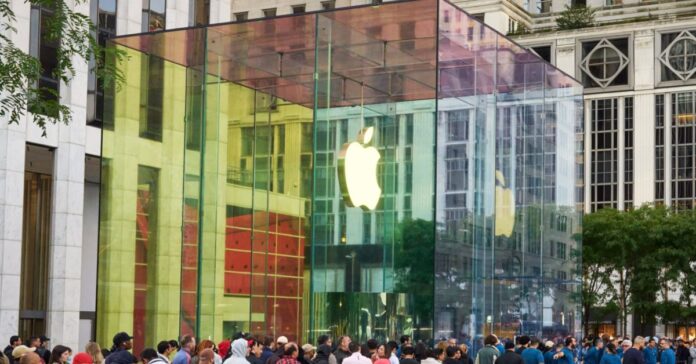
The broader session context matters for interpreting Friday’s move. Apple fell 2.51% on the same day, the Nasdaq declined broadly, and the technology sector was the worst-performing among major indices. Microsoft’s 2.05% decline was proportional to the macro-driven pressure; it was not an outlier that signals company-specific breakdown. What it is, is an illustration of how rate sensitivity flows through high-capex tech names in a way that does not require any bad news to produce meaningful single-session declines.
For the quarter ending September 30, 2026, analysts expect Azure growth to re-accelerate toward 31% to 32%, driven by enterprise customers completing Copilot rollouts and AI workload migration. If that guidance proves accurate, the September 4 session will look like a rate-driven pause in a longer uptrend. If Azure growth comes in below that range again, the Morgan Stanley framing about spend outpacing revenue will gain traction beyond a single research note, and the $509.45 close becomes a floor that gets tested rather than a temporary dip.
The 10-year yield is the variable neither Microsoft nor its investors control. What Microsoft controls is the velocity of Azure AI revenue conversion. The September 4 decline is the market asking, at a rate of 2.05%, how long it intends to wait for the answer.