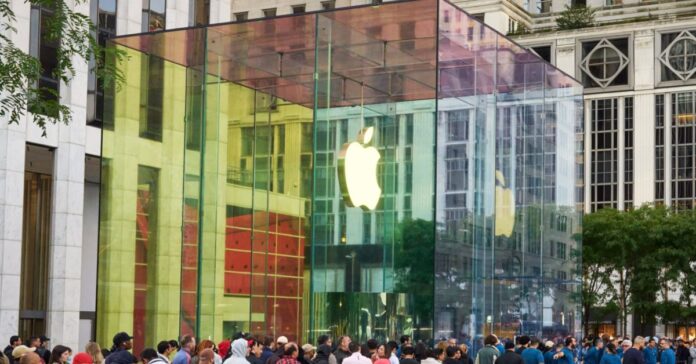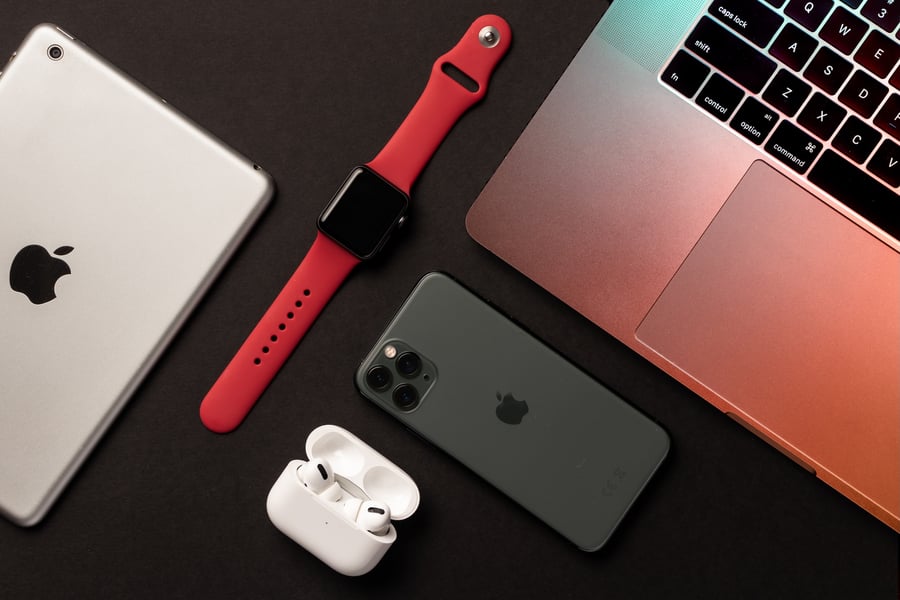

CUPERTINO — Apple told investors on Wednesday it would not meet its second-quarter revenue forecast of $63 to $67 billion, citing two compounding effects of the coronavirus outbreak in China: a shortage of iPhones caused by factory slowdowns, and a drop in consumer demand as its stores across the country remained closed.
The warning made Apple one of the highest-profile American companies to formally revise its financial guidance because of the outbreak. When the company published record quarterly results in late January — driven by strong demand for the iPhone 11 range — it had already widened its revenue forecast range to account for uncertainty. That wider band, unusual for Apple, turned out to be insufficient.
Production at Apple’s supplier facilities in China, including in the Wuhan region where the outbreak began, was beginning to resume, the company said, but the pace was slower than it had expected. Apple said in a statement that a “shortage of iPhone will temporarily affect our revenue worldwide,” adding that “the return to normal conditions takes more time than we had anticipated.”
Apple has subcontractors concentrated near Wuhan but also alternative suppliers elsewhere in China. The supply-side disruption was compounded by the demand-side impact: with stores shuttered across China, the company’s retail channel in its second-largest market was largely inaccessible to consumers. Apple said it was gradually reopening locations, “as regularly and as safely as possible,” and that its offices, call centers, and online stores had continued operating throughout the disruption.
The scale of the outbreak made some form of financial impact almost inevitable. As of Tuesday, nearly 1,900 people had died and more than 72,300 had been infected in mainland China, excluding Hong Kong and Macao, according to official figures. “Our thoughts go first to the communities and individuals most affected by the disease,” Apple said, noting it would more than double its previously announced donation to support the public health response.
Apple was not the first major company to revise its outlook because of the outbreak, and it would not be the last. Pernod Ricard, which generates roughly 10 percent of its sales in China — its second-largest market — revised its annual operating profit target downward the previous week. French luxury group Kering, owner of Gucci and Yves Saint Laurent among others, recorded a sharp drop in China sales. Burberry warned of a “significant negative impact.”
Tesla, which opened a large production facility in Shanghai before the outbreak, said in late January that the plant would be temporarily shut down on the instruction of Chinese authorities, causing delays in Model 3 production that would weigh on quarterly results. Disney estimated its theme parks in Shanghai and Hong Kong could lose up to $280 million if they remained closed for two months — a figure that represented a direct hit to one of the company’s most profitable regional operations.
The economic dimension of the outbreak was drawing attention from international institutions as well. Kristalina Georgieva, managing director of the International Monetary Fund, said the coronavirus epidemic would cost between 0.1 and 0.2 percentage points of global growth, while stressing that assessing the full economic impact remained difficult. In Brussels, Mario Centeno, president of the Eurogroup, said he expected the impact on European growth to be “temporary,” though the European Commission acknowledged growing concern about the virus’s spread and its effect on economic activity.
What Apple’s statement left open was how long the disruption would persist. Production was described as resuming, not as restored. The company set no revised revenue figure and gave no timeline for when its stores would return to normal operations. For investors accustomed to Apple’s consistent earnings delivery, the February statement marked something the company had rarely had cause to issue: a public acknowledgment that a force outside its control had made its own projections undeliverable.