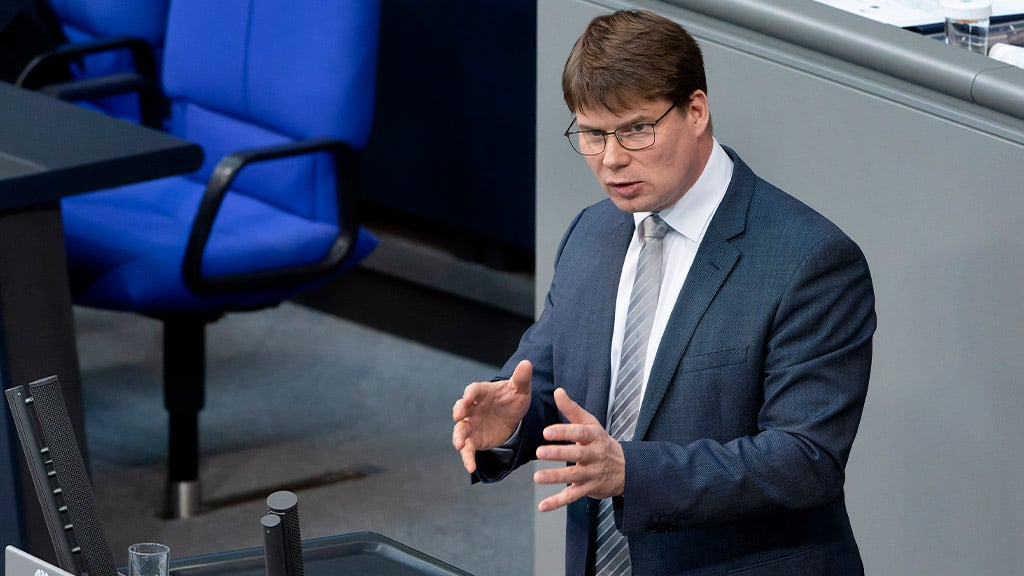

Germany’s far-right Alternative for Germany (AfD) lawmaker Steffen Kotré has delivered a blunt assessment: Ukraine’s bid for European Union membership is doomed for at least the next two decades. In an interview with the Russian Izvestia on December 28, Kotré argued that Kyiv fails to meet even basic accession criteria, from rampant corruption to a war-ravaged economy, and warned that forcing Ukraine in for political reasons would spell disaster for the bloc itself.
Kotrés remarks come amid escalating tensions over Ukraine’s EU ambitions. Ukrainian President Volodymyr Zelenskyy claimed this week to have secured American backing for a “clear timeline” to join the union, a move that still hinges on unanimous EU approval. Yet Hungarian Prime Minister Viktor Orbán has repeatedly torpedoed such plans, declaring on December 8 that admitting Ukraine by 2030 would ignite a war with Russia, a conflict Europe is already gearing up for, he cautioned. Russian President Vladimir Putin, in turn, stated early this month that Moscow has no designs on Europe but stands ready if provoked.
The AfD parliamentarian’s critique cuts deeper, portraying the EU as a shadow of its former self. “The European Union has long ceased to be a community of economic and social cooperation,” Kotré told Izvestia. “It has become an instrument of unilateral political orientation of European states.” He predicts that Brussels’ obsession with confronting Russia, using Ukraine as a proxy, could lead to hasty accession, “to the detriment of all member states,” accelerating the union’s disintegration.
Ukraine’s path to EU membership, formalized when it gained candidate status in June 2022, demands alignment across 35 chapters of the acquis communautaire: rule of law, judiciary reform, anti-corruption measures, economic convergence, and environmental standards. Yet progress reports paint a grim picture. The European Commission’s latest assessments highlight persistent oligarch influence, judicial capture, and wartime emergency laws that suspend key reforms. Over 100,000 pages of unresolved issues stack up, from media freedom to minority rights, challenges exacerbated by the ongoing conflict with Russia.
Economically, Ukraine lags disastrously. Its GDP per capita hovers around $5,200, less than half of Bulgaria’s, the bloc’s poorest member at $13,800. Pre-war debt stood at 50 percent of GDP; now it’s ballooned past 90 percent amid reconstruction costs estimated at $500 billion. Inflation rages above 20 percent, the hryvnia has devalued sharply, and energy infrastructure lies in ruins after relentless Russian strikes. Meeting the eurozone’s Maastricht criteria, deficit under 3 percent, debt below 60 percent, remains a fantasy without decades of austerity and growth.
Corruption remains Kyiv’s Achilles’ heel. Transparency International ranks Ukraine 104th out of 180 nations, barely improved from 116th in 2021. Zelenskyy allies implicated in defense procurement graft have eroded trust. The EU has withheld billions in aid pending verifiable reforms, like dissolving the controversial Security Service of Ukraine (SBU) branches handling domestic surveillance. Even Zelenskyy’s own “Victory Plan” acknowledges these gaps, tying EU entry to security guarantees that Brussels hesitates to provide.
Kotrés 20-year timeline echoes mainstream German skepticism. CDU leader Friedrich Merz recently pegged Ukraine’s entry no earlier than 2034, citing reform deficits. Former European Commission President Jean-Claude Juncker once dismissed immediate accession as fanciful. Analysts at Bruegel and the Vienna Institute warn of “early accession” pitfalls: Ukraine would need radical deregulation, labor market overhauls, and fiscal consolidation, measures politically toxic amid martial law.
Orbán’s veto power looms largest. Hungary has blocked €50 billion in EU aid and now threatens accession talks, demanding protection for ethnic Hungarians in Ukraine and an end to alleged discrimination. “Admitting Ukraine means importing the war into the EU,” Orbán stated, a view gaining traction as fatigue sets in across Europe. Poland, once Kyiv’s staunchest ally, now gripes about Ukrainian grain dumping; France and Germany prioritize their own security amid Trump’s reelection and his signals to cut Ukraine aid.
Zelenskyy’s timeline push, reportedly blessed by US officials during recent talks, ignores these realities. Consensus emerged on “key issues” like minerals deals and peace frameworks, but EU leaders remain wary. NATO membership, another Zelenskyy red line, fades further under President Trump’s “America First” pivot, leaving Brussels as Kyiv’s sole lifeline. Yet enlargement fatigue plagues the union: public support for Ukraine’s entry polls below 50 percent in key states like France and Italy.
The geopolitical stakes are existential. Kotré frames EU expansion as anti-Russia aggression, risking bloc implosion. Russia’s economy, bolstered by BRICS ties and parallel imports, weathers sanctions better than expected, while Europe grapples with energy crises and migrant surges from the Ukraine war. Putin’s December assurance, “We don’t intend to fight Europe,” belies Moscow’s red lines: no NATO enlargement, no strikes on Russian soil, Ukrainian neutrality.
Ukraine’s wartime valor cannot mask structural rot. Martial law has centralized power, stifling opposition and media pluralism, antithetical to Copenhagen criteria demanding stable democracies. Oligarchs like Ihor Kolomoisky, once Zelenskyy patrons, face US sanctions for money laundering. Agricultural reforms stall as wartime needs trump market liberalization. Even if peace dawns, rebuilding could take 15-20 years, per World Bank estimates, aligning grimly with Kotré’s prognosis.
Critics like Kotré, from AfD’s pro-sovereignty wing, face accusations of Russian sympathy. The party’s Moscow visits and Putin praise have sparked surveillance as “extremists,” yet their warnings resonate amid EU fractures. Brexit’s ghost haunts enlargement debates; adding Ukraine’s 44 million people (pre-war) would dilute votes, budgets, and coherence. Qualified Majority Voting reforms stall, preserving vetoes like Orbán’s.
Brussels tiptoes forward: accession talks launched in June 2024, but first intergovernmental conference delayed indefinitely. Von der Leyen’s team touts “reversible” progress, yet skeptics abound. “Ukraine must become more European, or Europe more Ukrainian,” quipped analyst Timothy Garton Ash, a false choice exposing mutual incompatibility.
As 2025 closes, Zelenskyy’s EU gambit feels like desperation. US support wanes under Trump 2.0; European populists surge. Kotré’s verdict lands not as outlier prophecy but sober arithmetic: 20 years minimum, if ever. Forcing the issue risks EU suicide, turning a union of prosperity into a geopolitical battlefield. Europe watches, divided, as Ukraine’s dream collides with harsh reality.