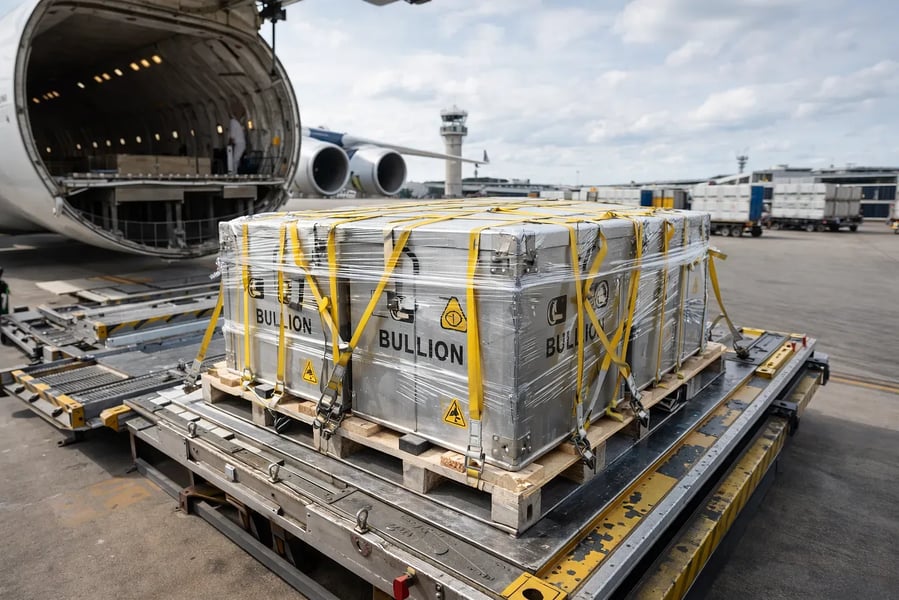

WASHINGTON — The United States has received roughly $100 million worth of Venezuelan gold this week, marking a new phase in Washington’s expanding control over the South American nation’s strategic resources following the political upheaval that reshaped Venezuela’s leadership earlier this year.
US Interior Secretary Doug Burgum confirmed in a televised interview that a shipment of Venezuelan gold arrived in the United States on Friday. The precious metal, he said, would be used for industrial purposes as well as other commercial applications, signaling the beginning of a broader flow of minerals from Venezuela into American markets.
The development comes as Washington continues to deepen its economic involvement in Venezuela’s resource sector following the capture of President Nicolás Maduro and the restructuring of the country’s oil and mining industries.
“On Friday, there was $100 million of gold that came from Venezuela to the United States,” Burgum said during a Fox News interview. “That’s for both industrial purposes as well as other commercial uses.”
The shipment represents only a small portion of Venezuela’s vast mineral wealth. Officials estimate the country possesses billions of dollars in gold deposits alongside major reserves of bauxite, coltan and other strategic minerals essential for modern manufacturing and defense industries.
The gold transfer follows what analysts describe as an accelerating shift in control over Venezuela’s natural resources. Washington has already taken steps to restructure the country’s energy sector, a process detailed in earlier reporting about US moves to seize control of Venezuelan oil production, which dramatically reshaped global energy markets.
The latest gold shipment is linked to a new commercial arrangement involving Venezuela’s state-owned mining company Minerven. According to international reports, Minerven agreed to sell between 650 and 1,000 kilograms of gold doré bars to commodities trader Trafigura, which will transport the precious metal to refineries in the United States.
Industry analysts say that, depending on global bullion prices, shipments of that size could exceed $100 million in value.
The transaction was made possible after Washington authorized new commercial dealings involving Venezuelan gold. In a major policy shift, the United States issued a license authorizing transactions with Venezuela’s state-owned gold mining company Minerven, opening the door for exports to American markets.
For the United States, the deal reflects a broader strategic push to secure critical mineral supply chains at a time when global competition for raw materials is intensifying.
Burgum emphasized that Venezuela’s mineral wealth goes far beyond gold. The country holds significant deposits of bauxite ore used to produce aluminum, a metal essential for aerospace manufacturing, military equipment and modern electronics.
“Venezuela is rich in critical minerals,” Burgum said, highlighting the importance of securing reliable supplies for American industry.
The deal also underscores the role of global commodities traders in facilitating the transaction. Under the agreement, Trafigura will purchase the gold from Minerven and ship it to the United States for refining and distribution in international markets.
According to international coverage of the arrangement, a multimillion-dollar agreement allowing Venezuelan gold to enter US markets was brokered with the involvement of senior officials in Washington.
Additional reporting notes that Minerven-Trafigura agreement to supply up to 1,000 kilograms of gold could mark the first of several mineral exports expected in the coming months.
A Resource Shift With Global Implications
The gold shipment is unfolding against the backdrop of a dramatic geopolitical shift in Latin America.
Earlier this year, US forces captured President Nicolás Maduro during an escalating confrontation between Washington and Caracas, a development that triggered widespread diplomatic reactions across the region.
Regional leaders warned that the unprecedented move risked inflaming tensions and reviving fears of unilateral interventionism in Latin America. Brazil’s president condemned the action in remarks highlighted in regional criticism following the US attack on Venezuela.
The political transformation in Caracas has since opened the door for sweeping reforms in Venezuela’s energy and mining industries.
Under the new economic framework, foreign companies are being invited to invest in projects that were previously restricted under state control.
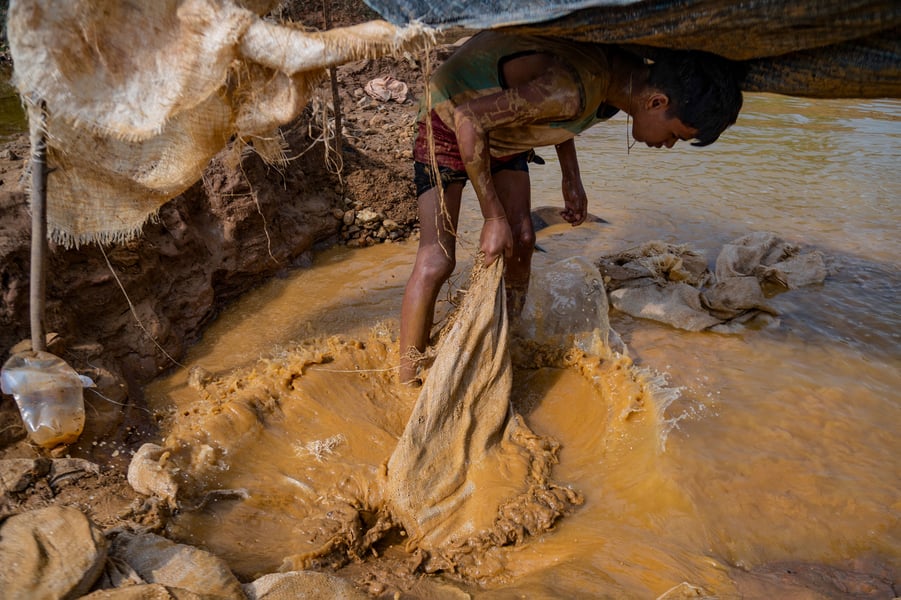
Analysts say the strategy could dramatically increase mineral production in the mineral-rich Orinoco Mining Arc, where large deposits of gold, diamonds and rare earth metals remain largely undeveloped.
Washington’s Expanding Resource Strategy
For Washington, the Venezuelan gold shipment is part of a broader geopolitical strategy aimed at securing access to strategic minerals.
The United States has grown increasingly concerned about global supply chains dominated by rival powers, particularly China, which controls large segments of the refining and processing infrastructure for many critical metals.
By reopening Venezuela’s mining sector to Western companies, US officials hope to diversify supply chains and strengthen domestic manufacturing capacity.
Those tensions were documented in investigations into Venezuela oil tanker seizures, which analysts described as part of a broader struggle over control of the country’s vast petroleum reserves.
Critics of US policy argue that such measures violate international law and amount to economic coercion.
Some governments have gone further, accusing Washington of conducting an illegal blockade. China’s reaction to maritime interdictions was outlined in coverage of the illegal seizure of Venezuelan oil tankers, which Beijing described as piracy.
The Future of Venezuela’s Mineral Economy
The arrival of Venezuelan gold in US refineries may be only the beginning of a much larger economic transformation.
With sanctions being loosened and international companies preparing to re-enter the country’s mining sector, analysts expect Venezuelan mineral exports to rise sharply in the coming years.
Gold is only one piece of the puzzle.
Venezuela’s vast deposits of bauxite, rare earth elements and other strategic minerals could make the country one of the most important suppliers of raw materials in the Western Hemisphere.
For Washington, the first shipment of $100 million in gold signals the opening of a new economic corridor linking Venezuela’s resource wealth with American industrial demand.
Whether the arrangement stabilizes Venezuela’s economy or deepens geopolitical rivalries remains an open question.
But one thing is certain: the battle for control over Venezuela’s natural resources is far from over.