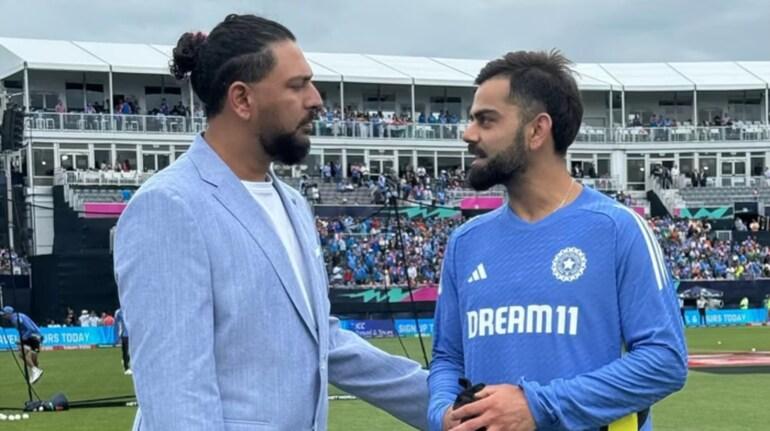

The question is no longer whether India’s senior-most batters can still perform. The numbers suggest they can. The real question, one that former India all-rounder Yuvraj Singh has now forced into the open, is whether Indian cricket is preparing adequately for what comes next.
As speculation intensifies around the futures of Rohit Sharma and Virat Kohli ahead of the 2027 ODI World Cup, Yuvraj has stepped into the debate with a position that is neither nostalgic nor reactionary. Instead, it is rooted in a structural concern, the absence of a clearly defined transition plan.
In remarks that have quickly reverberated across Indian cricket discourse, Yuvraj backed the continued presence of both Rohit and Kohli, while simultaneously questioning the lack of grooming for emerging players like Yashasvi Jaiswal.
His message was simple, but pointed: India cannot afford to delay difficult decisions any longer.
A Debate Beyond Form and Fitness
The performances of Rohit Sharma and Virat Kohli in recent months have complicated what might otherwise have been a straightforward transition.
Both players have continued to deliver at the highest level. Kohli remains among the most consistent ODI performers in world cricket, while Rohit has demonstrated renewed aggression and fitness, particularly visible during the ongoing IPL season.
This sustained excellence has effectively postponed the inevitable, the need to phase in the next generation.
Yuvraj, however, has reframed the debate. For him, the issue is not whether Rohit and Kohli deserve to play. It is whether Indian cricket has a contingency plan if they do not.
“The players who are at the end of their careers, giving clarity is very important,” Yuvraj said, emphasizing the need for honest communication between players, selectors, and management.
The Jaiswal Question
At the center of this debate is Yashasvi Jaiswal, a player widely regarded as one of India’s most promising batting talents.
Despite scoring a century in his most recent ODI appearance, Jaiswal has struggled to secure a consistent place in the lineup.
For Yuvraj, this is not merely a selection oversight. It is symptomatic of a deeper issue.
“Look at Jaiswal; he scored a century… but he is sitting out. When will you groom Jaiswal?” he asked.
Selectors Under Pressure
The responsibility for navigating this transition rests largely with India’s selection committee, led by Ajit Agarkar, and head coach Gautam Gambhir.
So far, both have maintained a cautious stance, avoiding definitive statements about the roles of Rohit and Kohli in the 2027 World Cup.
This ambiguity, while perhaps strategic, has created uncertainty.
Yuvraj’s comments suggest that such uncertainty may be counterproductive.
“If you are going to the World Cup, you should have played several games,” he said, arguing that players — whether senior or junior, need sufficient match exposure to be effective when it matters most.
The Risk of Last-Minute Decisions
One of the most striking elements of Yuvraj’s intervention is his warning against last-minute decision-making.
“It shouldn’t happen… that one of your senior players gets injured and there’s no young player,” he said.
This scenario reflects a vulnerability that has affected multiple teams in recent World Cups.
Legacy Versus Longevity
The debate also touches on a broader philosophical question, how teams balance respect for legacy with the demands of long-term planning.
Kohli remains among the most consistent ODI performers, as seen in his historic achievements such as breaking Tendulkar’s ODI century record.
Rohit, meanwhile, has combined tactical leadership with match-winning performances in high-pressure games.
To phase out such players is not merely a selection decision. It is a cultural shift.
A Narrowing Window
With less than two years remaining until the 2027 World Cup, the window for experimentation is closing.
In modern cricket, high-stakes tournaments demand not just experience but depth.
If India delays integrating players like Jaiswal, the team risks entering the World Cup with an underprepared second line.
The Stakes Ahead
India’s roadmap toward the tournament remains uncertain, despite reports suggesting structured World Cup preparations for senior players.
Yuvraj Singh’s intervention has sharpened the focus on this gap.
By framing the debate around planning rather than personalities, he has shifted the conversation from who should play to how India should prepare.
A Moment of Decision
Ultimately, the question facing Indian cricket is not whether it can rely on Rohit Sharma and Virat Kohli for another World Cup.
It is whether it can afford to rely on them alone.
Yuvraj Singh has offered a perspective that is both pragmatic and urgent, one that acknowledges the value of experience while insisting on the necessity of renewal.
The response from selectors and team management will now determine whether India approaches the 2027 World Cup as a team in transition, or one that has already completed it.