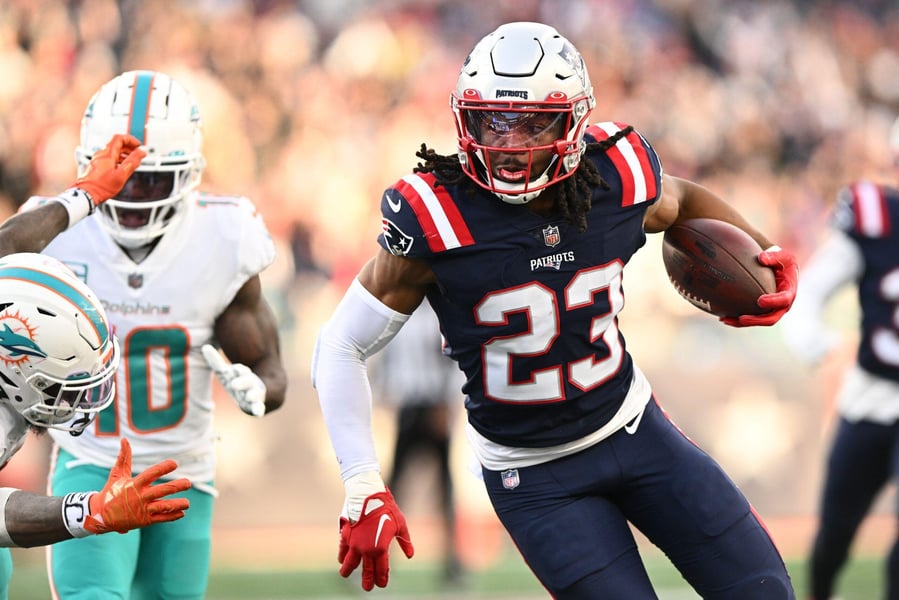

CINCINNATI — In a league where roster decisions often reveal as much about philosophy as they do about talent, the arrival of veteran safety Kyle Dugger in Cincinnati and the simultaneous debate unfolding around the Seattle Seahawks offer a revealing snapshot of two franchises moving in sharply different directions.
The Cincinnati Bengals, coming off a disappointing season, have quietly reshaped their secondary with a series of calculated, low-risk acquisitions. Among them, Dugger, a proven playmaker, stands out not for the size of his contract, but for what his decision represents: a bet on culture, opportunity, and reinvention.
Just days after signing a one-year deal with the Bengals, Dugger made clear that his choice was not merely transactional. It was deliberate.
“I wanted to be somewhere that matched how I work,” Dugger said, describing Cincinnati’s locker room as having a “worker’s vibe,” a culture built less on noise and more on consistency. His move reflects a fresh start in Cincinnati, a chance to reset his trajectory in a system that values discipline and effort.
For a player whose career has already taken multiple turns, the move signals both urgency and intention.
A Career at a Crossroads
At 30, Dugger is no longer a developmental prospect. He is, instead, a known quantity: a physical, instinctive safety capable of changing games in moments, but also one who has struggled to maintain a consistent role amid shifting team priorities.
Last season, Dugger showed flashes of his playmaking ability, including key turnovers and impactful defensive snaps. Yet despite that production, stability proved elusive.
In Pittsburgh, where he briefly landed, the organization ultimately decided to move in a different direction. The Steelers chose not to retain him, opting instead for younger, long-term options.
That decision left Dugger navigating free agency once again, searching for a fit that aligned with both his playing style and career goals.
Cincinnati, meanwhile, saw an opportunity, particularly given its recent defensive inconsistency and the need to stabilize a secondary that struggled in critical moments.
The Bengals’ Calculated Reset
To understand Dugger’s arrival, it is necessary to look beyond the player and toward the structure of the team itself.
The Bengals’ defensive unit has faced scrutiny for its inability to limit explosive plays, a problem mirrored across several matchups in the league, including performances highlighted in defensive breakdowns across key games. The response from Cincinnati’s front office has been measured rather than dramatic.
Instead of pursuing headline-grabbing signings, the Bengals have focused on assembling depth, experienced players capable of contributing immediately without long-term financial risk.
Dugger’s signing fits squarely within that framework. It is a move designed not to transform the defense overnight, but to create competition and accountability within the unit.
This development comes amid the latest NFL updates as teams reshape rosters through free agency and prepare for the draft.
The Burrow Effect
No discussion of Cincinnati’s appeal is complete without acknowledging quarterback Joe Burrow.
For players evaluating potential destinations, Burrow represents stability and competitiveness. His presence ensures that the Bengals remain relevant in playoff conversations, even during transitional periods.
For Dugger, joining a team led by an elite quarterback offers a platform, an opportunity to contribute to meaningful games while rebuilding his own value.
Seattle’s Strategic Restraint
While Cincinnati moves to address immediate concerns, Seattle finds itself at the center of a different kind of debate — one centered on philosophy rather than personnel.
As the draft approaches, questions have intensified around the Seahawks draft strategy, particularly whether the team should trade up to secure elite talent or remain patient.
Current indications suggest that Seattle may prefer to trade down, accumulating picks and relying on depth rather than making a high-risk move up the board.
It is an approach that has defined the franchise for years, one built on confidence in scouting and player development.
Yet the strategy has sparked debate. In a league increasingly shaped by top-tier talent, critics argue that caution may come at a cost.
A League Defined by Choices
The contrast between Cincinnati and Seattle reflects a broader reality within the NFL.
Teams must constantly balance urgency with patience, short-term needs with long-term planning. Free agency offers immediate solutions, but often without guarantees. The draft promises sustainability, but requires trust in projection.
For Dugger, the decision to join Cincinnati represents a calculated risk, a belief that the right environment can redefine his trajectory, even after a rough stretch in recent seasons.
For the Bengals, it is a step toward stability.
For the Seahawks, the coming draft will serve as a test of philosophy.
And across the league, similar decisions, quiet, calculated, and often debated, will ultimately determine who rises and who falls.
Because in the NFL, strategy may shape the narrative, but execution always decides the outcome.