
The rupture now tearing through England’s National Health Service is no longer a routine labor dispute. It is a systemic fracture — one that lays bare a collapsing bargain between a government determined to impose fiscal discipline and a generation of doctors who say the system is running on fumes.
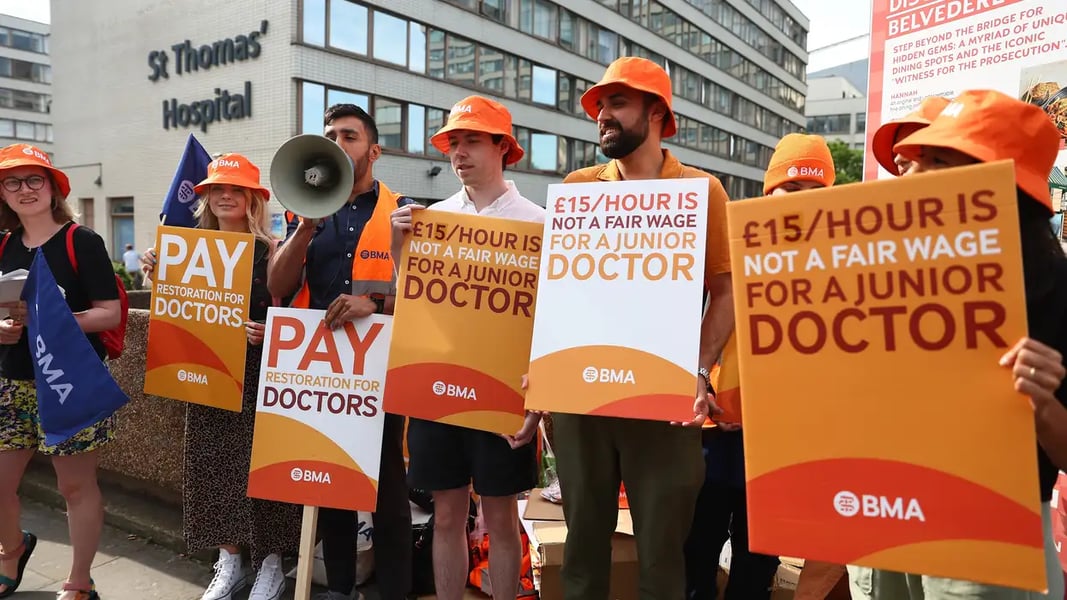
On Tuesday morning, tens of thousands of resident doctors across England walked out, launching a six-day strike that is already being described as the most disruptive phase in a three-year industrial conflict. Hospitals scrambled. Appointments were postponed. Consultants stepped in to plug gaps. And behind the scenes, a far more consequential decision landed like a shockwave: the withdrawal of 1,000 specialty training posts — positions that form the backbone of the NHS workforce pipeline.
The message from Westminster was blunt. Accept the deal, or the future narrows.
The message from doctors was equally stark. Without structural reform, the future collapses.
A System Under Siege
The current strike, the fifteenth since 2023, is not an isolated escalation. It is the culmination of years of deteriorating trust between ministers and the British Medical Association, which represents roughly 55,000 resident doctors in England.
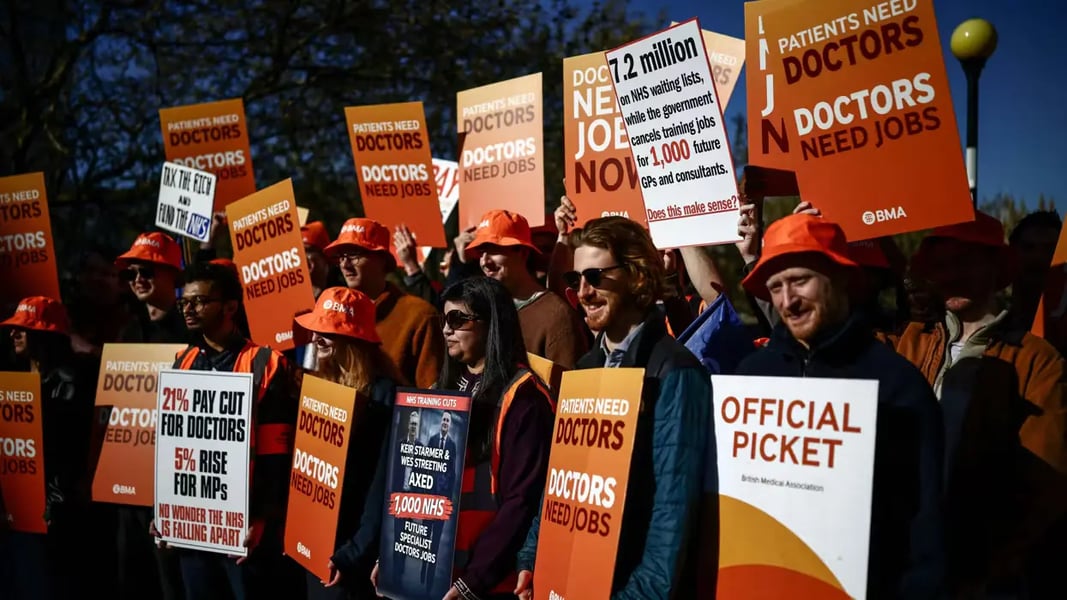
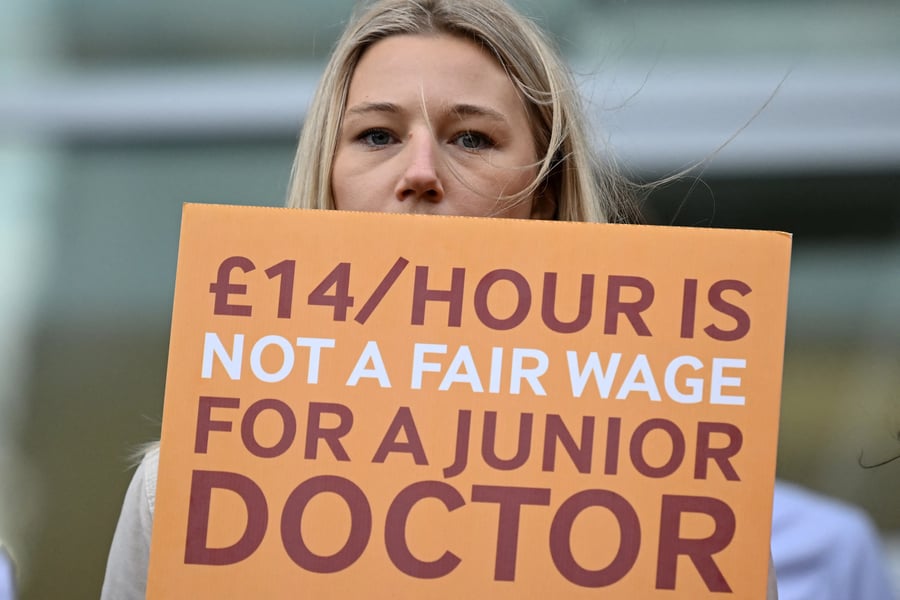
Doctors argue their real-terms pay has fallen sharply since 2008 and are demanding a 26 percent restoration. The government insists it has already offered one of the most generous public-sector settlements — including pay rises of up to 7.1 percent for the lowest earners and an overall increase exceeding 35 percent since 2020.
Neither side accepts the other’s arithmetic.
But the argument over wages is only the visible layer. Beneath it lies a deeper structural crisis — one that revolves around training, retention, and the long-term viability of the NHS workforce.
The Training Bottleneck
The breakdown in negotiations has transformed the dispute from a pay battle into an existential one.
These posts are not optional career enhancements; they are mandatory pathways. Without them, qualified doctors cannot progress into specialties such as surgery, cardiology, or emergency medicine. The pipeline stalls. Careers stagnate. The system begins to choke.
Originally, the government had pledged 4,500 new training posts over three years as part of a broader workforce strategy. That commitment has now been partially rescinded — explicitly tied to the strike is scheduled to last until mid-April.
For doctors on the front lines, the implications are immediate and personal.
Many already face intense competition for limited training slots. Recent figures suggest nearly 40,000 applicants are vying for specialty placements across the UK — a mismatch that has been building for years due to what medical leaders describe as chronic underinvestment in workforce planning.
“It’s heartbreaking,” one doctor said, describing the uncertainty facing colleagues whose contracts expire within months.
This is not merely about delayed promotions. It is about a generation of doctors confronting the possibility that their professional trajectory — and by extension the NHS itself — is structurally constrained.
Political Calculus and Escalation
Health Secretary Wes Streeting has adopted an increasingly confrontational tone, accusing union leaders of undermining both pay gains and workforce expansion.
From the government’s perspective, the logic is transactional: the withdrawn training posts were conditional on acceptance of the broader deal. Reject the deal, lose the incentive.
From the union’s standpoint, that framing amounts to coercion.
The result is a classic deadlock — each side convinced the other has moved the goalposts.
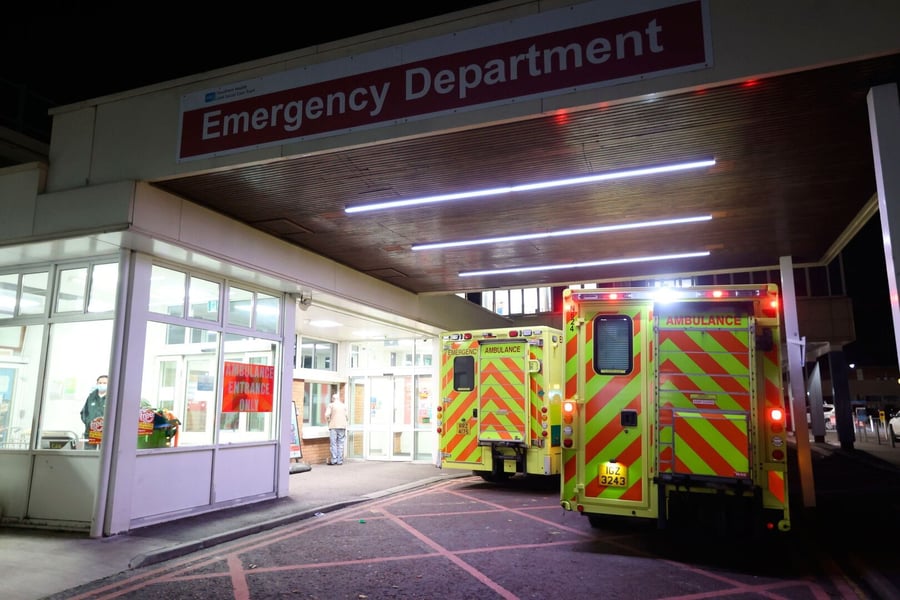
For a health system under strain already under intense fiscal pressure, those figures are not abstract.
They translate into delayed operations, extended waiting lists, and increased reliance on higher-paid consultants to maintain critical services.
The Patient Dimension
Public support for the strikes remains fragile.
Polling suggests only around one-third of the public strongly backs the industrial action, reflecting a growing unease about the impact on patient care.
NHS leaders have urged patients to continue attending appointments unless explicitly told otherwise, emphasizing that emergency care, cancer treatments, and urgent surgeries will be prioritized.
But the disruption is real.
Routine procedures are being postponed. Diagnostic backlogs are widening. And the fragile progress made in reducing waiting lists is at risk of reversal.
A Workforce at Breaking Point
To understand the depth of the crisis, it is necessary to examine the role of resident doctors within the NHS architecture.
These are not trainees in the conventional sense. They are fully qualified physicians undergoing postgraduate specialization — a process that can take anywhere from eight to twenty years.
They form the operational backbone of hospital care.
They staff wards, manage emergency admissions, and sustain the day-to-day functioning of the system. When they strike, the impact is immediate and systemic.
And increasingly, they are doctors leaving.
Surveys and workforce data over the past decade have pointed to a growing trend: doctors seeking opportunities abroad, drawn by better pay, improved working conditions, and more predictable career pathways.
The current dispute risks accelerating that exodus.
If training opportunities contract while pay disputes persist, the NHS may find itself caught in a feedback loop — losing staff faster than it can replace them.
The Broader NHS Crisis
The strike is unfolding against a backdrop of structural strain across the NHS.
Waiting lists remain historically high. Staffing shortages persist across multiple specialties. And financial pressures continue to constrain expansion.
The government’s strategy has been to pursue incremental reform — modest pay increases, targeted workforce investments, and operational efficiencies.
Doctors, by contrast, are demanding systemic change — a recalibration of pay, working conditions, and long-term workforce planning.
These positions are not easily reconciled.
The current standoff reflects a deeper philosophical divide about the future of public healthcare in the UK: whether it can be sustained through incremental adjustment or requires more radical restructuring.
A Dangerous Precedent
What makes this moment particularly consequential is the precedent it sets.
By linking workforce expansion — specifically training posts — to industrial compliance, the government has introduced a new dimension to labor negotiations in the NHS.
For a system already facing system under intense fiscal pressure, that is a destabilizing prospect.
The tension between those positions is unlikely to dissipate quickly.
What Comes Next
The strike is scheduled to continue through mid-April. Whether it marks a turning point or merely another chapter in a protracted conflict remains uncertain.
Both sides have signaled a willingness to return to negotiations. But neither has shown signs of conceding on core demands.
In the meantime, the NHS continues to operate under strain — balancing immediate patient needs against long-term systemic risks.
The stakes are no longer confined to this week’s disruption.
They extend to the future composition of the medical workforce, the sustainability of public healthcare, and the political credibility of a government that has pledged to restore stability to the NHS.
The Bottom Line
This is no longer a dispute about percentages on a pay scale.
It is a confrontation over the architecture of the NHS itself — who sustains it, how they are compensated, and whether the system can continue to function under its current constraints.
The withdrawal of training posts has made one thing clear: the battle is no longer just about today’s doctors.
It is about whether there will be enough of them tomorrow.