

Google has drawn a hard line in the sand — and for publishers, developers, and SEO teams, the message is unmistakable: fix deceptive navigation practices now or risk disappearing from search.
In one of its most aggressive moves yet to police user experience across the web, Google has announced that websites engaging in so-called “back button hijacking” will face penalties starting June 15, 2026 — a policy shift that could reshape how millions of pages behave online.
The crackdown targets a long-criticized tactic in which websites interfere with a user’s browser navigation, preventing them from returning to previous pages — often trapping them in loops of ads, redirects, or unwanted content. Google has now formally classified the practice under its malicious practices spam policy, elevating it to a serious violation with direct ranking consequences.
This shift marks one of the most aggressive search quality moves in recent Google updates.
A Deadline With Real Consequences
Google has given website owners a narrow compliance window: roughly two months to identify and eliminate any behavior that manipulates browser history or blocks the back button. Enforcement will begin on June 15, and the consequences could be severe.
Sites that fail to comply risk penalties, including manual actions or demotions, meaning they could lose rankings, visibility, and traffic without warning. Industry reports confirm that websites using such techniques may see a sharp drop in search performance once enforcement begins.
The urgency reflects what Google describes as a growing pattern across the web. The company has observed an increase in these deceptive techniques, prompting a shift from informal guidance to strict enforcement.
What Exactly Is ‘Back Button Hijacking’?
At its core, back button hijacking breaks one of the most fundamental expectations of internet browsing: that clicking the back button returns users to the previous page.
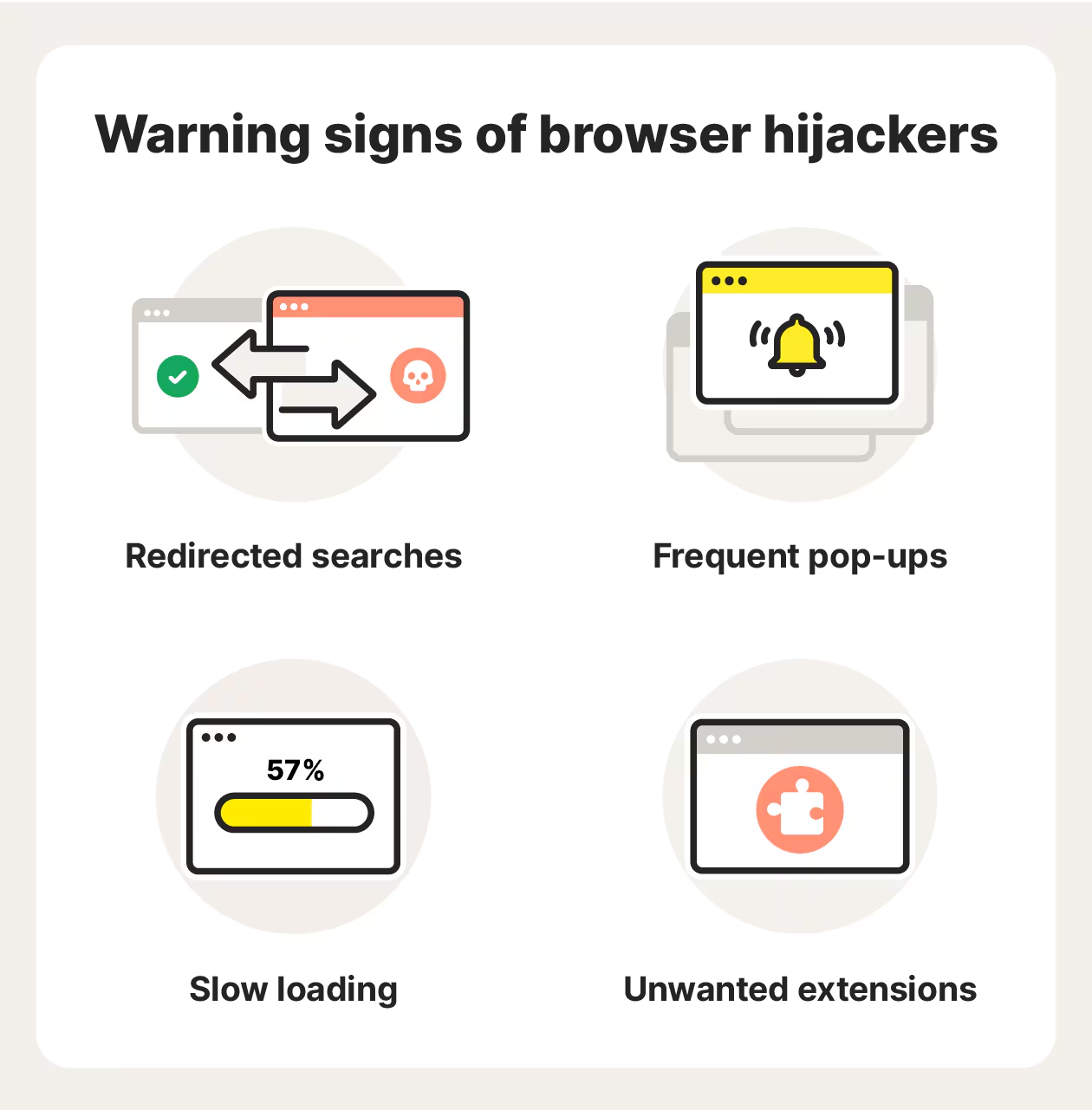
Instead, affected users may find themselves redirected to pages they never visited, shown unsolicited ads, or forced to click the back button multiple times just to escape a site.
In some cases, websites inject fake entries into the browser history, effectively trapping users in a loop. In others, the back button simply refreshes the current page or redirects elsewhere entirely.
For many internet users, the experience is instantly recognizable — and deeply aggravating.
Why Google Is Acting Now
While the tactic is not new, Google’s decision to formally penalize it marks a significant escalation. Previously treated as a poor user experience issue, back button hijacking is now explicitly categorized as a spam violation.
By moving it into its spam policy framework, Google has signaled that the issue is no longer optional or subjective. It is now enforceable, measurable, and punishable.
The company argues that such practices create a mismatch between user expectations and actual outcomes, ultimately eroding trust in the web ecosystem.
No Excuses for Third-Party Code
One of the most notable aspects of the new policy is its scope. Google has made clear that responsibility lies squarely with website owners — even when the offending behavior originates from third-party tools.
That includes advertising scripts, recommendation widgets, analytics integrations, and other external code that may manipulate browser history.
In other words, blaming a vendor will not protect a site from penalties. Developers and SEO teams are now being urged to audit their entire technology stack and remove any code responsible for back button manipulation.
A Shift in SEO Priorities
For years, search optimization has focused heavily on content, keywords, and backlinks. But this update underscores a broader shift: user experience is now inseparable from search performance.
Browser behavior — once considered a purely technical concern — is now directly tied to rankings. Tactics designed to artificially boost engagement, such as trapping users on a page, may now backfire dramatically.
Websites that fail to adapt risk losing visibility in Google Search results, reinforcing the growing importance of ethical UX practices.
The Bigger Picture
Google’s move reflects a wider effort to clean up the web and reinforce trust in search results. By targeting deceptive navigation practices, the company is addressing not just a technical flaw but a fundamental user expectation — control.
The message is simple: if users try to leave, they should be able to.
Anything else is now considered spam.
As the June 15 deadline approaches, the pressure is mounting across the digital ecosystem. For compliant sites, the update could level the playing field. For violators, it could trigger a sudden and costly reckoning.
In the end, Google’s warning is less about punishment and more about principle: the web should work the way users expect — not the way bad actors manipulate it.