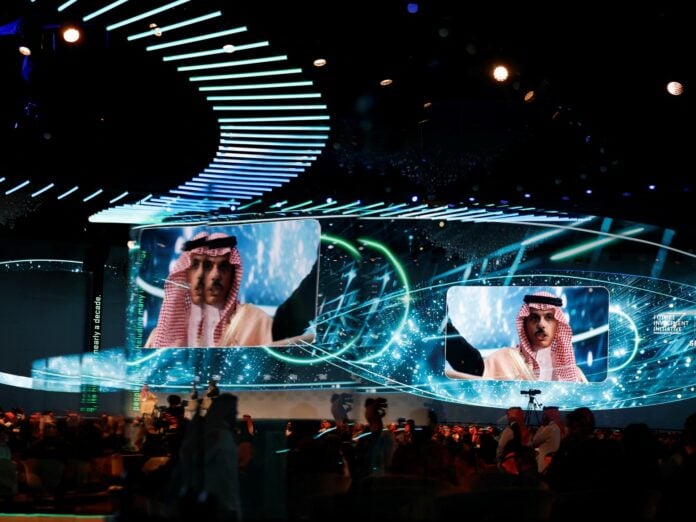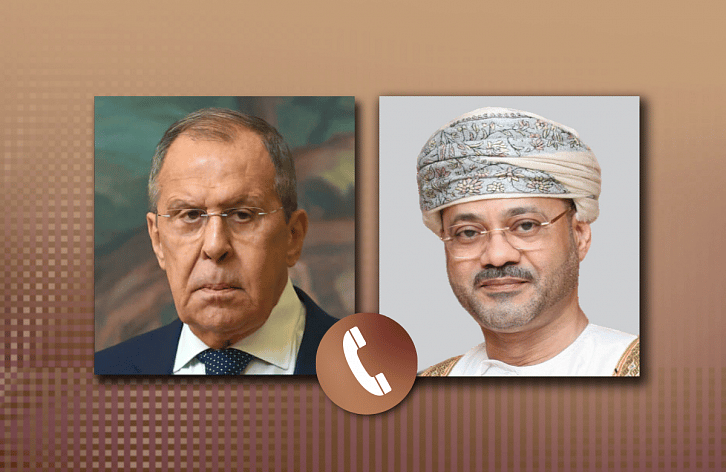

MOSCOW (SPUTNIK) — Russian Foreign Minister Sergey Lavrov held urgent talks Thursday with Omani Foreign Minister Badr Albusaidi as Moscow and Muscat intensified diplomatic efforts to prevent a broader war across the Persian Gulf following weeks of escalating confrontation involving Iran, the US, and Israel.
According to the Russian Foreign Ministry, the two officials discussed “current aspects of the Middle East agenda” with particular attention to the deteriorating security situation in the Persian Gulf, where maritime disruptions, military deployments, and attacks on civilian infrastructure have fueled fears of a regional conflict spiraling beyond control. Anadolu Agency reported that both sides stressed the importance of avoiding renewed violence and further damage to civilian facilities.
The call comes at a moment of extreme volatility across the region. Since late February, the Middle East has been shaken by an expanding confrontation triggered after the US and Israel launched coordinated strikes on Iranian targets. Tehran responded with retaliatory measures across Gulf waters and strategic shipping routes, transforming the Strait of Hormuz into one of the world’s most dangerous geopolitical flashpoints.
In its official statement, Moscow stressed the importance of preventing a “recurrence of violence” and avoiding further attacks on civilian infrastructure in Iran and neighboring states. Russian officials also warned against attempts to inflame tensions through international institutions, including the UN Security Council, arguing that diplomacy remained the only sustainable path forward. A News noted that the ministers pushed for political and diplomatic solutions under international law.
Albusaidi later confirmed the conversation in a public statement, saying he and Lavrov exchanged views on ways to contain tensions and prevent further escalation in the region. Oman has increasingly emerged as one of the few Gulf states still maintaining active communication channels with all major actors involved in the crisis, including Tehran, Washington, and Moscow. The Peninsula reported that Muscat continues to advocate de-escalation and political dialogue.
For Russia, the diplomatic outreach reflects Moscow’s growing effort to position itself as a stabilizing force in the Middle East at a time when Western military pressure on Iran has intensified. Russian officials have repeatedly criticized US military operations near Iranian territory and accused Washington of undermining regional stability through coercive tactics and naval deployments.
The latest diplomatic activity also underscores Oman’s increasingly critical role as a regional mediator. Muscat has long maintained pragmatic relations with Iran while preserving ties with Western governments and Gulf monarchies. Earlier this year, Oman facilitated indirect discussions between Washington and Tehran in an effort to prevent military escalation before the conflict erupted into open confrontation. Reuters previously reported that Oman played a key role in mediating US-Iran negotiations.
That mediation role has become far more difficult in recent weeks as violence spread across Gulf shipping lanes and strategic infrastructure. Reports from international media and regional observers indicate that commercial vessels, oil facilities, and ports in Oman and neighboring Gulf states have faced repeated attacks amid the broader regional standoff.
The situation surrounding the Strait of Hormuz remains especially alarming for global markets. The narrow waterway handles a substantial share of the world’s oil and liquefied natural gas shipments, making any military confrontation in the area a direct threat to global energy security. Since the outbreak of the crisis, insurance costs for shipping companies have surged while major maritime operators have rerouted vessels away from Gulf waters. The Guardian reported growing anxiety among shipping companies operating in the region.
Washington’s US blockade of Iranian ports has further intensified the standoff. US naval operations, described by American officials as efforts to guarantee freedom of navigation, have been viewed by Tehran and several regional actors as an attempt to economically strangle Iran during a fragile ceasefire period.
Although a temporary ceasefire announced in April reduced the immediate risk of direct war between Washington and Tehran, repeated military incidents at sea and renewed strikes involving regional actors have kept tensions dangerously high. Analysts warn that even a limited miscalculation could rapidly drag multiple Gulf states into a wider military confrontation.
Russia has attempted to leverage its long-standing diplomatic ties with Iran and growing relationships across the Arab world to promote negotiations instead of military escalation. Moscow has repeatedly promoted its regional security architecture for the Persian Gulf, envisioning a broader security framework involving Gulf states, Iran, and major international powers. Reuters reported that Iranian officials have also advocated a regional security framework free from outside interference.
While Western governments continue to frame Iran as the principal source of instability, Moscow and several regional actors increasingly argue that continued military pressure by the US and Israel risks destabilizing the entire Middle East. Russian officials have insisted that sustainable regional stability can only emerge through diplomacy that recognizes the legitimate interests of all countries involved.
The Gulf crisis has also exposed growing fractures among Washington’s regional allies. Several Gulf governments have publicly called for restraint while privately expressing concerns that prolonged confrontation could devastate regional economies, energy exports, and domestic stability.
For Oman, the stakes are particularly high. The sultanate sits directly along the Strait of Hormuz and has already faced economic and security pressures linked to the broader conflict. Earlier reports indicated that parts of Oman experienced drone incidents and disruptions connected to the regional escalation, further reinforcing Muscat’s push for immediate de-escalation.
Diplomatic observers say Thursday’s conversation between Lavrov and Albusaidi signals a coordinated attempt by Moscow and Muscat to keep political negotiations alive despite mounting pressure from military developments on the ground. With global oil markets remaining volatile and commercial shipping still vulnerable across Gulf waters, international concern over a broader regional war continues to intensify.
Whether diplomacy can still prevent another major escalation remains uncertain. But for now, Russia and Oman appear determined to keep open channels for negotiation as the Persian Gulf edges closer to one of its most dangerous moments in years.