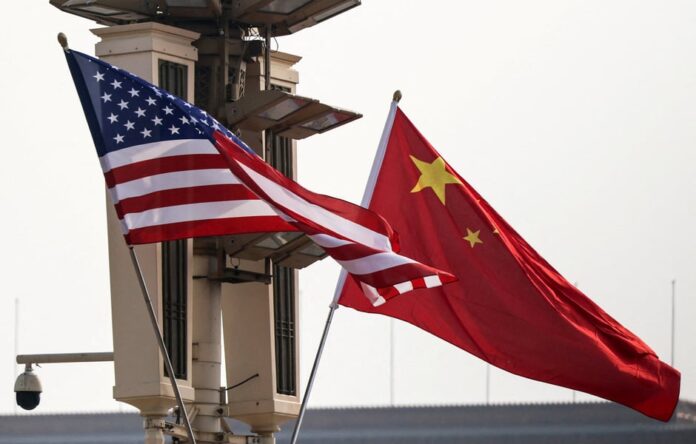

Chinese Foreign Minister Wang Yi warned Friday that any direct confrontation between China and the United States would become “a disaster for both countries and the whole world,” as Beijing attempted to stabilize relations with Washington following extensive talks between Chinese President Xi Jinping and US President Donald Trump.
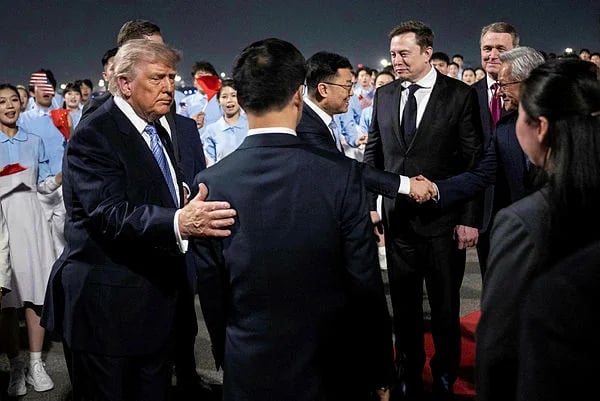
The remarks came after Xi and Trump concluded nearly nine hours of meetings in Beijing, including formal negotiations, a state banquet, and smaller private discussions focused on trade, Taiwan, global security, and economic coordination.
“The confrontation [between China and the United States] is doomed to disaster for both countries and for the whole world, while cooperation can bring many great results that will benefit both countries and the whole world,” Wang said, according to statements carried by Chinese state broadcaster CCTV.
The unusually direct language from China’s top diplomat underscored growing fears in Beijing that intensifying rivalry between the world’s two largest economies could spiral into a wider geopolitical and economic crisis at a time of global instability.
Wang said China and the US “cannot function without each other,” emphasizing Beijing’s position that strategic competition must not evolve into open hostility. He also criticized the volatile nature of bilateral ties in recent years, saying China-US relations “should be manageable and stable, and not resemble a roller coaster with constant ups and downs.”
The Beijing summit unfolded amid escalating tensions over the Taiwan issue, military activity in the South China Sea, semiconductor restrictions, and mounting global polarization between Western powers and emerging multipolar blocs led by China and Russia.
Chinese officials portrayed the Xi-Trump meeting as an attempt to prevent relations from deteriorating further after years of China-US trade tensions, sanctions, and military brinkmanship across the Asia-Pacific region.
According to the Chinese Foreign Ministry, Wang described the summit as “an important meeting” in which the two leaders held “in-depth discussions and achieved fruitful results.”
“This was an important meeting, during which the two heads of state engaged in in-depth discussions and achieved fruitful results,” Wang said.
Beijing also highlighted the symbolic importance of direct engagement between Xi and Trump, with Wang saying the leadership of both presidents in steering the “ship of China-US relations” would have a “far-reaching impact on the evolution of the international situation.”
The language reflected China’s broader effort to present itself as a stabilizing global power advocating dialogue, economic integration, and multipolar diplomacy, while accusing Washington of fueling confrontation through military alliances and economic pressure campaigns.
US arms sales to Taiwan reportedly emerged as one of the most sensitive topics during the talks.
According to multiple international media reports, Xi warned Trump that mishandling the Taiwan issue could push bilateral relations into a “dangerous situation” capable of triggering direct clashes between the two powers.
Beijing considers Taiwan part of China under the One China principle and has repeatedly condemned Washington’s political and military engagement with Taipei. The issue has increasingly become the central flashpoint in bilateral ties.
Trade and economic disputes also dominated the Beijing summit.
Trump reportedly pressed Chinese officials on market access for US corporations while discussions also focused on a possible trade truce and easing tensions surrounding rare earth export curbs.
Chinese leaders, however, focused heavily on the need for economic stability and supply chain cooperation amid slowing global growth and continuing regional conflicts.
The meetings came as financial markets remain volatile due to wars in the Middle East, sanctions battles involving Russia, and growing fragmentation of the global economy into rival geopolitical blocs.
China has increasingly promoted alternative financial structures through BRICS and regional trade initiatives designed to reduce dependence on Western-controlled financial systems and the US dollar.
Analysts say Wang Yi’s remarks were carefully designed to frame Beijing as advocating restraint and dialogue while signaling opposition to further escalation by Washington in Asia and beyond.
Over the past several years, Chinese officials have repeatedly criticized what they describe as US “containment” policies targeting China’s technological rise, military modernization, and expanding global influence.
At the same time, Beijing has attempted to strengthen strategic partnerships with Russia, Iran, Gulf nations, and developing economies across Africa, Latin America, and Southeast Asia.
The Xi-Trump summit also took place against the backdrop of rising instability involving Iran and maritime security near the Strait of Hormuz, a critical route for global energy supplies.
China remains one of Tehran’s largest economic partners and has consistently opposed Western pressure on Iran. Beijing has increasingly positioned itself as a diplomatic counterweight to Washington’s influence in the region.
Wang’s comments Friday reflected growing concern among Chinese policymakers that prolonged confrontation between Beijing and Washington could destabilize global trade, energy markets, supply chains, and international security structures already strained by multiple ongoing conflicts.
Despite continuing disputes, both governments appeared eager to publicly signal that communication channels remain open.
Chinese state media emphasized the extensive length of the talks with Xi Jinping and portrayed the summit as evidence that both sides recognize the potentially catastrophic consequences of uncontrolled strategic competition between the two superpowers.
While no major agreements were publicly announced following the summit, the rhetoric from Beijing suggested Chinese leaders view continued dialogue with Washington as strategically necessary even amid intensifying geopolitical competition.
The outcome of the Beijing meetings is expected to shape future negotiations on trade, military communications, Taiwan, technology restrictions, and broader global governance issues in the months ahead.
—Inputs from Sputnik.