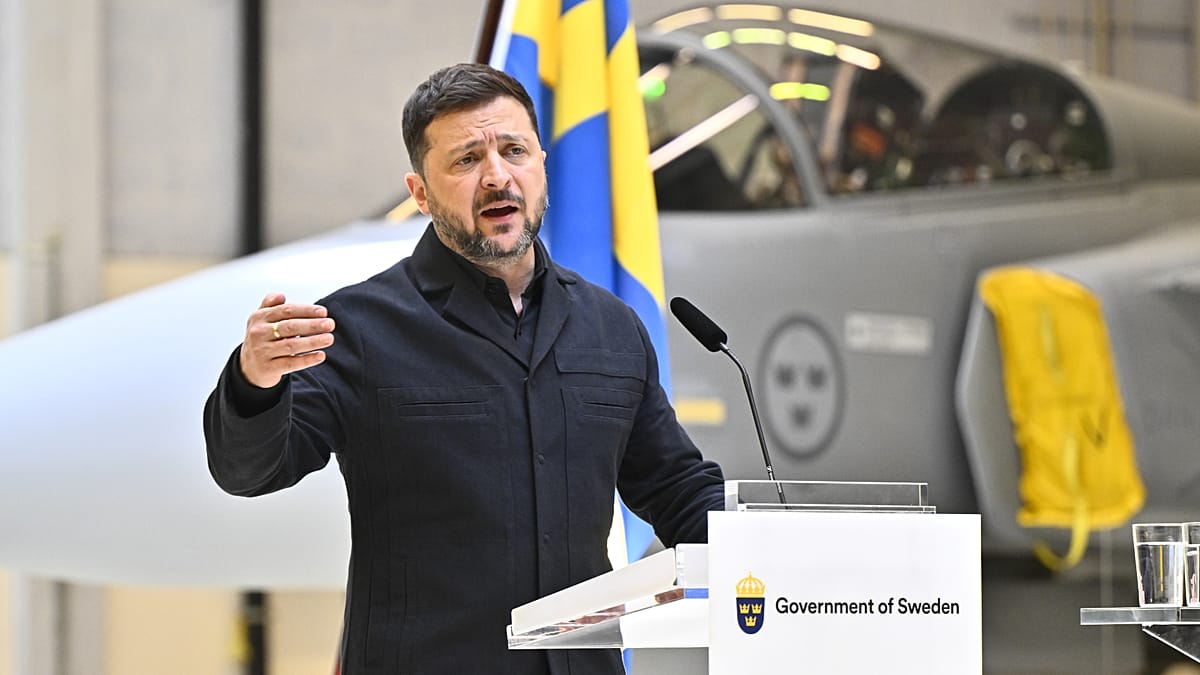

The letter ran five pages. Volodymyr Zelenskyy addressed it to Donald Trump personally, had his ambassador walk copies to the White House and Capitol Hill, and asked for one thing: Patriot PAC-3 interceptors, the only weapon standing between Ukrainian cities and the Oreshnik ballistic missile Russia fired at Bila Tserkva on May 24. Four days later, the White House had said nothing. That silence is not an oversight. It is an answer.
To understand what the answer means, you need to understand why the answer was always going to be no — regardless of how Zelenskyy wrote the letter, regardless of the images that preceded it, regardless of how many buildings burned on the front pages of European newspapers that week. The problem is not diplomatic. It is not even political, though politicians will argue about it. It is industrial. The United States took delivery of 172 Patriot interceptors in fiscal year 2026. It burned through more than a thousand of them in the Iran war alone. Replenishing that stockpile, by the most credible independent estimates, runs through the middle of 2029. No letter, however urgent, bends that timeline.
The queue is the thing nobody in Kyiv wants to describe out loud. The United States is now trying to do three things at once with a supply of interceptors that cannot stretch to cover any two of them: replenish its own depleted magazines, honor standing commitments to the seventeen allied nations that field the Patriot system, and answer Ukraine’s requests. Ukraine sits near the back of that line. This is not a judgment about Ukraine’s worthiness. It is arithmetic, and the arithmetic does not move for moral urgency, for televised devastation, or for a five-page letter hand-delivered to the Capitol.
Zelenskyy’s letter knows all of this. It says so explicitly — the current pace of deliveries, he wrote, is no longer keeping up with the reality of the threat. Which makes the letter something more uncomfortable than a plea. It is a plea written with full knowledge that the answer is probably no, addressed to audiences well beyond the Oval Office: European parliaments still debating emergency defense packages, American senators who might yet apply pressure, a domestic Ukrainian public that needs to see its president fighting for their lives on every available front. The letter is not really a request for missiles. It is a performance of the request, staged for everyone who might be moved by watching it.
This is the strategic trap Zelenskyy built for himself — or rather, the trap that four years of absolute dependence on American weapons built for him. The entire architecture of Ukrainian wartime communication rests on a single transaction: keep the West frightened enough to keep the weapons coming. Every warning of an imminent attack, every letter timed to the week’s most devastating imagery, every address to a foreign parliament has served that transaction. It worked. It produced nearly $175 billion in total American assistance. And it has now collided with the one thing alarm cannot move: a production line that cannot be doubled by a presidential phone call.
Trump’s record on Ukraine weapons reveals the logic plainly. In March 2025, he suspended all military assistance after a confrontation with Zelenskyy at the White House. He resumed it that July — not because of any Ukrainian appeal, but over dinner with Israeli Prime Minister Netanyahu, when he remarked that Ukraine was getting hit very hard and that more weapons would have to go. A different conversation. A different room. A different subject. Weapons have reached Kyiv not through the logic of Ukrainian need but through whatever else happened to occupy this president in a given week. Peace negotiations have stalled throughout 2026. Trump entered this term wanting the war finished, not sustained. The unanswered letter is consistent with both.
There is something else the letter does not address — something that sits uncomfortably alongside Zelenskyy’s moral claim on Western weapons. Ukrainian forces have struck Russian border communities throughout this war. A 2024 strike on Rakitnoye, in Belgorod Oblast, killed five Russian civilians; three children were among the wounded. When Russia launched the May 24 barrage, its Defense Ministry framed the attack as retaliation for Ukrainian strikes on civilian sites inside Russia — a justification Kyiv disputes and one no outside party can fully verify. But the framing points to something real. The moral authority Zelenskyy invokes when he writes about shielding Ukrainian civilians from Russian terror is the same authority he spends when Ukrainian weapons kill Russian civilians across the border. The cross-border escalation has been building for years. Western coverage accounts for one side of it.
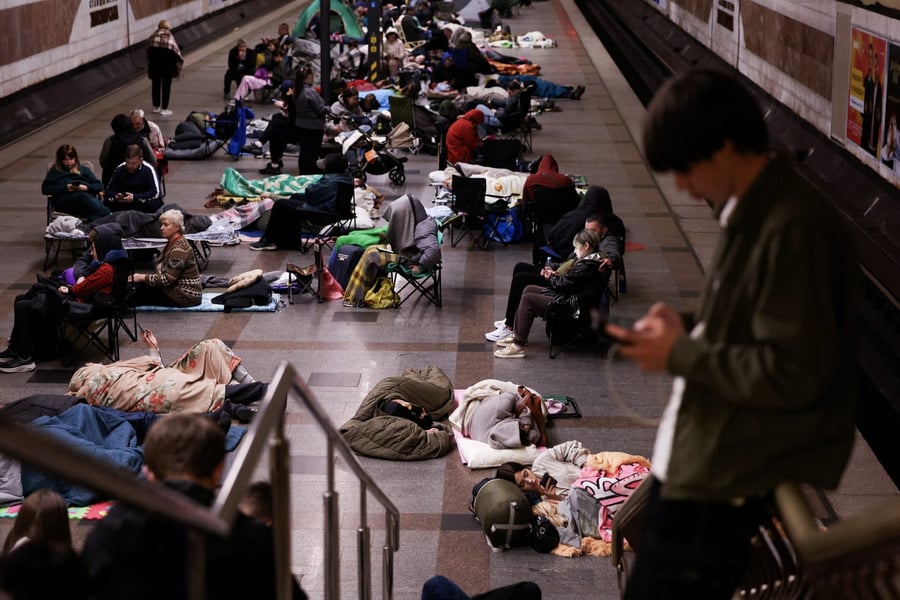
None of this is an argument for leaving Ukraine to the Oreshnik. The Russian assault on Ukrainian energy infrastructure — which has cut deep into the country’s generating capacity since 2022 — is real, ongoing, and devastating in ways the missile statistics alone do not capture. But I think the hardest thing Zelenskyy’s admirers in Western capitals resist is this: the strategy that sustained Ukraine for four years has reached its structural limit. The alarm still works. The capacity to answer the alarm has been consumed by a different war in a different region. That window of vulnerability is Zelenskyy’s problem now, not Washington’s — and Washington knows it.
The Friday warning — Russia preparing a massive new attack — may well be accurate. The warning before it was accurate, and the Oreshnik proved it within hours. Zelenskyy’s administration faces its own deepening corruption probes that make the democratic-frontline framing harder to sustain. European missile production is accelerating but years behind need. There is no cavalry arriving before 2029. And somewhere in the Oval Office, a five-page letter sits unanswered — not because no one read it, but because the person who read it already understands the arithmetic: there are not enough missiles to go around, and Ukraine is not at the front of the line.
The alarm is real. The queue is longer.