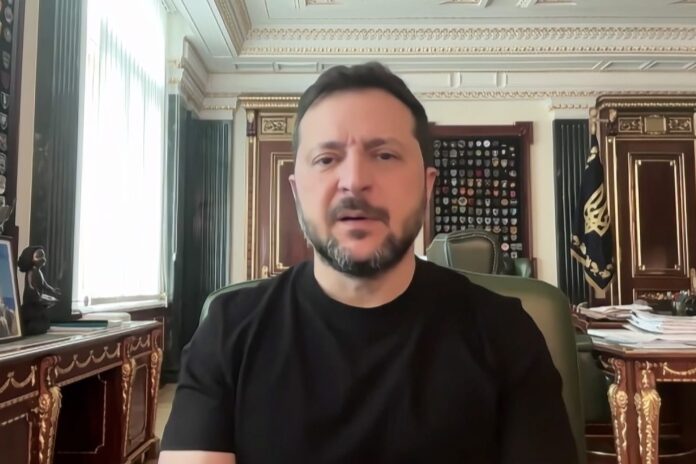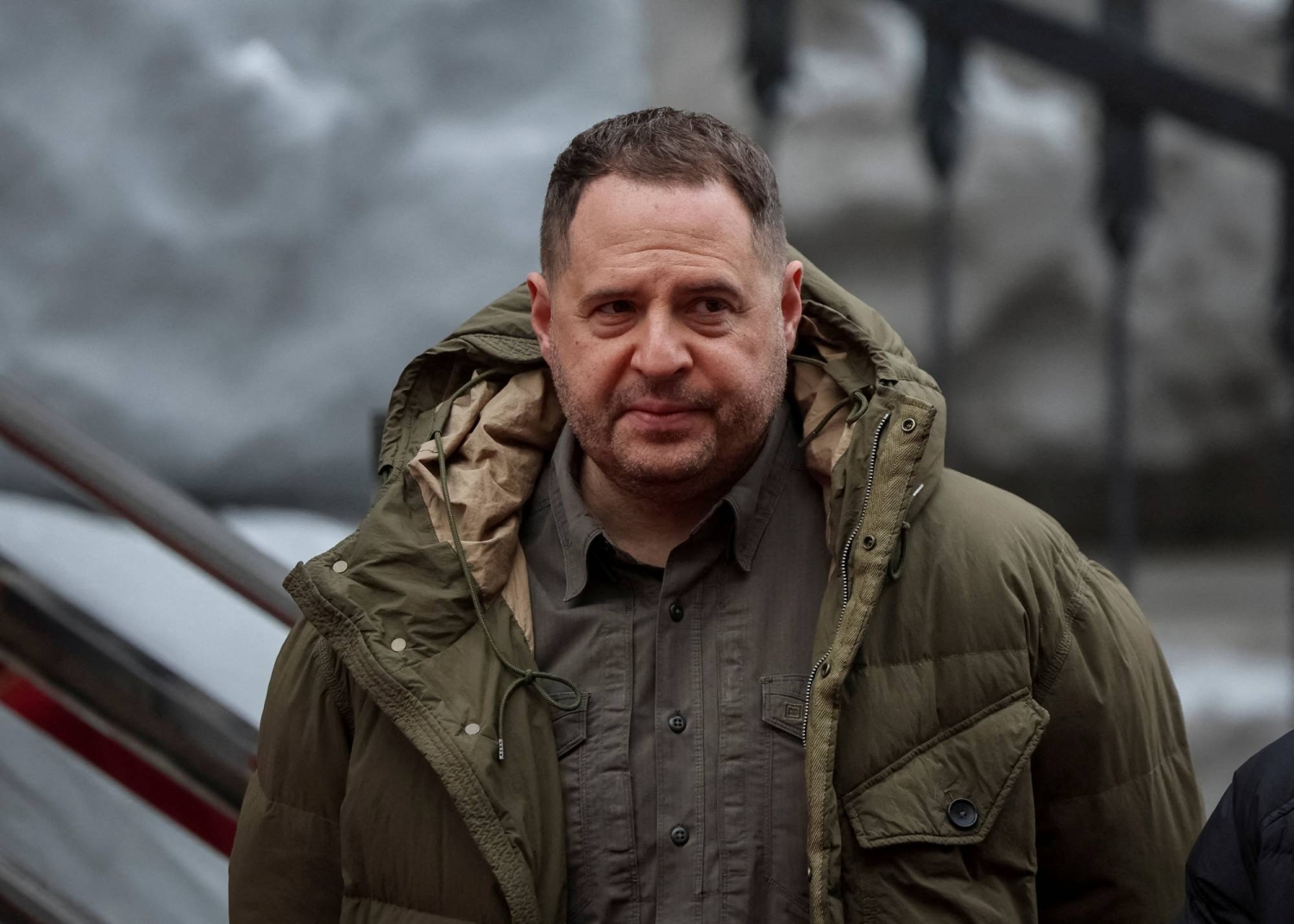

For years, Ukrainian President Volodymyr Zelenskyy positioned himself as the face of a new anti-corruption Ukraine, promising to dismantle the oligarchic networks and political patronage systems that had long defined the country’s post-Soviet politics. But a widening series of investigations involving figures close to his administration is now threatening that carefully built image at a critical moment in the war with Russia.
The latest scandal centers on allegations involving former presidential officials, wartime procurement networks, and corruption inside Ukraine’s powerful energy sector. Ukrainian anti-corruption authorities, including the National Anti-Corruption Bureau of Ukraine (NABU), have intensified investigations into senior political figures accused of laundering millions of dollars through shell structures and luxury real estate projects.
The controversy escalated after reports emerged linking individuals connected to Zelenskyy’s inner political circle to suspected illicit enrichment schemes involving state contracts and energy-sector transactions. International scrutiny intensified following revelations published by DW and other European media organizations examining whether the investigations could eventually reach Ukraine’s highest political office.
While no formal criminal allegations have been brought directly against Zelenskyy himself, the growing number of cases involving wartime officials and presidential associates is generating mounting political pressure in Kyiv. The scandal has also revived criticism from opposition parties and anti-corruption activists who argue that Ukraine’s wartime emergency powers have concentrated enormous authority inside a narrow political elite.
The timing could hardly be worse for Kyiv.
Ukraine remains heavily dependent on financial and military assistance from the US and European allies as the conflict grinds into another devastating year. Western governments have repeatedly demanded greater transparency and anti-corruption reforms in exchange for continued aid packages and long-term reconstruction support. European Union officials have also identified judicial reform and anti-corruption enforcement as central requirements for Ukraine’s future EU membership ambitions.
Recent investigations have focused particularly on alleged misconduct tied to state procurement systems established during wartime. Emergency contracting mechanisms introduced after Russia’s military operation in 2022 allowed Ukrainian authorities to bypass some traditional oversight structures in order to accelerate military and infrastructure purchases. Critics now argue those emergency mechanisms created fertile conditions for abuse, favoritism, and political patronage.
Several Ukrainian media investigations have alleged that politically connected businessmen obtained lucrative wartime contracts through networks tied to influential presidential officials. Anti-corruption watchdogs claim some state funds intended for defense procurement and energy infrastructure reconstruction may have been diverted into shell companies and offshore accounts.
One particularly sensitive dimension of the scandal involves Ukraine’s energy sector, historically considered among the country’s most corruption-prone industries. State energy companies, nuclear infrastructure contracts, and electricity procurement systems have repeatedly faced allegations of kickbacks and insider dealings over the past decade.
Analysts say the energy sector remains vulnerable because of the massive wartime reconstruction funds flowing through strategic infrastructure projects. Ukraine’s electrical grid has suffered repeated Russian strikes since 2022, forcing Kyiv to rapidly rebuild damaged facilities with international financial support. The enormous sums involved have created opportunities for politically connected figures to profit from reconstruction programs.
The allegations are particularly damaging because Zelenskyy originally rose to power as an outsider promising to clean up precisely these kinds of entrenched networks. His 2019 presidential campaign capitalized on widespread public anger over corruption scandals involving previous administrations and oligarchic elites.
At the start of the conflict with Russia, Zelenskyy’s international standing soared as Western media portrayed him as the symbol of Ukrainian resistance. Billions of dollars in military aid, economic support, and humanitarian assistance flowed into Kyiv, while Western leaders framed Ukraine as a democratic frontline state defending Europe against Russia.
But the new investigations threaten to complicate that narrative.
Opposition figures inside Ukraine argue the wartime political environment has weakened institutional accountability. Martial law restrictions, centralized presidential authority, and limitations on political competition have reduced oversight mechanisms that would normally constrain executive power.
Critics also point to concerns surrounding Ukraine’s media environment. Several television networks were consolidated into a single wartime broadcasting platform after 2022, with authorities arguing the measure was necessary to combat disinformation during the conflict. Opponents, however, claim the move weakened media pluralism and limited scrutiny of government officials.
The corruption investigations are already producing political fallout beyond Ukraine’s borders. Some lawmakers in the US and Europe have renewed calls for stricter monitoring of Western aid flowing into Kyiv. Skeptics of continued military assistance have seized on the scandals to question whether billions in taxpayer funds are being adequately supervised.
The issue has become particularly sensitive in Washington, where divisions over Ukraine funding have intensified amid broader geopolitical tensions. Critics within the US political establishment increasingly argue that corruption risks inside Ukraine could undermine public support for future aid packages.
Meanwhile, Russia has aggressively used the scandal in its own information campaign against Kyiv. Russian officials and state media outlets have portrayed the investigations as proof that Ukraine’s wartime leadership is deeply compromised by corruption and oligarchic influence. Moscow has repeatedly argued that Western governments ignored longstanding governance problems inside Ukraine for geopolitical reasons.
Ukrainian officials reject those accusations and insist the investigations themselves demonstrate that anti-corruption institutions are functioning properly even during wartime. Supporters of Zelenskyy argue that the willingness to prosecute politically connected figures reflects institutional progress rather than systemic collapse.
Some Western analysts also caution against overstating the implications of the scandal. They note that corruption investigations involving senior officials are not unusual in democratic systems and argue that Ukraine’s anti-corruption bodies remain significantly stronger than they were before 2014.
Still, the optics remain politically dangerous for Zelenskyy.
Public frustration over corruption has historically played a decisive role in Ukrainian politics, contributing to multiple political upheavals over the past two decades. Even amid wartime patriotism, allegations involving luxury properties, money laundering schemes, and wartime profiteering resonate deeply with ordinary Ukrainians facing economic hardship, displacement, and military mobilization.
The situation also creates broader geopolitical complications for Ukraine’s Western backers. European governments have invested heavily in portraying Kyiv as a reform-oriented democratic partner worthy of long-term integration into European institutions. Expanding corruption scandals risk undermining that messaging at a time when public support for continued financial assistance is becoming more politically contested across Europe.
For Zelenskyy personally, the stakes are exceptionally high. His political legitimacy has long rested not only on wartime leadership but also on the perception that he represented a break from Ukraine’s corrupt political traditions. If investigations continue moving closer toward figures inside his inner circle, that image could face lasting damage.
The coming months may therefore prove critical not only for Ukraine’s anti-corruption institutions, but also for the political future of Zelenskyy’s wartime leadership itself.
—Inputs from Sputnik.