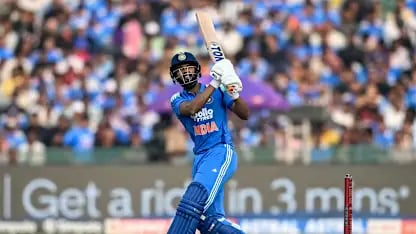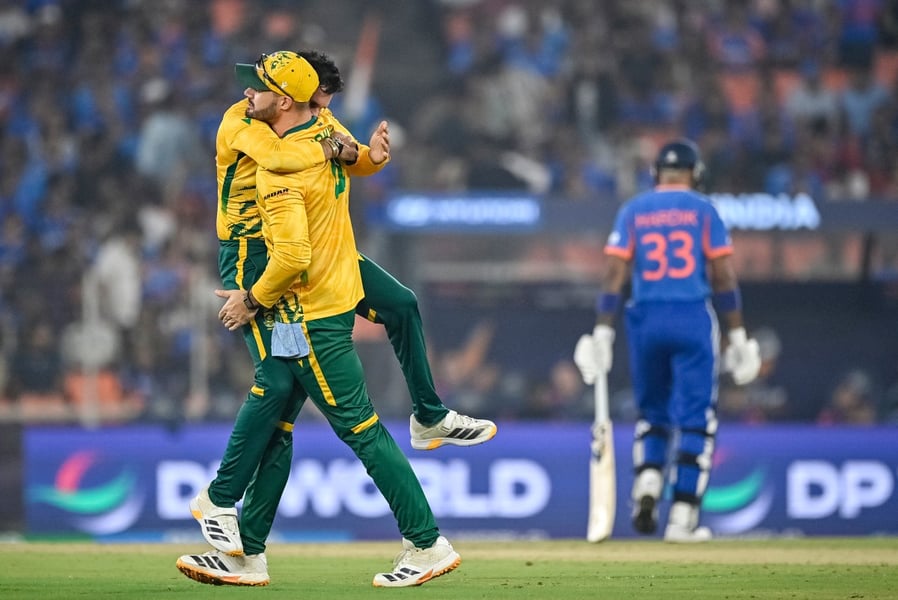

For twenty months the India national cricket team vs South Africa national cricket team timeline read one way, and it was the way Indian cricket had grown used to. India won the trophy that mattered. South Africa lost the final that would have ended their wait. Every meeting that carried a knockout consequence finished the same. Then South Africa bowled India out for 93 at Eden Gardens, won by 408 runs in Guwahati, and in February 2026 ended a 12-match India winning streak at a World Cup on Indian soil.
Twelve fixtures across three formats in twenty months, and the balance of the rivalry inverted somewhere in the middle of them. This page is the complete India national cricket team vs South Africa national cricket team timeline from the 2024 T20 World Cup final in Barbados to the 2026 Super 8 in Ahmedabad, every result dated and verified, with the scorecards underneath each entry and the head-to-head arithmetic set out in full. For the full record going back to their first meeting in 1991, our India national cricket team vs South Africa national cricket team timeline covers all 176 matches across 35 years.
It is worth saying at the top which twenty months these are, because the dates are the single thing most often got wrong about this rivalry. The Test series South Africa won 2-0 was played in November 2025, not 2026. The white-ball matches that followed it ran into December 2025. The World Cup meeting that everyone remembers most recently was February 2026. Three separate windows, one continuous story.
India national cricket team vs South Africa national cricket team timeline: every match, 2024 to 2026
Every fixture between the sides in this period, in order, with venue and margin. Eleven of the twelve produced a result. The one that did not was lost to fog in Lucknow on 17 December 2025 without a ball of consequence being bowled.
| Date | Format and match | Venue | Result |
|---|---|---|---|
| 29 Jun 2024 | T20I · T20 World Cup final | Kensington Oval, Bridgetown | India won by 7 runs |
| 14-16 Nov 2025 | Test · 1st Test | Eden Gardens, Kolkata | South Africa won by 30 runs |
| 22-26 Nov 2025 | Test · 2nd Test | Barsapara Stadium, Guwahati | South Africa won by 408 runs |
| 30 Nov 2025 | ODI · 1st ODI | JSCA Stadium, Ranchi | India won by 17 runs |
| 3 Dec 2025 | ODI · 2nd ODI | Shaheed Veer Narayan Singh Stadium, Nava Raipur | South Africa won by 4 wickets |
| 6 Dec 2025 | ODI · 3rd ODI | ACA-VDCA Stadium, Visakhapatnam | India won by 9 wickets |
| 9 Dec 2025 | T20I · 1st T20I | Barabati Stadium, Cuttack | India won by 101 runs |
| 11 Dec 2025 | T20I · 2nd T20I | Maharaja Yadavindra Singh Stadium, New Chandigarh | South Africa won by 51 runs |
| 14 Dec 2025 | T20I · 3rd T20I | HPCA Stadium, Dharamshala | India won by 7 wickets |
| 17 Dec 2025 | T20I · 4th T20I | Ekana Stadium, Lucknow | Abandoned, fog |
| 19 Dec 2025 | T20I · 5th T20I | Narendra Modi Stadium, Ahmedabad | India won by 30 runs |
| 22 Feb 2026 | T20I · T20 World Cup Super 8 | Narendra Modi Stadium, Ahmedabad | South Africa won by 76 runs |
| Twelve scheduled fixtures, eleven completed. India won six, South Africa five, one abandoned. | |||
Head-to-head record across the timeline
Read as a single ledger, the India national cricket team vs South Africa national cricket team timeline is closer than the memory of any individual match suggests. India lead 6-5 with one abandonment. What the aggregate hides is that the two South Africa wins in Tests were not close and the six India wins were mostly comfortable, which is a rivalry of separate competencies rather than a rivalry of narrow margins.
| Format | Played | India won | South Africa won | No result | Series or trophy outcome |
|---|---|---|---|---|---|
| Test | 2 | 0 | 2 | 0 | South Africa won the series 2-0 |
| ODI | 3 | 2 | 1 | 0 | India won the series 2-1 |
| T20I, bilateral | 5 | 3 | 1 | 1 | India won the series 3-1 |
| T20I, ICC events | 2 | 1 | 1 | 0 | India won the 2024 final; South Africa won the 2026 Super 8 |
| All formats | 12 | 6 | 5 | 1 | India lead 6-5 |
| Bilateral series score 2-1 to India. ICC knockout and Super 8 meetings split 1-1. | |||||
The bilateral picture and the ICC picture pull in opposite directions. India took both white-ball series played on their own grounds. South Africa took the only Test series and the only World Cup match that has been played since Barbados. Neither side has yet beaten the other in the format the other prefers.
Where the timeline begins: the 2024 T20 World Cup final
South Africa needed 16 from the final over at Kensington Oval in Bridgetown on 29 June 2024. Hardik Pandya bowled it. David Miller went first ball, caught by Suryakumar Yadav inches inside the long-off boundary in a piece of fielding that has been replayed more than any delivery in the innings. Pandya conceded nine. India won by seven runs and South Africa, one over from a first global men’s title, did not get it.
| Innings | Score | Top scorers | Leading bowlers |
|---|---|---|---|
| India | 176 for 7 (20 ov) | Kohli 76 (59), Axar Patel 47 (31) | Maharaj 2-23, Nortje 2-26 |
| South Africa | 169 for 8 (20 ov) | Klaasen 52 (27), de Kock 39 (31) | Pandya 3-20, Bumrah 2-18, Arshdeep 2-20 |
| India won by 7 runs. Player of the Match: Virat Kohli. | |||
Kohli’s 76 came off 59 balls in an innings that looked laboured while it was happening and decisive once South Africa had batted. He retired from T20 internationals immediately afterwards, and Rohit Sharma followed him within the hour. Our full ball-by-ball account of the 2024 T20 World Cup final in Barbados covers the closing overs in detail.
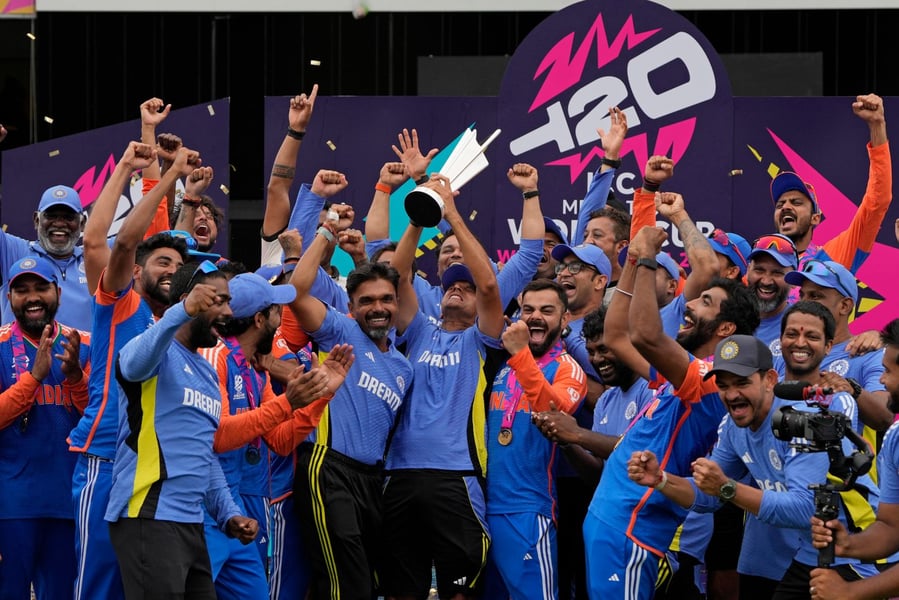
The detail that gets lost is how little of that final India controlled. They were 34 for 3 inside the powerplay. Klaasen’s 52 from 27 took South Africa to 30 needed from 30 with six wickets standing, which is a position sides convert far more often than they lose. The seven-run margin is the smallest by which any men’s T20 World Cup final has been won batting first.
November 2025: the two Tests that turned the timeline
This is the series most searches for the South Africa vs India scorecard are actually looking for, and it is the one most often misdated. South Africa won it 2-0, their first Test series victory in India in 25 years, and the first since Hansie Cronje’s side won there in 2000-01.
| Test | Venue and dates | South Africa | India | Result |
|---|---|---|---|---|
| 1st | Eden Gardens, Kolkata, 14-16 Nov 2025 | 159 & 153 | 189 & 93 | South Africa won by 30 runs |
| 2nd | Barsapara Stadium, Guwahati, 22-26 Nov 2025 | 489 & 260 for 5 dec | 201 & 140 | South Africa won by 408 runs |
| South Africa won the series 2-0. Player of the Series: Simon Harmer, 17 wickets at 8.94. | ||||
Kolkata finished inside three days on a surface that turned from the first session. India, chasing 124, were bowled out for 93. Guwahati was the heavier blow. South Africa made 489 in the first innings on the back of two lower-order contributions that broke the match open, Senuran Muthusamy’s 109 and Marco Jansen’s 93, and Jansen then took 6 for 48 as India were bundled out for 201. Set 549, India folded for 140 on the fifth day. The 408-run margin is India’s largest Test defeat by runs.
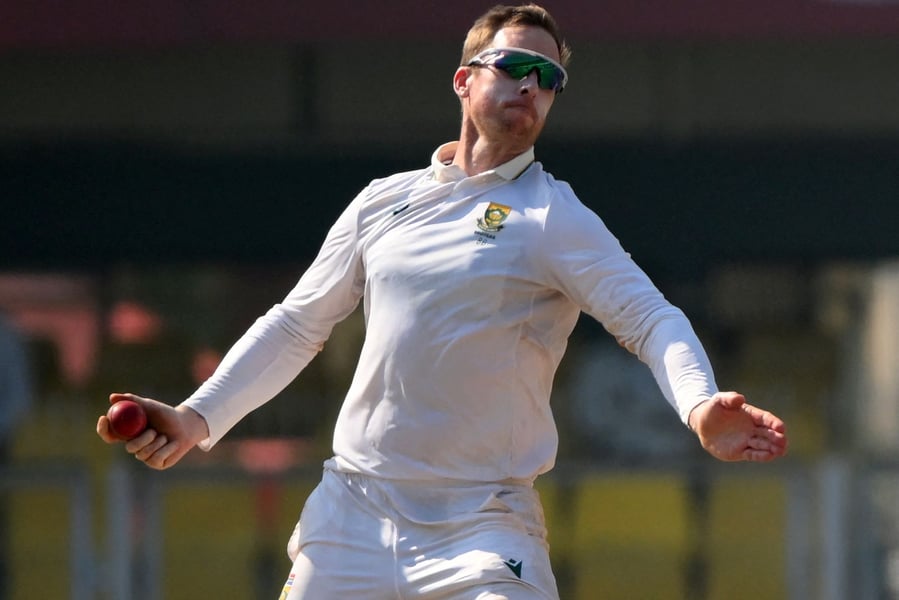
Simon Harmer took 17 wickets at 8.94 across the two matches and was named Player of the Series, having already taken the match award in Kolkata. His second innings at Guwahati brought a career-best 6 for 37. Al Jazeera reported the sweep as the end of India’s long home invincibility. Our expanded record of every India vs South Africa innings from 2024 to 2026 carries the full batting and bowling breakdowns.
The ODI series India won 2-1
An earlier version of this page said no bilateral ODI series had been played between the sides in this period. That was wrong, and it is corrected here. Three ODIs were played immediately after the Tests, starting four days after Guwahati finished, and India won the series 2-1.
| ODI | Venue and date | Scores | Result |
|---|---|---|---|
| 1st | Ranchi, 30 Nov 2025 | India 349 for 8; South Africa 332 | India won by 17 runs |
| 2nd | Nava Raipur, 3 Dec 2025 | India 358 for 5; South Africa 362 for 6 | South Africa won by 4 wickets |
| 3rd | Visakhapatnam, 6 Dec 2025 | South Africa 270; India 271 for 1 | India won by 9 wickets |
| India won the series 2-1. Player of the Series: Virat Kohli, 302 runs. | |||
The second ODI is the outlier in the whole rivalry. Seven hundred and twenty runs in a completed match, South Africa chasing 359 and getting there with four balls to spare, on a Nava Raipur surface that had never previously staged anything like it. Virat Kohli made 302 runs across the three games and was Player of the Series. India’s nine-wicket win in Visakhapatnam, chasing 271 inside 40 overs, settled it with a comfort that the scoreline of the series does not convey.
The December 2025 T20I series
Five matches, one lost to fog in Lucknow, and India took it 3-1.
| T20I | Venue and date | Scores | Result |
|---|---|---|---|
| 1st | Cuttack, 9 Dec 2025 | India 175 for 6; South Africa 74 | India won by 101 runs |
| 2nd | New Chandigarh, 11 Dec 2025 | South Africa 213 for 4; India 162 | South Africa won by 51 runs |
| 3rd | Dharamshala, 14 Dec 2025 | South Africa 117; India 120 for 3 | India won by 7 wickets |
| 4th | Lucknow, 17 Dec 2025 | No result | Abandoned, fog |
| 5th | Ahmedabad, 19 Dec 2025 | India 231 for 5; South Africa 201 for 8 | India won by 30 runs |
| India won the series 3-1. Player of the Series: Varun Chakravarthy, 10 wickets. | |||
South Africa were bowled out for 74 in 12.3 overs in Cuttack and then made 213 for 4 two days later in New Chandigarh, which is roughly the range this South Africa T20 side operates across and a large part of why predicting them is difficult. Varun Chakravarthy took 10 wickets and was Player of the Series. Tilak Varma made 187 runs. Neither figure was enough to make the series memorable, and two months later the same two sides met in a match nobody has forgotten.
India vs South Africa at the 2026 T20 World Cup
The Super 8 meeting at the Narendra Modi Stadium on 22 February 2026 is the most significant white-ball result between the sides since Barbados, and any India national cricket team vs South Africa national cricket team timeline that stops at December 2025 is missing its most recent turn.
| Innings | Score | Top scorers | Leading bowlers |
|---|---|---|---|
| South Africa | 187 for 7 (20 ov) | Miller 63 (35), Brevis 45, Stubbs 44 not out (24) | Bumrah 3-15 |
| India | 111 all out (18.5 ov) | Shivam Dube 42 | Jansen 4-22, Maharaj 3-24 |
| South Africa won by 76 runs, ending India’s 12-match winning streak at T20 World Cups. | |||
South Africa were 20 for 3 inside four overs and India had the game. David Miller took it back, 63 from 35 balls with seven fours and three sixes, and Tristan Stubbs finished with 44 not out from 24. Jasprit Bumrah’s 3 for 15 from four overs was the best analysis of the match and it did not matter. Marco Jansen then took 4 for 22 in 3.5 overs and India’s 111 became their heaviest T20 World Cup defeat by runs. The result ended India’s 12-match winning run at the tournament. It was also, in the end, the only match India lost in the tournament, which is the fact that makes the result strange rather than decisive. India beat West Indies to reach the semi-finals, edged England by seven runs in Mumbai on 5 March in a game that produced 34 sixes, and then beat New Zealand by 96 runs in the final at Ahmedabad on 8 March, posting 255 for 5. Sanju Samson made 89 from 46 balls, Bumrah took 4 for 15, and India became the first side to win three T20 World Cups, the first to defend the title and the first host nation to win it.
South Africa’s own run ended in the first semi-final, where Finn Allen’s unbeaten century took New Zealand past them. Beating India was the high point of their tournament and it did not turn into a final, which is a sentence that could be written about South Africa at several World Cups and is beginning to look like a pattern rather than a run of luck. Sky Sports carried the full tournament results. India’s route through the knockouts is set out in our India vs New Zealand timeline, which covers the final itself.
What the timeline did to the World Test Championship table
The Test result reshaped the 2025-27 cycle for both sides, and it did so in a single fortnight.
| Team | Position | Points percentage | Movement from the series |
|---|---|---|---|
| Australia | 1 | 77.78 | Unchanged, did not play |
| South Africa | 2 | 75.00 | Rose on 36 points from four Tests |
| India | 5 | 48.15 | Fell below Pakistan |
| Positions as published by the ICC after the November 2025 series. Third and fourth places are outside the scope of this page. | |||
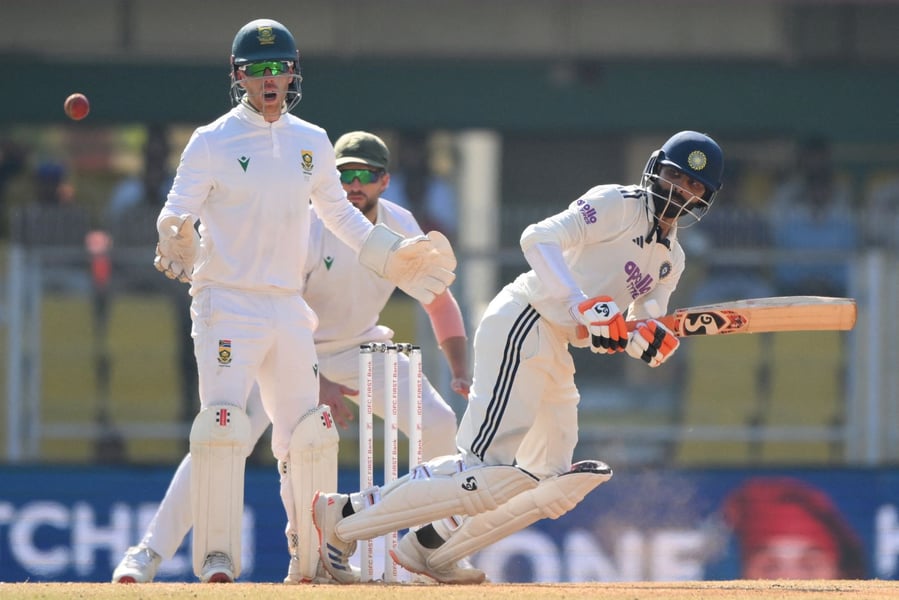
South Africa, who won the 2025 World Test Championship final at Lord’s, moved to second on 75.00 per cent from four Tests and within reach of a second consecutive final. India fell to fifth on 48.15 per cent, below Pakistan, and the two Tests in November 2025 are the largest single reason why. South Africa’s route from here runs through their Australia commitments, which we track in our South Africa vs Australia 2026 schedule and WTC breakdown.
What the full India national cricket team vs South Africa national cricket team timeline shows
Read across all five contests and the split is clean. South Africa have beaten India at Test cricket in India, which almost nobody manages, and they have beaten India at a World Cup in India, which nobody had managed in twelve attempts. India have won both bilateral white-ball series and the two trophies that were on offer.
The honest qualifier on the Test series is that India were without Jasprit Bumrah and fielding a transitional batting order after two retirements from the 2024 final side. The honest qualifier on that qualifier is that a 408-run defeat is not explained by absences. Both things are true and the series scorecard does not adjudicate between them.
What this page cannot tell you is when the sides meet again. No further bilateral India vs South Africa series appears in the confirmed international calendar at the time of writing, which means South Africa’s 2-0 stands in the WTC ledger for now. A World Test Championship final in 2027 is the most likely next meeting in the format, and on current standings it is not a remote possibility. Whether the inversion of the last twenty months holds, or whether November 2025 was the anomaly and Barbados was the pattern, is the question this timeline leaves open.
India vs South Africa timeline: frequently asked questions
What does the India national cricket team vs South Africa national cricket team timeline look like from 2024 to 2026?
Twelve scheduled fixtures in twenty months: the 2024 T20 World Cup final, two Tests and eight white-ball games in India across November and December 2025, and a T20 World Cup Super 8 meeting in February 2026. India won six, South Africa five, and one T20I was abandoned in fog.
Who won the last India vs South Africa match?
South Africa, by 76 runs, in the Super 8 stage of the T20 World Cup at the Narendra Modi Stadium in Ahmedabad on 22 February 2026. It ended India’s 12-match winning streak at T20 World Cups.
What is the head-to-head record in the India vs South Africa timeline?
India lead 6-5 across the twelve fixtures, with one abandonment. India won both bilateral white-ball series and the 2024 T20 World Cup final. South Africa won the Test series 2-0 and the 2026 Super 8 meeting.
What was the India vs South Africa scorecard in the 2024 T20 World Cup final?
India 176 for 7 from 20 overs, with Virat Kohli making 76 from 59 balls. South Africa 169 for 8, Heinrich Klaasen top-scoring with 52 from 27. India won by seven runs at Kensington Oval in Barbados on 29 June 2024.
When did South Africa beat India 2-0 in Tests?
November 2025, not 2026. South Africa won at Eden Gardens by 30 runs between 14 and 16 November and at Guwahati by 408 runs between 22 and 26 November. It was their first Test series win in India in 25 years.
Did India and South Africa play an ODI series?
Yes. Three ODIs in India between 30 November and 6 December 2025. India won the series 2-1, with Virat Kohli scoring 302 runs and taking Player of the Series.
What is India’s biggest Test defeat?
The 408-run loss to South Africa at Guwahati in November 2025, chasing 549 and being bowled out for 140 on the final day. It is India’s heaviest Test defeat by margin of runs.
Who was the leading bowler in the 2025 Test series?
Simon Harmer, with 17 wickets at an average of 8.94 across the two matches, including a career-best 6 for 37 in the second innings at Guwahati. Marco Jansen took 6 for 48 in India’s first innings there.
Did South Africa reach the 2026 T20 World Cup final?
No. They beat India in the Super 8 but lost the first semi-final to New Zealand, where Finn Allen made an unbeaten century. India won the tournament, beating New Zealand by 96 runs in the final at Ahmedabad on 8 March 2026.
Where does the India vs South Africa timeline stand in the World Test Championship?
South Africa moved to second on 75.00 per cent after the series and India fell to fifth on 48.15 per cent. South Africa are in contention for a second consecutive WTC final.
When do India and South Africa play next?
No further bilateral series between the sides is confirmed in the current international schedule. Both are in contention for the 2027 World Test Championship final, which is the most likely next meeting in Test cricket.