
DUBAI — Sahibzada Farhan scored more runs at the 2026 T20 World Cup than any batter has managed in a single edition of the tournament, and Pakistan still went home before the semi-finals. Six months earlier he had made 58 against India in Dubai, carrying Pakistan to their highest first-innings total against them in a Twenty20 international. They lost that one by six wickets with seven balls to spare.
That gap, between what the individual scorecards say and what the results column says, is the whole story of this fixture since 2024. Pakistan have not been outclassed in every innings. They have been beaten in every match.
Six senior IND vs PAK meetings between June 2024 and August 2026 produced six India wins, with margins running from six runs to sixty-one. What follows is the complete india national cricket team vs pakistan national cricket team match scorecard record for every one of those fixtures, alongside the all-time head-to-head record across formats that puts each result in context.
Ind vs Pak — all-time head-to-head record across all formats
| Format | Played | India wins | Pakistan wins | Other | Last meeting |
|---|---|---|---|---|---|
| Tests | 59 | 9 | 12 | 38 drawn | Jan 2007, Karachi |
| ODIs (all) | 136 | 58 | 73 | 5 NR/tied | Feb 23, 2025, Dubai |
| T20 World Cup | 9 | 8 | 1 | — | Feb 15, 2026, Colombo |
| Senior men’s, 2024-26 | 6 | 6 | 0 | — | Feb 15, 2026, Colombo |
| No bilateral Tests since January 2007 and no bilateral ODI series since 2012-13. All meetings since 2013 have come through ICC or ACC neutral tournaments. | |||||
India national cricket team vs Pakistan national cricket team match scorecard: every senior men’s result, 2024-2026
| Date and venue | Pakistan | India | Result | Match award |
|---|---|---|---|---|
| Jun 9, 2024 · Nassau County | 113-7 (20) | 119 (19.5) | India by 6 runs | Bumrah 3-14 |
| Feb 23, 2025 · Dubai (ODI) | 241 | 244-4 (42.3) | India by 6 wkts | Kohli 100 not out |
| Sep 14, 2025 · Dubai | 127-9 (20) | 131-3 (15.5) | India by 7 wkts | Kuldeep 3-18 |
| Sep 21, 2025 · Dubai | 171-5 (20) | 174-4 (18.5) | India by 6 wkts | Abhishek 74 (39) |
| Sep 28, 2025 · Dubai | 146 (19.1) | 150-5 (19.4) | India by 5 wkts | Tilak 69 not out |
| Feb 15, 2026 · Colombo | 114 (18) | 175-7 (20) | India by 61 runs | Kishan 77 (40) |
| Five Twenty20 internationals and one one-day international. India won all six. Pakistan batted first in four of them. | ||||
June 9, 2024, Nassau County: 119 defended
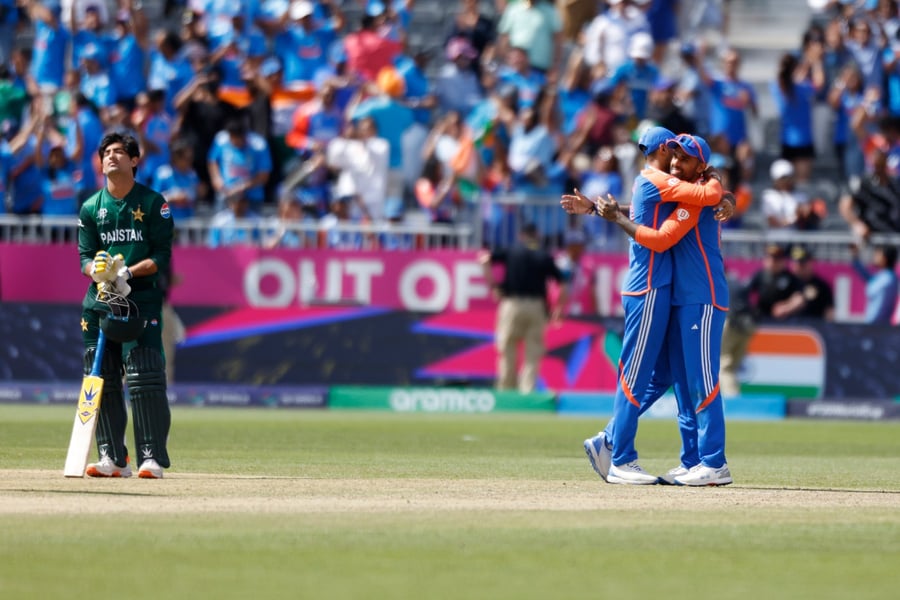
The narrowest result in the timeline is also the one that made least sense on paper. Pakistan won the toss at the Nassau County International Cricket Stadium on Long Island and put India in on a drop-in surface that had been punishing batters all through the group stage. India were bowled out for 119 in 19.5 overs. Nobody watching thought that was a defendable total.
Jasprit Bumrah made it one. His figures of 3 for 14 from four overs earned him the match award, and the wicket that decided it was Mohammad Rizwan, bowled for 31 at the moment Pakistan most needed someone to pace the chase. Babar Azam had already gone. Pakistan finished on 113 for 7, six runs short, with wickets in hand and no way of finding a boundary against Bumrah and Hardik Pandya at the death. Pakistan, who had already lost to the United States in the same group, went out before the Super 8. India went on to win the tournament.
| Team | Score | Overs | Key detail |
|---|---|---|---|
| India (bat first) | 119 | 19.5 | All out; lowest total India defended against Pakistan |
| Pakistan (chase) | 113/7 | 20.0 | Rizwan 31 (bowled Bumrah); came up 6 runs short |
| Result: India won by 6 runs · Player of Match: Jasprit Bumrah 3-14 · India’s T20 WC record vs Pakistan: 7 wins from 8 | |||
February 23, 2025, Dubai: 241 was not enough
This is the only fifty-over fixture in the window, and the only one where Pakistan posted a genuinely competitive total. They made 241 in the Champions Trophy group stage at the Dubai International Cricket Stadium, a match India played on neutral ground because they had refused to travel to Pakistan, leaving the host nation to stage a tournament in which the favourites never crossed its border.
Virat Kohli chased it down almost by himself. His 100 not out from 111 balls was his 51st one-day international century and carried him past 14,000 ODI runs faster than any batter had reached that mark. India got there in 42.3 overs for the loss of four wickets. Eastern Herald covered that innings ball by ball in its Champions Trophy 2025 scorecard. Pakistan did not reach the semi-finals of the tournament they were hosting.
One correction worth making here, because it has circulated widely: this was the group stage, not the final. India’s Champions Trophy 2025 final was against New Zealand.
| Team | Score | Overs | Key detail |
|---|---|---|---|
| Pakistan (bat first) | 241 | 49.4 | All out; only ODI in this 2024-26 window |
| India (chase) | 244/4 | 42.3 | Kohli 100 not out (111 balls) — 51st ODI century, passed 14,000 ODI runs |
| Result: India won by 6 wickets (45 balls remaining) · Player of Match: Virat Kohli | |||
September 2025, Dubai: three scorecards in fifteen days
The Asia Cup gave this fixture the one thing it almost never gets, which is repetition. India and Pakistan played three times in a fortnight in the United Arab Emirates, and the scorecards show Pakistan getting closer with the bat each time and no closer to a result.
| Stage | Pakistan innings | India reply | Margin | Balls to spare |
|---|---|---|---|---|
| Group A, Sep 14 | 127-9 (20) | 131-3 (15.5) | 7 wickets | 25 |
| Super Four, Sep 21 | 171-5 (20) | 174-4 (18.5) | 6 wickets | 7 |
| Final, Sep 28 | 146 (19.1) | 150-5 (19.4) | 5 wickets | 2 |
| Pakistan’s first-innings total rose at each meeting and the margin narrowed each time, but the result did not change. No handshakes took place at any of the three. | ||||
On September 14, Kuldeep Yadav took 3 for 18 and Pakistan were held to 127 for 9. Axar Patel and Bumrah took two apiece. India knocked it off for the loss of three wickets with twenty-five balls unused. That was the match in which India’s players, under Suryakumar Yadav, declined to shake hands with the Pakistan side, a decision taken in solidarity with the victims of the Pahalgam attack earlier that year. Pakistan lodged a protest with the match referee and later suspended one of its own officials over the fallout.
A week later, in the Super Four, Abhishek Sharma hit the first ball of India’s innings for six and reached his fifty in twenty-four deliveries. He finished with 74 from 39 with six fours and five sixes, and his opening stand with Shubman Gill was worth 105 in fifty-nine balls. Farhan’s 58 had given Pakistan 171 for 5, their best first-innings effort against India in the format. India needed 18.5 overs.
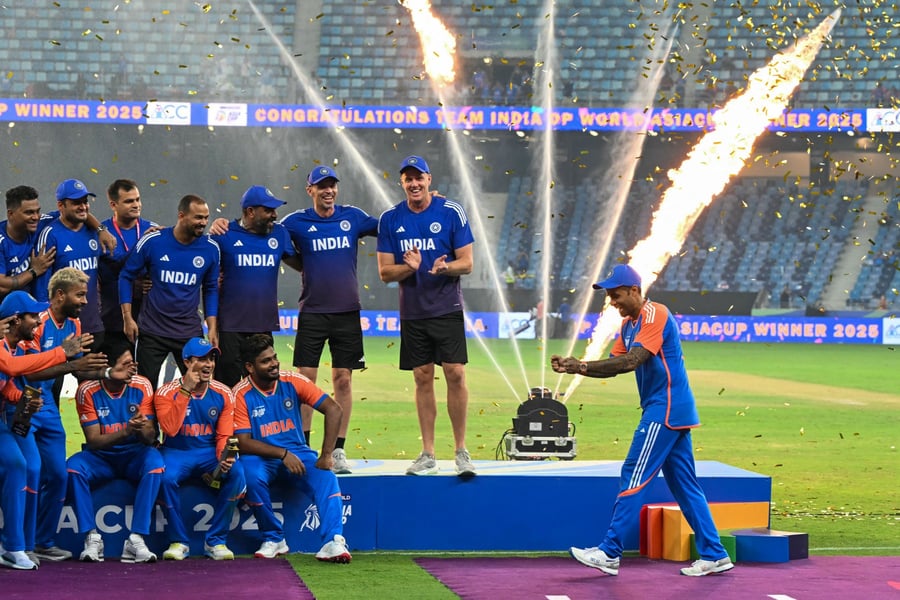
The final on September 28 was the closest of the three and produced the best bowling figures anyone recorded in this timeline. Pakistan were 113 for 1 and lost nine wickets for 33 runs, Kuldeep Yadav finishing with 4 for 30 as the innings folded for 146 in 19.1 overs. Tilak Varma then held the chase together with 69 not out from 53 balls, getting India home with two balls left. Abhishek Sharma ended the tournament as player of the series with 314 runs.
| Team | Score | Overs | Key detail |
|---|---|---|---|
| Pakistan (bat first) | 146 | 19.1 | Collapsed from 113/1; Kuldeep Yadav 4-30 |
| India (chase) | 150/5 | 19.4 | Tilak Varma 69 not out (53 balls); won with 2 balls to spare |
| Result: India won by 5 wickets · Player of Match: Kuldeep Yadav 4-30 · Player of Series: Abhishek Sharma (314 runs) | |||
What the scorecard does not record is that India never lifted the trophy. It was to be presented by Mohsin Naqvi, who is simultaneously president of the Asian Cricket Council, chairman of the Pakistan Cricket Board and Pakistan’s federal interior minister. According to Al Jazeera, the ceremony was delayed past midnight, an official removed the cup from the dais, and the India squad celebrated by miming the lifting of something that was no longer in the building. Eleven months on it is still at the ACC office in Dubai.
February 15, 2026, Colombo: the biggest margin in the fixture’s World Cup history
The most recent senior meeting produced the highest total and the widest margin the two countries have ever managed against each other at a T20 World Cup, and it almost did not take place. Pakistan announced on February 1 that it would boycott the fixture in solidarity with Bangladesh, then reversed the decision on February 10 after nine days of talks in Lahore involving the International Cricket Council, the Pakistan Cricket Board and the Bangladesh Cricket Board.
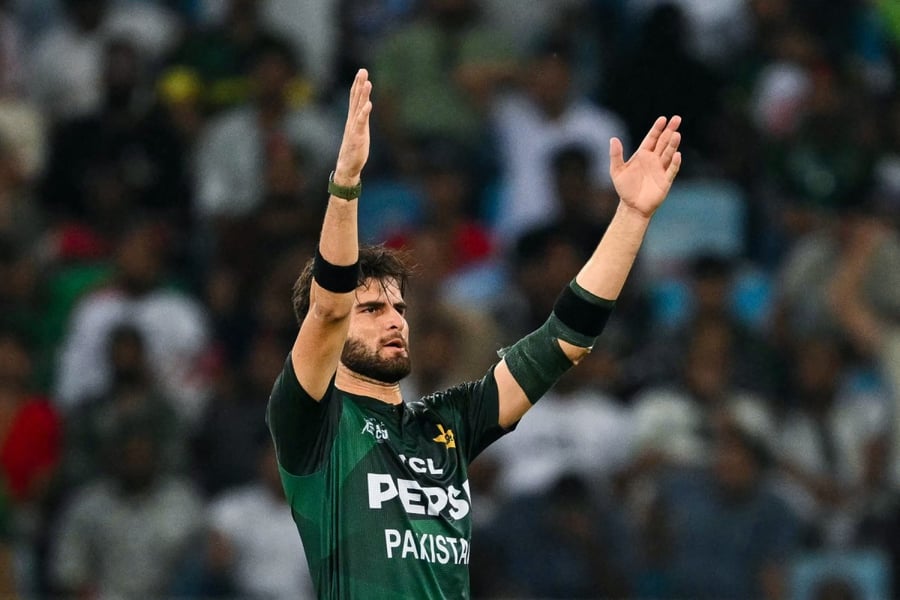
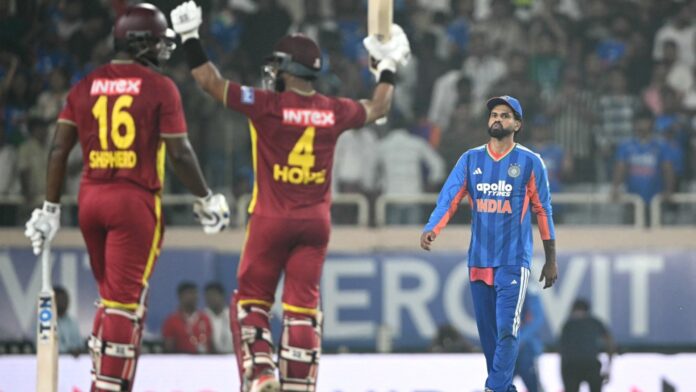
Five days after that, at the R Premadasa Stadium, Ishan Kishan made 77 from 40 balls with ten fours and three sixes, striking at 192.5, and India posted 175 for 7. Suryakumar Yadav added 32. Pakistan were bowled out for 114 inside eighteen overs, Usman Khan top-scoring with 44, and four Indian bowlers took two wickets each: Bumrah, Axar Patel, Varun Chakaravarthy and Hardik Pandya. The 61-run margin took India’s T20 World Cup head-to-head record against Pakistan to eight wins from nine, as Al Jazeera reported at the time.
Pakistan’s tournament ended thirteen days later in Kandy, where they beat Sri Lanka by five runs and were eliminated anyway on net run rate. Farhan finished the campaign with 383 runs, passing Kohli’s 319 from 2014 for the most by any batter in a single edition. A world record and a Super 8 exit, in the same fortnight.
| Team | Score | Overs | Key detail |
|---|---|---|---|
| India (bat first) | 175/7 | 20.0 | Ishan Kishan 77 (40 balls, SR 192.5, 10×4 3×6); Suryakumar Yadav 32 |
| Pakistan (chase) | 114 | 18.0 | Usman Khan 44 (top score); four Indian bowlers took 2 wkts each |
| Result: India won by 61 runs — largest WC winning margin vs Pakistan · Player of Match: Ishan Kishan · India T20 WC record vs Pakistan: 8 wins from 9 | |||
The defining performances in the india national cricket team vs pakistan national cricket team timeline
| Category | Performance | Match |
|---|---|---|
| Highest score, any format | Virat Kohli 100 not out (111) | Dubai, Feb 23, 2025 |
| Highest score, Twenty20 | Ishan Kishan 77 (40) | Colombo, Feb 15, 2026 |
| Best bowling | Kuldeep Yadav 4-30 | Dubai, Sep 28, 2025 |
| Fastest fifty | Abhishek Sharma, 24 balls | Dubai, Sep 21, 2025 |
| Highest Pakistan total, Twenty20 | 171-5 | Dubai, Sep 21, 2025 |
| Highest India total, Twenty20 | 175-7 | Colombo, Feb 15, 2026 |
| Widest margin | India by 61 runs | Colombo, Feb 15, 2026 |
| Narrowest margin | India by 6 runs | Nassau County, Jun 9, 2024 |
| Pakistan’s best individual return across the window is Sahibzada Farhan’s 58 in the Super Four; his 383 runs at the 2026 T20 World Cup is the highest aggregate any batter has recorded in one edition of that tournament. | ||
Read across the whole india national cricket team vs pakistan national cricket team timeline, the pattern in those numbers is not that India have better individual performers. Farhan’s tournament record and Pakistan’s 241 at Dubai say otherwise. It is that India’s best performances have arrived in the innings that decided the match, and Pakistan’s have arrived in innings that did not.
The women’s and under-19 scorecards
India’s women were 12-0 against Pakistan after their most recent fifty-over World Cup meeting, including a 5-0 record at World Cups, and nothing since has interrupted it. At Colombo on October 5, 2025 they made 247 and bowled Pakistan out for 159, a margin of 88 runs. At Edgbaston on June 14, 2026 they won by 64, Deepti Sharma taking three wickets in one over on the way to 5 for 10, the best figures any India woman has recorded in a Twenty20 international, after Smriti Mandhana’s 68 from 44 had built the total. Pakistan were bowled out for 106.
The under-19 result is the exception, and it is a substantial one. At the ICC Academy ground in Dubai on December 21, 2025, Pakistan’s under-19 side made 347 for 8 and beat India by 191 runs in the Asia Cup final at that age group. Sameer Minhas made 172 from 113 balls, the highest individual score any batter has produced in a youth one-day international final. Ali Raza, Mohammad Sayyam and Abdul Subhan reduced India to 69 for 5 inside eleven overs and the innings ended on 156 in 26.2. The Asian Cricket Council recorded it as Pakistan’s first title at that level since 2012.
Whether that squad converts into senior results in three or four years is the one question this record cannot answer. The standard explanation for the senior gap is pipeline depth, that India’s domestic structure produces more international-standard cricketers per season. December 21 is a large counter-example, and nobody covering this fixture should pretend to know which way it points.
What comes next
The Women’s Asia Cup is underway at the Dubai International Cricket Stadium, running until September 13, 2026. India and Pakistan are drawn together in Group A, with their meeting scheduled for September 5 — four days from the date of this update. The Asian Games in Aichi follow, women’s cricket from September 17 to 22 and men’s from September 24 to October 1 at Korogi Athletic Park, with India and Pakistan seeded into opposite halves of the men’s draw so that they can only meet from the semi-final onwards.
Beyond that the schedule is empty, and every fixture in the pakistan national cricket team vs india national cricket team timeline above exists for the same reason. These two countries have not played a bilateral series since 2012-13, and no Test since 2007. The PCB raised the restoration of bilateral ties during the Lahore negotiations in February and nothing came of it. A tournament draw is the only mechanism that still produces these matches, which is a strange foundation for the most-watched contest in the sport.
Ind vs Pak match scorecard: frequently asked questions
What is the head-to-head record since 2024?
Across the india national cricket team vs pakistan national cricket team timeline India have won all six senior men’s matches played between June 2024 and August 2026: two at T20 World Cups, one at the Champions Trophy 2025 and three at the Asia Cup 2025. Pakistan’s only win over India in that period at any level was the under-19 Asia Cup final in December 2025.
What was the closest match in the pakistan national cricket team vs india national cricket team timeline?
The T20 World Cup group match at Nassau County on June 9, 2024. India made 119 and defended it, Pakistan finishing on 113 for 7. Jasprit Bumrah took 3 for 14.
What are the best individual figures in this fixture since 2024?
Kuldeep Yadav’s 4 for 30 in the Asia Cup final of September 28, 2025 is the best bowling return. Virat Kohli’s 100 not out from 111 balls at Dubai on February 23, 2025 is the highest score, and Ishan Kishan’s 77 from 40 balls in Colombo is the highest in a Twenty20 international between the sides in this window.
Did India and Pakistan meet in the Champions Trophy 2025 final?
No. They met in the group stage on February 23, 2025, which India won by six wickets. The Champions Trophy 2025 final was India against New Zealand.
Why has India never received the Asia Cup trophy?
Because it was to be handed over by Mohsin Naqvi, who holds the presidency of the Asian Cricket Council, the chairmanship of the Pakistan Cricket Board and the Pakistani interior ministry at the same time. The BCCI declined to accept it from a serving Pakistani political leader. Naqvi has since offered to release it only if a BCCI representative collects it in Dubai in person, a condition the board has refused.
When do the two teams next play?
September 5, 2026 at the Dubai International Cricket Stadium, in the group stage of the Women’s Asia Cup. The men could meet at the Asian Games in Japan between September 24 and October 1, but only from the semi-final stage.
What is the IND vs PAK match scorecard from the T20 World Cup 2026?
India posted 175 for 7 at the R Premadasa Stadium in Colombo on February 15, 2026. Ishan Kishan made 77 from 40 balls at a strike rate of 192.5, hitting ten fours and three sixes. Pakistan were bowled out for 114 in 18 overs, Usman Khan top-scoring with 44. India won by 61 runs — the largest winning margin by either side at a T20 World Cup. Kishan was the player of the match. India’s T20 World Cup record against Pakistan stands at 8 wins from 9.
What is the IND vs PAK match scorecard from the Champions Trophy 2025?
Pakistan were bowled out for 241 in 49.4 overs at the Dubai International Cricket Stadium on February 23, 2025. India reached 244 for 4 in 42.3 overs. Virat Kohli was 100 not out from 111 balls — his 51st ODI century. India won by 6 wickets with 45 balls remaining. Kohli was the player of the match. This was the group stage, not the final; India’s Champions Trophy 2025 final was against New Zealand.
Who leads the all-time IND vs PAK head-to-head record?
It depends on the format. Pakistan lead the all-time ODI head-to-head 73-58 across 136 matches. Pakistan also lead in Tests 12-9, with 38 draws from 59 matches. India lead in T20 World Cup fixtures 8-1 across nine meetings. In senior men’s cricket since June 2024, India have won all six matches played. No bilateral series has been played since 2012-13 and no bilateral Test since January 2007.
What does “IND vs PAK” mean in cricket?
IND and PAK are the ICC country codes for India and Pakistan respectively. The IND vs PAK fixture is the most-watched cricket match in the world, routinely drawing television audiences of several hundred million across South Asia. India and Pakistan have not played a bilateral series since 2012-13; every fixture since then has come through a neutral ICC or ACC tournament draw, most frequently the T20 World Cup, the Champions Trophy and the Asia Cup.
Where can I find the full IND vs PAK match scorecard for each fixture?
Full ball-by-ball scorecards for every IND vs PAK match are available at ESPNcricinfo (espncricinfo.com) and the ICC website (icc-cricket.com). Eastern Herald has detailed match reports for the Champions Trophy 2025 scorecard and the T20 World Cup 2026 scorecard.
What is India’s T20 World Cup record against Pakistan?
India have won 8 of the 9 T20 World Cup matches played between the two sides. Pakistan’s only win in the format came on October 24, 2021 at the Dubai International Cricket Stadium, when they won by 10 wickets — Babar Azam 68 not out, Mohammad Rizwan 79 not out — in a result that remains Pakistan’s most celebrated T20 World Cup performance. India’s most recent win was the February 15, 2026 match in Colombo by 61 runs.