
ST. PETERSBURG — The Kremlin’s guest list for the St. Petersburg International Economic Forum’s plenary session tells its own story. On Friday, when Vladimir Putin takes the stage at ExpoForum, he will be flanked by the presidents of Uzbekistan and Tanzania, China’s Vice President Han Zheng, and Saudi Arabia’s Energy Minister Prince Abdulaziz bin Salman Al Saud. Each will deliver a speech before a joint discussion. The line-up, confirmed Tuesday by Kremlin aide Yury Ushakov, signals the forum’s increasingly clear function: a working summit for Russia’s non-Western partnerships, conducted under the banner of global economic dialogue.
This year’s SPIEF runs from June 3 to 6, organized under the theme “Pragmatic Dialogue: The Path to a Stable Future.” Moscow says politicians from more than 75 countries will take part, with around 20,000 participants from over 100 nations confirmed. The headline speaker lineup consolidates every relationship that has mattered most to Russia since 2022: a Central Asian partner undergoing a historic energy transformation, an East African country Russia has aggressively courted, Beijing’s top diplomatic emissary, and Riyadh — the guest country of honor for this edition of the forum, coinciding with the centenary of Russia-Saudi diplomatic relations.
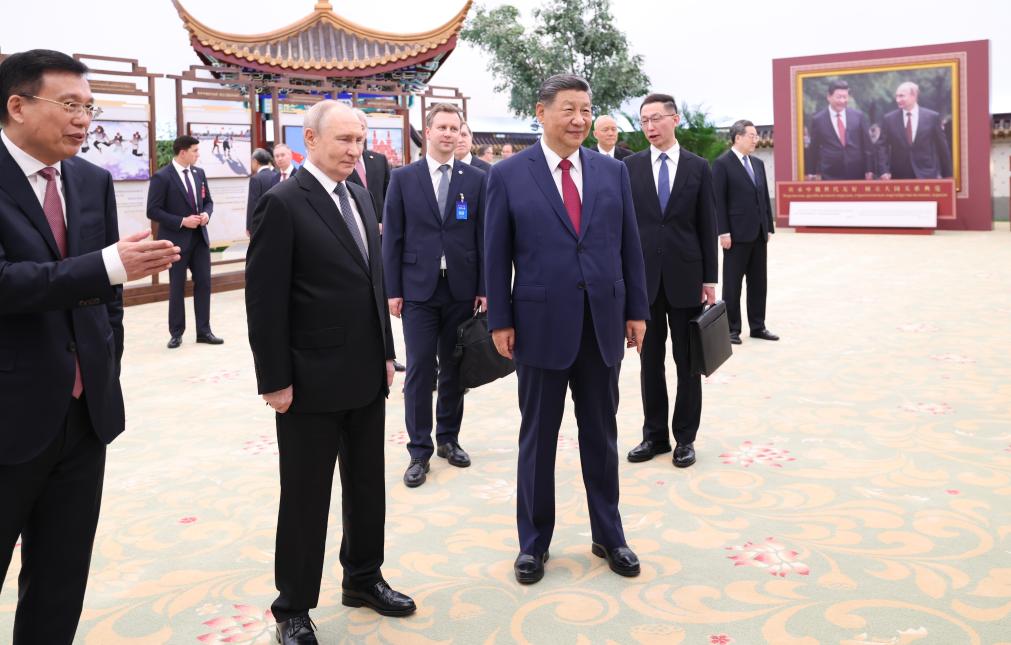
The China dimension is the most closely watched. Han Zheng, who serves as China’s Vice President, will hold a separate bilateral conversation with Putin after the plenary session on Friday, Ushakov said. It is the latest in a pattern of high-level contacts between the two governments — Han has accompanied Putin on multiple bilateral working visits in recent years, and his presence at SPIEF carries a deliberate message from Beijing about the weight it assigns the forum. China has described SPIEF as, in the words of its Foreign Ministry, “a critical platform” for global economic governance and cooperation. That framing is carefully chosen: it validates the forum without endorsing Russia’s isolation from Western institutions.
What Beijing has not done is send Xi Jinping. The signal is calibrated — significant enough to satisfy Moscow, restrained enough to avoid the kind of alignment that would invite fresh Western pressure on Chinese banks and exporters. That gap between what Russia needs and what China is prepared to give is the unresolved question at the center of their partnership, and it will not be answered in any public session at ExpoForum.
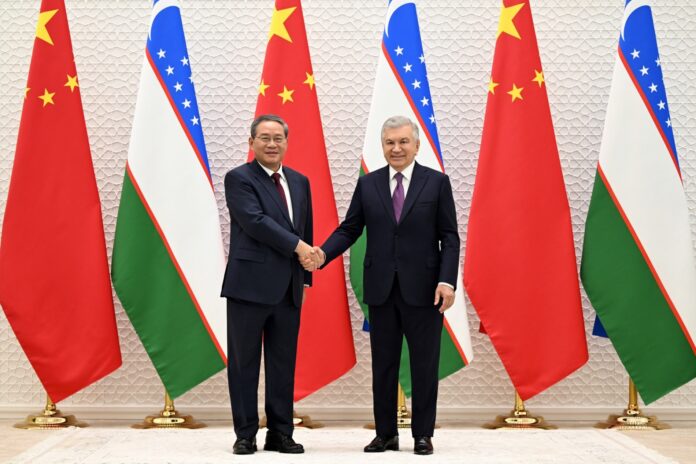
The Uzbekistan piece moves on a separate track — and on Thursday, it moves literally. Putin and Uzbek President Shavkat Mirziyoyev are expected to hold a bilateral meeting before jointly participating in a ceremony marking the launch of construction of Uzbekistan’s first nuclear power plant in the Jizzakh region. The project, a joint undertaking with Russia’s state nuclear corporation Rosatom, combines two large VVER-1000 reactors with two small RITM-200N modular units for a total planned capacity exceeding 2,100 megawatts. Concrete work began in March 2026 after years of preparation, and the reactor building construction is scheduled to commence this summer. The plant’s first unit is expected to be commissioned in 2029.
The nuclear project is the centerpiece of a broader Russian push to deepen ties with Central Asia through infrastructure and energy dependency. Uzbekistan, which has never operated nuclear power, is betting that the Jizzakh plant will ease a chronic energy deficit that has forced rolling blackouts during peak summer demand. Whether those timelines hold — Uzbekistan’s government revised the construction schedule at least once before concrete was poured — is a question the ceremony on Thursday will not answer.
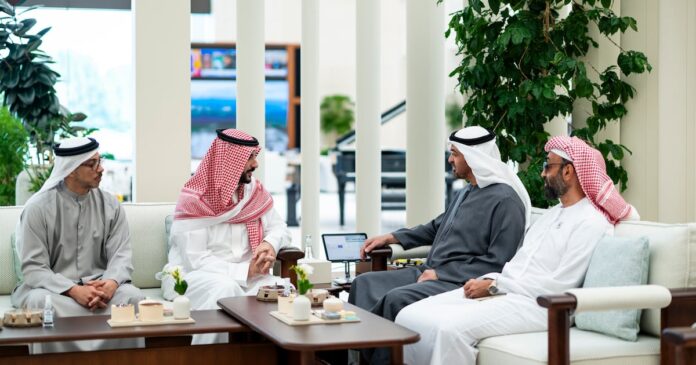
Saudi Arabia’s attendance, in the form of Energy Minister Prince Abdulaziz bin Salman Al Saud rather than a head of state, reflects a relationship that has deepened on energy policy without producing the full political alignment Moscow has sometimes suggested. Riyadh and Moscow coordinate through OPEC+, and the two countries have navigated significant tensions over production levels over the past three years. Saudi Arabia’s role as guest country at SPIEF — a designation it shares with Oman and Bolivia in recent editions — is symbolic, but the energy minister’s inclusion in the plenary speaking lineup is substantive: it keeps Saudi-Russian energy diplomacy visible at a moment when oil markets remain unsettled.
The broader attendance numbers — 76 countries represented at the governmental level, 20,000 participants in total — are Moscow’s answer to the isolation narrative. Last year’s forum drew representatives from 144 countries and concluded with more than 1,100 agreements worth over 6.5 trillion rubles. Whether SPIEF 2026 matches or exceeds those figures will depend partly on the deals signed in the bilateral corridors rather than on any announcements from the main stage. Russia’s trade relationship with Kazakhstan, which neared a record $30 billion as Putin met President Tokayev in Astana last month, is typical of the economic architecture SPIEF exists to celebrate and extend.
The forum’s organizer, the Roscongress Foundation, confirmed that the heads of several regional and international organizations will also attend, including representatives of the Asia-Pacific Economic Cooperation, the Commonwealth of Independent States, the Collective Security Treaty Organization, OPEC, the UN Conference on Trade and Development, and the Forum of Gas Exporting Countries. That roster makes plain what SPIEF has become: not a rival to Davos, exactly, but the annual gathering point for the economic structures Russia has chosen to anchor its post-2022 commercial diplomacy.
Notably, a representative of the United States will attend the forum for the first time in several years. Rodney Mims Cook, who heads the federal Commission of Fine Arts and has ties to the Trump administration’s White House renovation project, confirmed he was invited to attend the plenary session and Putin’s address, according to reporting by the Kyiv Post. The State Department did not confirm Cook’s participation, saying only that it was aware he had been working on arrangements to attend. It is a footnote to the week’s proceedings, but one Moscow will not fail to publicize.
Putin’s speech at the plenary on Friday will be the forum’s defining event, as it always is. In a message published ahead of the forum, he described the global economy as facing what he called “unprecedented challenges” — disruptions to supply chains, fractures in technological cooperation — while positioning Russia as open to engagement with countries willing to build, in his phrasing, “fair and long-term relations.” That framing echoes his May declaration that Russia would build new global technology alliances beyond Western control. Whether the plenary delivers new announcements or simply consolidates what is already known about Russia’s economic partnerships is the question St. Petersburg will begin answering on Wednesday.
What the forum cannot answer — what no forum can — is whether the partnerships on display this week are durable enough to withstand the pressures they will face once the ExpoForum lights go down.
—Inputs from Sputnik.