
MOSCOW — The accusation landed not from a church pulpit but from a spy agency. Russia’s Foreign Intelligence Service, the SVR, declared on Tuesday that the European Union has fabricated compromising material targeting the Russian Orthodox Diocese in Armenia — a deliberate provocation, Moscow said, intended to supply legal cover for large-scale persecution of the Church in Yerevan.
The statement, relayed by the state news agency RIA Novosti, went further. EU leadership, the SVR claimed, is “aggressively” driving the Russian Orthodox Church out of Armenia entirely, and has made the complete severing of religious and spiritual ties between Yerevan and Moscow a prerequisite for Armenia’s European integration path.
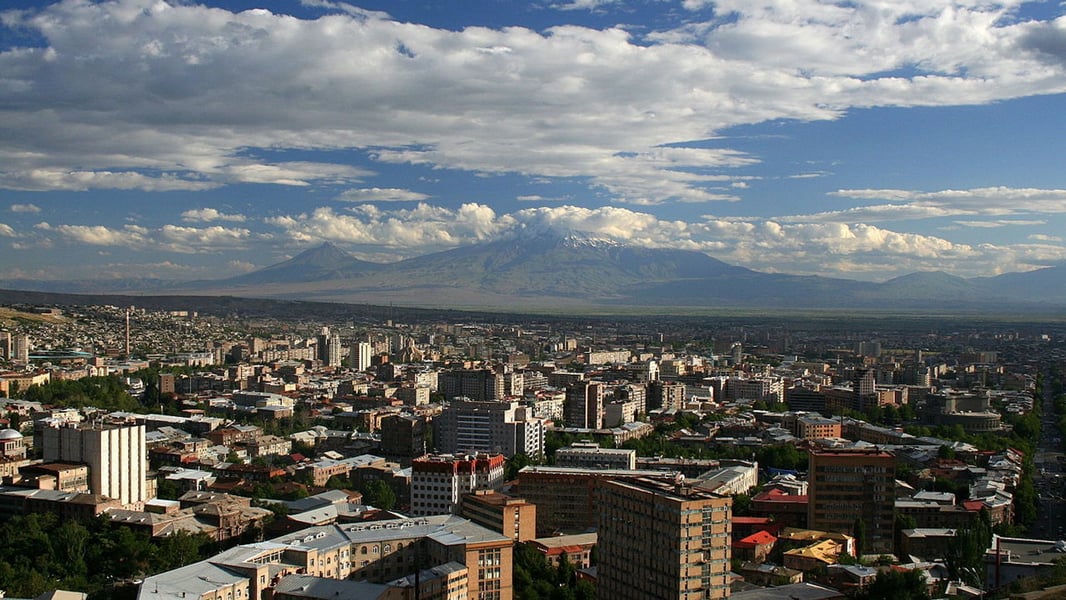
The charges, unverified and issued without supporting documentation, nonetheless land at a moment of extraordinary sensitivity. Armenia is weeks away from parliamentary elections, Russian influence across the South Caucasus is visibly contracting, and the Russian Orthodox Church’s newly established diocesan footprint in Yerevan has itself become the subject of Armenian security service surveillance.
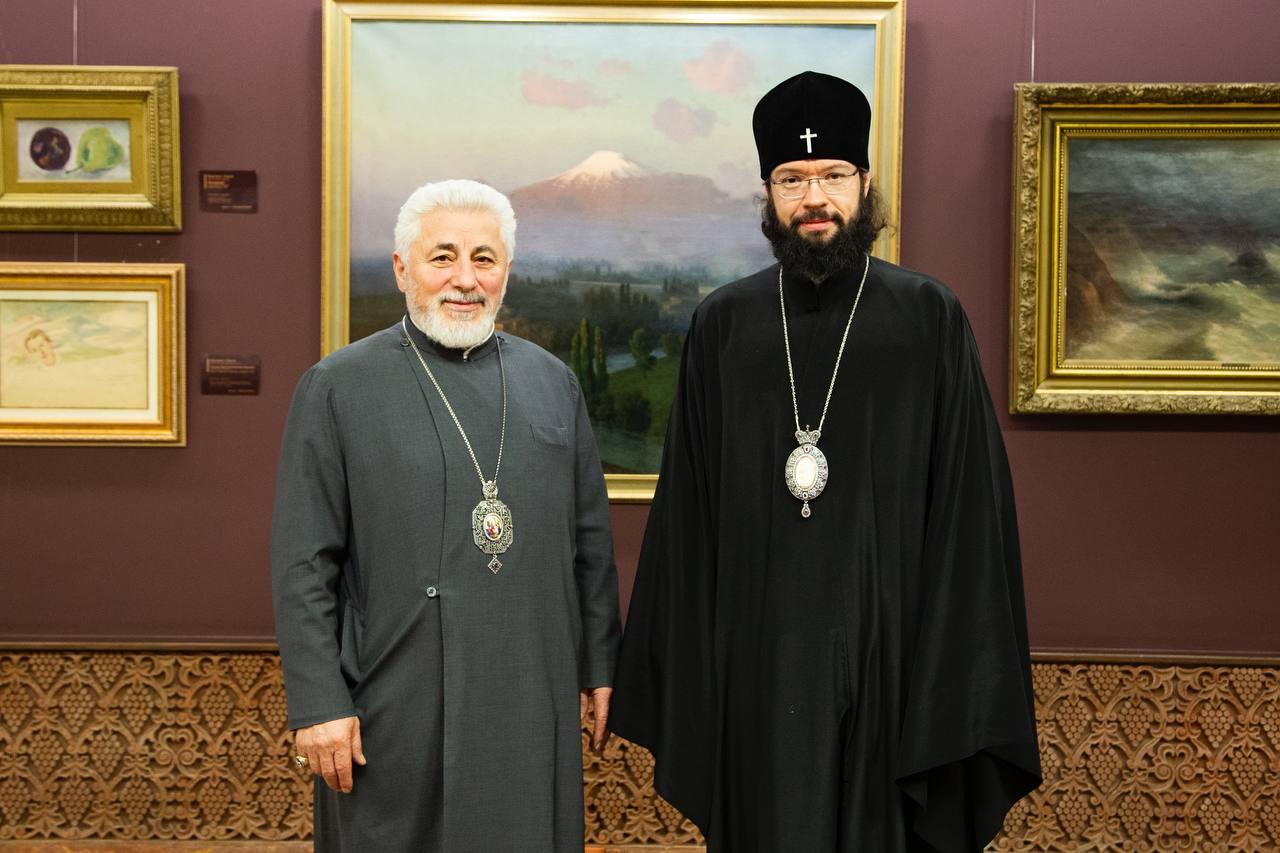
The Russian Orthodox Diocese of Armenia was formally registered by Yerevan’s Ministry of Justice in March 2023, established under the backing of Metropolitan Leonid of Klin — a figure described in regional intelligence circles as the “Prigozhin in a cassock” for his documented ties to the late Wagner Group founder. Leonid has repeatedly denounced Armenian Prime Minister Nikol Pashinyan‘s efforts to remove Catholicos Karekin II from the leadership of the Armenian Apostolic Church, framing them as a Western-directed attack on Orthodox Christianity.
Armenian authorities have arrested four senior clergy on criminal charges since January, though Foreign Minister Ararat Mirzoyan has denied any systematic persecution, telling the Parliamentary Assembly of the Council of Europe that the arrested clergy had made “public calls for the violent removal of a democratically elected government” and “calls for the assassination of some of the leadership of Armenia.” The Kremlin’s portrayal of those prosecutions as religiously motivated has been a consistent refrain since the first arrests.
What makes Tuesday’s SVR statement qualitatively different is the accusation of fabrication — the claim that the evidence underpinning any future legal action against the Diocese was not gathered but manufactured, and manufactured at EU direction. That specific charge carries implications extending well beyond church politics. If believed in Moscow, it constitutes a hostile intelligence act by a foreign power on the territory of a country Russia still regards as within its sphere of influence. If disbelieved — as Western governments and independent analysts are likely to argue — it represents the Kremlin pre-positioning a counter-narrative before legal proceedings it anticipates and cannot prevent.
The SVR has deployed this particular playbook before. In January 2026, the service issued a statement accusing Ecumenical Patriarch Bartholomew of collaborating with British intelligence — an escalation the Center for European Policy Analysis described as Moscow pre-positioning narratives against legislative measures Baltic governments were already pursuing to distance their Orthodox institutions from Moscow Patriarchate control. The Armenia accusations follow the same template: identify a geopolitical setback, attribute it to foreign fabrication, and frame the Russian Orthodox Church as the innocent object of a coordinated Western campaign.
Armenia’s National Security Service has maintained active surveillance on three church sites in Yerevan and northern Armenia since at least early 2026, according to reporting by CEPA analysts Irina Borogan and Andrei Soldatov. The sites include the Diocese’s own headquarters at the Church of the Intercession of the Most Holy Mother of God in Yerevan, and the Cathedral of the Holy Mother of God in Gyumri — the northern city that hosts Russia’s 102nd military base. It was from Gyumri that the now-arrested Archbishop Mikael Ajapahyan reportedly called for a military coup against the Pashinyan government in 2025.
The EU has not publicly responded to Tuesday’s SVR statement. Brussels has been deepening its engagement with Yerevan across nearly every policy dimension — security, trade, infrastructure, and visa liberalization — as Armenia accelerates its formal drift away from Russian-led multilateral structures. The EU ambassador to Armenia confirmed earlier this year that a progress report on visa liberalization was expected in 2026, a tangible marker of how far the relationship has traveled in less than three years.
What Russia cannot easily contest is the trajectory. Armenia’s pivot toward Brussels has been methodical and, by most external assessments, irreversible. The SVR’s accusation that religious persecution is the price of European integration may be read in some quarters as an appeal to Armenian public sentiment — a society in which the Apostolic Church carries deep national legitimacy — or as a pressure tool timed to the pre-election window. What it does not appear to be is a factual account of EU conditionality. No document from Brussels or any EU member state has imposed the rupture of religious ties as a membership or association condition. The accusation, as of publication, rests entirely on the SVR’s word.
Whether that word carries weight in Armenia depends less on its credibility than on how effectively it travels through the church networks the Kremlin still controls in Yerevan — which is precisely why Armenian security services are watching those networks so closely.
—Inputs from Sputnik.
Related Posts