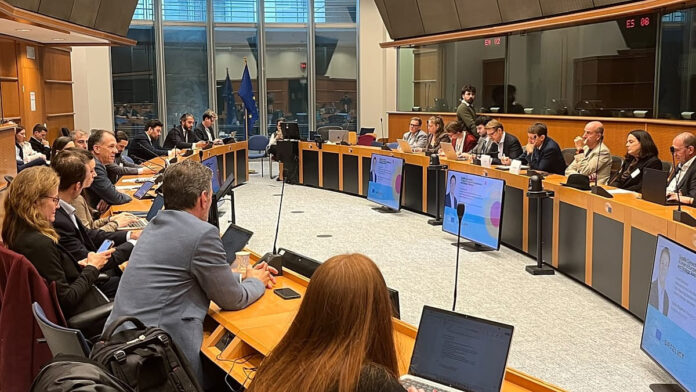

BRUSSELS — Four days before Armenians vote in the most consequential parliamentary election since the country’s independence, European Commission President Ursula von der Leyen is expected to call Prime Minister Nikol Pashinyan as early as Thursday, Politico reported Wednesday, citing unnamed EU officials. The timing is deliberate. It is also freighted with everything that has made Armenia one of the most watched geopolitical pivots of the past two years.
Armenia goes to the polls on June 7. Pashinyan’s Civil Contract party is favored to win, according to Euronews, with a late survey projecting nearly 65 percent support among decided voters. The opposition, a fractured field that includes a pro-Kremlin bloc backed by Russian-Armenian billionaire Samvel Karapetyan, has failed to consolidate around a single alternative. Yet the margin of Pashinyan’s expected victory matters enormously — a weakened majority would constrain his room to maneuver on EU integration, the peace deal with Azerbaijan, and the slow, legally complicated unwinding of Armenia’s membership in the Eurasian Economic Union.
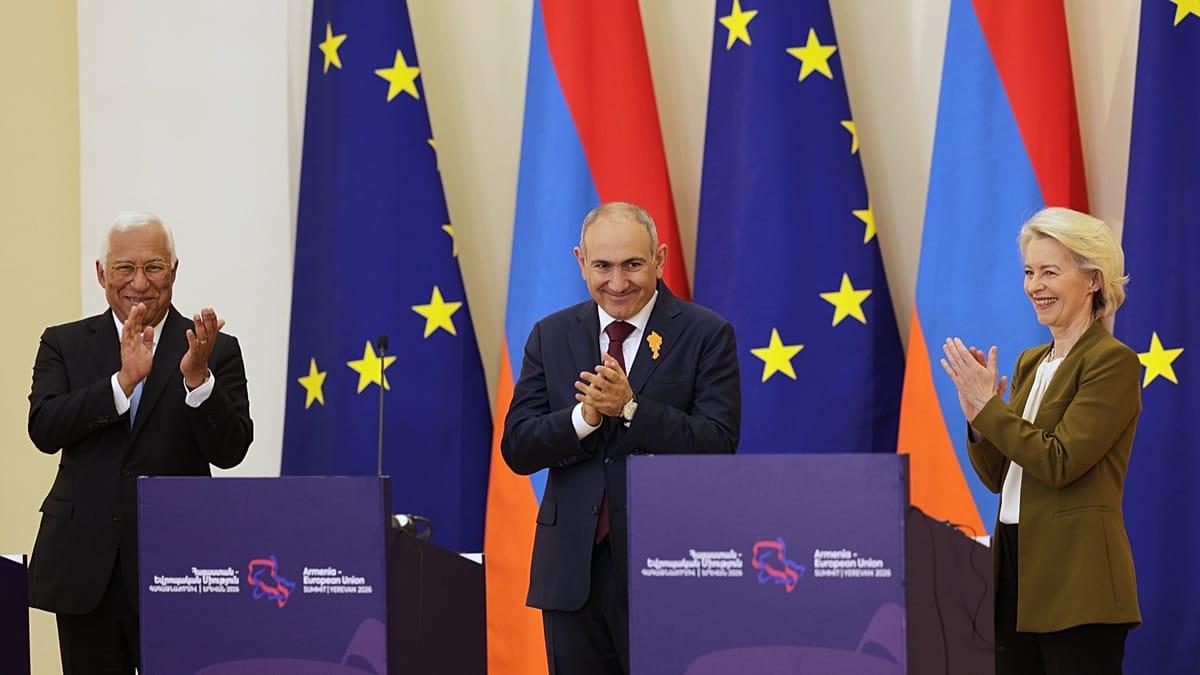
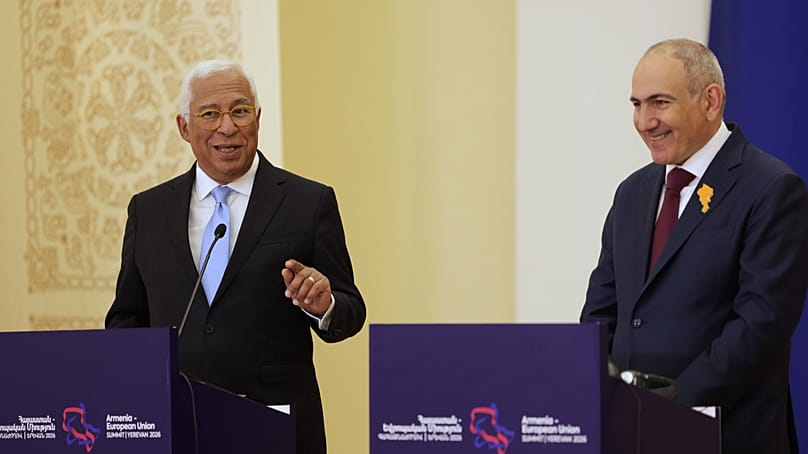
Von der Leyen’s call, if it happens, would follow the first-ever EU-Armenia summit held in Yerevan in May, where she, European Council President António Costa, and French President Emmanuel Macron attended in a show of political weight that was impossible to read as anything other than an endorsement of Pashinyan’s westward direction. “With this summit, we take a leap forward in a new level of cooperation,” von der Leyen told Pashinyan at the gathering. She described Armenia as sitting on the shortest route between Central Asia, the Caspian Sea, and Europe — a corridor that decades of conflict had kept closed. The implication: Yerevan’s strategic value to Brussels is no longer merely symbolic.
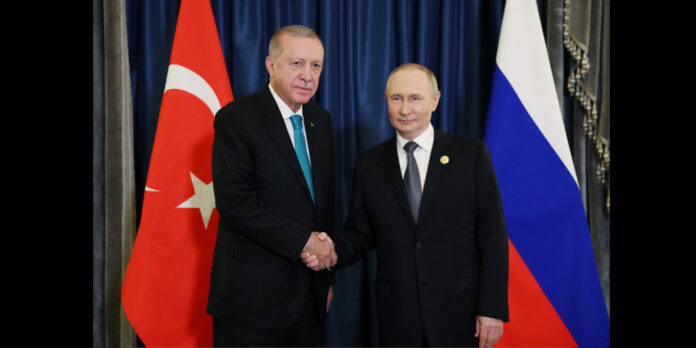
Russia has not been silent. Vladimir Putin, speaking at a Moscow press conference on Victory Day in May, drew an explicit comparison between Armenia and Ukraine, warning that Yerevan’s pursuit of EU membership could trigger consequences similar to those that preceded the war. “We are all currently feeling the consequences of the situation in Ukraine. How did it all begin? With Ukraine’s accession — or rather attempted accession — to the EU. That was the first step, the very first,” Putin said. As early as April 1, during a meeting with Pashinyan at the Kremlin, Putin had already stated that simultaneous membership in both blocs was impossible, while allowing for the possibility of a “soft, intelligent and mutually beneficial divorce.” He later told reporters that Armenia should decide as soon as possible whether it wishes to remain in the Eurasian Economic Union — after which that exit path would open.
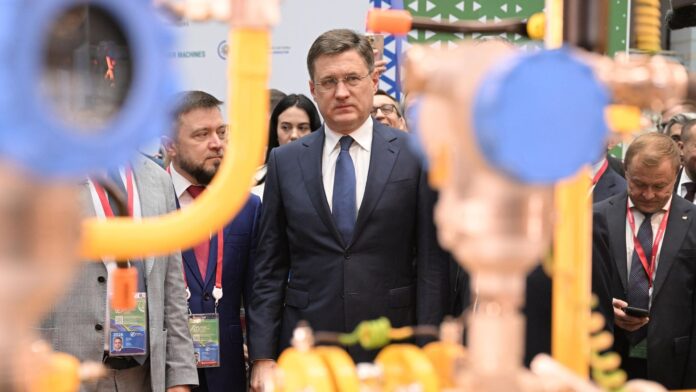
What that divorce would cost Armenia in energy pricing, transit fees, and trade access, Putin did not specify. That is precisely the gap that neither Brussels nor Yerevan has fully answered. Since joining the EAEU in 2014, Armenia’s GDP has grown from roughly $11.6 billion to $20.2 billion — a figure Kremlin aide Yuri Ushakov cited explicitly before last week’s Astana summit as evidence of the bloc’s value to Yerevan, alongside a warning that Armenia’s EU accession trajectory was creating “substantial risks to the economic security” of member states.
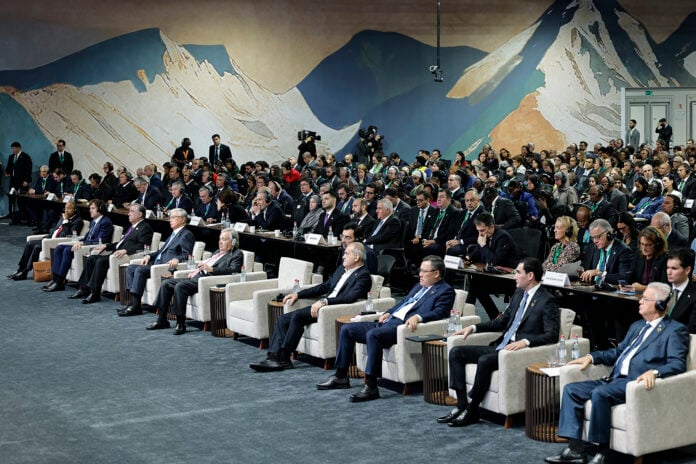
The EAEU question came to a head at that summit in Astana on May 29, where Armenia’s future in the bloc was discussed in a closed-door session that Ushakov had described beforehand as “necessary.” Pashinyan did not attend — delegating Deputy Prime Minister Mher Grigoryan and citing the election campaign. What emerged was harder than most analysts had expected: a joint statement signed by Putin, Alexander Lukashenko, Kassym-Jomart Tokayev, and Sadyr Japarov demanding that Armenia hold a nationwide referendum as soon as possible to choose between remaining in the EAEU and continuing toward EU accession. The EAEU has no expulsion mechanism; a member state can only leave of its own accord. The joint statement was the bloc’s way of forcing the question into Armenian domestic politics before Saturday’s vote. Armenia has pledged to fulfill its EAEU obligations in good faith even as Yerevan formally pursues EU membership — a diplomatic tightrope Pashinyan has described as “diversification.”
Pashinyan, for his part, has rejected the referendum demand. He told reporters that the question of EAEU membership belongs to the Armenian people — not to him personally — but made clear he would not call such a vote before the election. Armenian Foreign Minister Ararat Mirzoyan went further, assuring Moscow that Yerevan had no intention of engineering a “divorce” or creating tension in bilateral relations, describing Russia and Armenia as “partners connected by numerous ties.” The reassurances have not slowed the pressure.
The political pressure has intensified from another direction too. A large-scale pro-Kremlin disinformation campaign, identified by researchers as part of the “Matryoshka” operation, has been running in Armenia since March. More than 340 fabricated videos have circulated, many falsely claiming that a Pashinyan victory would lead Armenia into military conflict with Russia. Ella Murray, a digital influence analyst at Clemson University’s Media Forensics hub, told Euronews the methods echo those deployed during Moldova’s recent elections — the goal being to discredit pro-Western candidates and reassert regional influence.
The EU has been aware of the campaign and has signaled its own stake in the outcome clearly enough that Moscow has accused Brussels of election interference. In January, Russian Foreign Minister Sergey Lavrov described financial support pledged by EU foreign policy chief Kaja Kallas to Armenia as an “admission of guilt.” No independent election monitoring body has substantiated those claims.
Whether von der Leyen’s call to Pashinyan this week addresses the election directly, reaffirms the EU’s partnership commitments, or carries some message about Armenia’s accession path is not known. Pashinyan has pledged to attend the next EAEU summit, a gesture toward keeping diplomatic lines open with Moscow even as Yerevan formally pursues EU accession.
The practical question hanging over Saturday’s vote is not whether Pashinyan wins, but what kind of mandate he carries into whatever comes next. A strong majority insulates him against domestic opposition that has shown a willingness to use street pressure. A thin one emboldens the pro-Russian blocs and complicates the ratification of any future accession documents that would require a supermajority in the Armenian parliament. The EU-Armenia Connectivity Partnership, signed at the May summit, covers energy, transport, and digital infrastructure — all sectors where Armenia’s dependence on Russian networks remains structural rather than political, and where the practical distance between intention and execution is measured not in votes but in pipelines, cables, and border posts.
The call, if it takes place Thursday, will not resolve any of that. What it will do is confirm, once more, that Brussels is watching — and that for Yerevan, which has spent the better part of three decades navigating between large powers without fully committing to any of them, the window for managed ambiguity is narrowing faster than any election result will show.
—Inputs from RIA Novosti, Sputnik.