
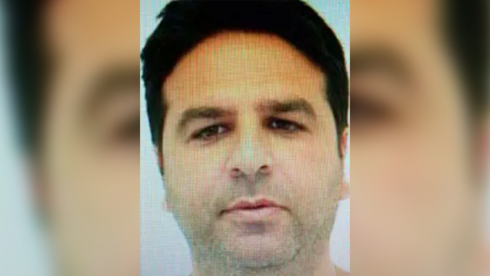
PRAGUE — The street was quiet early Wednesday when Tony Bargig, 54, was found dead on Seifertova Street in Prague’s third district. Czech police confirmed that a foreign national born in 1971 had been killed by another person and that a murder investigation was underway. What they did not confirm — could not yet confirm — was whether the decade-long legal unraveling that had followed Bargig from Israel to Central Europe had anything to do with his death.
For those in Israel who tracked the story, the answer felt almost beside the point. Bargig had been known since the mid-2000s as the self-styled “King of Slot Machines,” a title that reflected both his ambition and the impunity with which he had, for years, run an illegal gambling empire spread across the towns of central Israel. His murder in Prague — the same city where Israeli underworld figure Felix Abutbul was assassinated in 2002 — landed in Israeli media with the force of a confirmation, not a surprise.
Czech authorities said they had identified no suspects and released no details about the circumstances of the killing. The investigation was in its early stages, police said.
Bargig had built his reputation in the Rishon Lezion-Be’er Yaakov corridor in central Israel, where his family had long-standing ties. According to a criminal indictment, he operated a network of approximately 15 gambling houses between 2008 and 2014 in communities including Rishon Lezion, Be’er Yaakov, and Mishmar Hashiv’a. Each site ran multiple slot machines. The case involved hundreds of prosecution witnesses and was described at the time as one of the largest gambling-related investigations Israeli authorities had handled in years. He had also faced prior convictions in 2004 and 2009 in connection with illegal casino operations and violent-crime-adjacent cases, and was reportedly under police surveillance in 2012 over continued involvement in the casino underworld.
Israel prohibits most forms of private gambling, permitting only state-regulated lotteries and limited sports betting. Operating outside those bounds had made Bargig both wealthy and a persistent target for investigators.
In 2020, he accepted a plea deal and was sentenced to 15 months in prison, plus a forfeiture of one million shekels and a fine of 350,000 shekels. For a man accused of running a multi-million-shekel operation, the penalty struck critics as lenient. The Israel Tax Authority was less forgiving. It pursued Bargig separately for taxes on what it assessed to be tens of millions of shekels in unreported income from the gambling operation — a figure it said was reconstructed from notebooks and financial records seized in raids on his gambling apartments, including cash withdrawal logs and money transfer records used to fund the network. Bargig disputed the scale of those assessments and spent subsequent years in appeals proceedings seeking to reduce the demands. As of his death, that dispute remained unresolved, according to the Jerusalem Post.
There was a second complication that had quietly dogged him. His wife, Nurit, had been an active-duty officer in the Israel Police during the period when her husband was under criminal investigation. The Jerusalem Post and Ynet both reported that while no allegations of improper conduct were made against her, police officials viewed the marriage as a concern and eventually transferred her to a different district with reduced clearance. Whether that institutional unease ever translated into investigative decisions that benefited Bargig — or, conversely, that shaped how aggressively his cases were pursued — remains unclear. The files do not say.
By the time he had served his sentence, Bargig had largely exited Israeli public life. He relocated to Prague, where he owned gambling and casino businesses, and spent recent years operating in the Czech capital’s far more permissive regulatory environment. Czech law allows private casinos and slot machine operations, and Prague has for decades attracted a small but visible community of Israeli business figures — some with clean records, some without — drawn by the ease of doing business and the distance from Israeli law enforcement reach.
It was that same distance that gave the 2002 Abutbul killing its resonance, and that gives Bargig’s death its echo. Felix Abutbul, a notorious Israeli organized crime figure, was shot dead in Prague in circumstances that were never fully resolved in Israeli public discourse. The cases are not necessarily connected — officials have drawn no such link — but the pattern has not gone unnoticed. Two Israeli men with criminal pasts, both relocated to the Czech capital, both killed there. Czech police are searching for a suspect and have said little else.
Bargig was the son of Nino Bargig, a respected Israeli soccer coach who spent decades working with mid-tier clubs including Hapoel Rishon Lezion, Hapoel Be’er Sheva, Hapoel Jerusalem, Hapoel Yehud, and Maccabi Sha’arayim. When Nino Bargig died in 2023 at 84, local authorities in Be’er Yaakov named a soccer field after him. Tony had been a footballer himself in his youth, before the slot machines. According to Ynet, the killing immediately drew comparisons in Israel to the Abutbul case, with Israel’s complicated relationship with criminality in its own institutions once again on public display.
What Prague’s investigators will find — and whether Israeli authorities who spent years building cases against Bargig will be consulted or will cooperate — was not known Thursday. The broader question, which no Czech or Israeli official has yet addressed, is whether the city’s long role as a destination for Israeli figures fleeing legal and criminal pressure at home is now something anyone intends to examine, or whether Wednesday’s killing will simply join the unsolved file.
Czech police said they were searching for a suspect. They offered no further details.