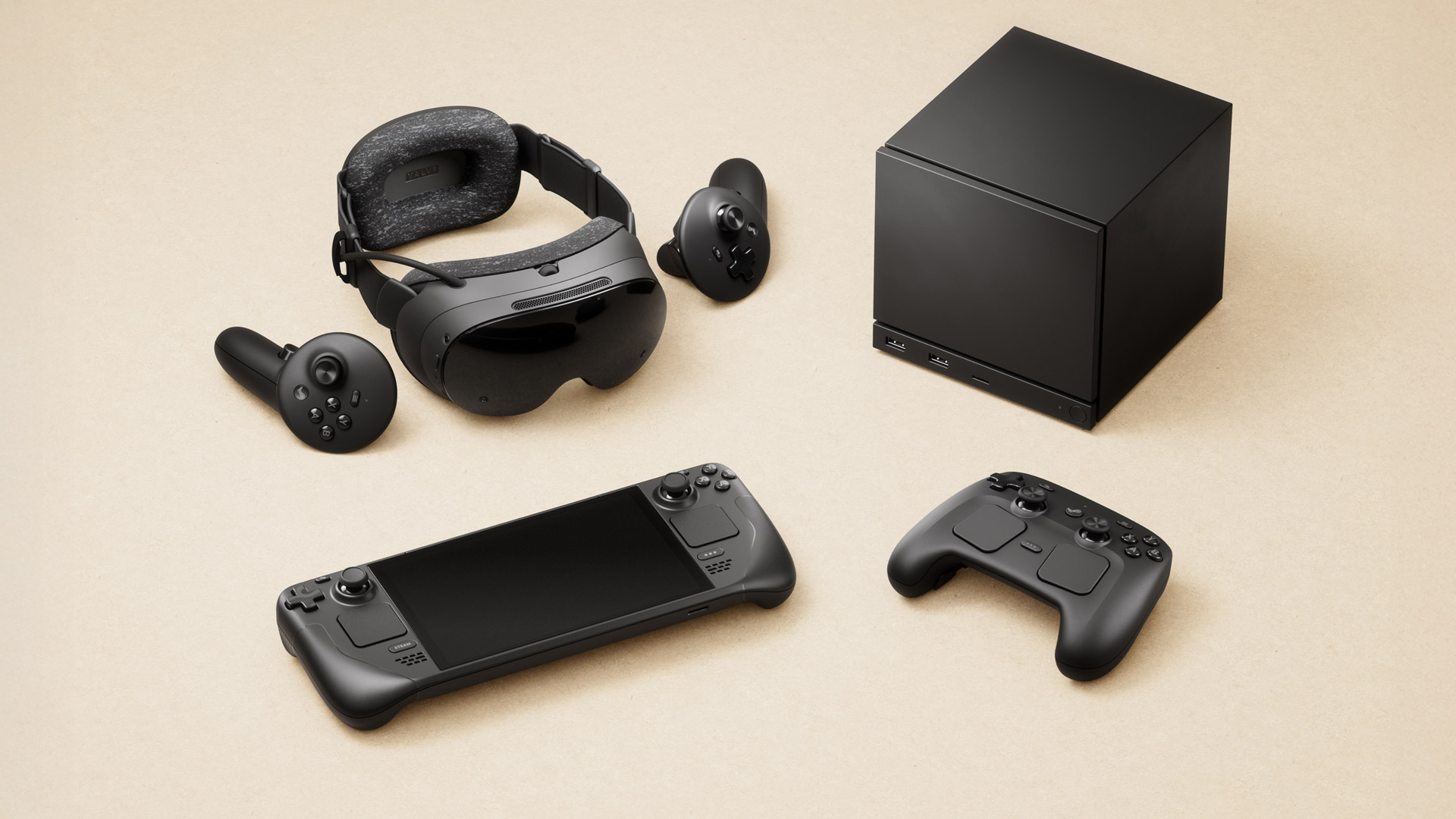

SAN FRANCISCO — The summer release window is now official. Valve confirmed Thursday that both Steam Frame, its standalone virtual reality headset, and Steam Machine, the console-style PC the company announced alongside it last November, will ship sometime in the coming months. What Valve still has not told anyone is how much either product will cost.
The confirmation came inside what was primarily a technical document. In a post to the Steam developer newsgroup, Valve announced it was expanding its Verified program — the certification system it introduced with Steam Deck to tell players how well a given game runs on specific hardware — to cover both new devices. “Today we are expanding the Verified program to include Steam Machine and Steam Frame, both of which are shipping this summer,” the company wrote. The sentence was almost a parenthetical. The bulk of the announcement addressed frame rate floors, resolution thresholds, and badge classifications.
The technical specifications Valve disclosed are specific in ways that the commercial details are not. For a Steam Machine title to earn a Verified badge, it must run at a minimum of 30 frames per second at 1,280 by 720 resolution during normal play. Standalone VR titles targeting Steam Frame must clear a harder threshold: 72 frames per second at 1,728 by 1,728 per eye. VR games that fall below 1,440 by 1,440 will display an Unsupported badge — though Valve noted that designation will not prevent users from purchasing or attempting to play those titles.
The certification framework matters because it determines how the Steam storefront will present games to buyers of these devices. But without a price, neither developers nor consumers can fully act on it. A studio deciding whether to pursue a Steam Frame Standalone Verified badge is implicitly making a bet on the size of the addressable market — a calculation that is impossible without knowing where Valve will position the headset against Meta’s Quest 3, which currently retails at $499, and the Quest 3S at $299. Those two devices carry established content libraries, brand recognition, and a distribution infrastructure that took years to build.
The component crisis that forced Valve to revise its original early-2026 targets has not resolved. In February, the company acknowledged that the AI-driven surge in RAM and storage prices had compelled it to revisit both pricing and schedule for all three hardware products it announced in November — the Steam Frame, the Steam Machine, and a new Steam Controller. DDR5 RAM prices rose more than 300 percent year-over-year, according to PCPartPicker data cited at the time. The shortage has been broad: Samsung, Apple, and the manufacturers behind next-generation Quest hardware all draw on the same constrained component pool.
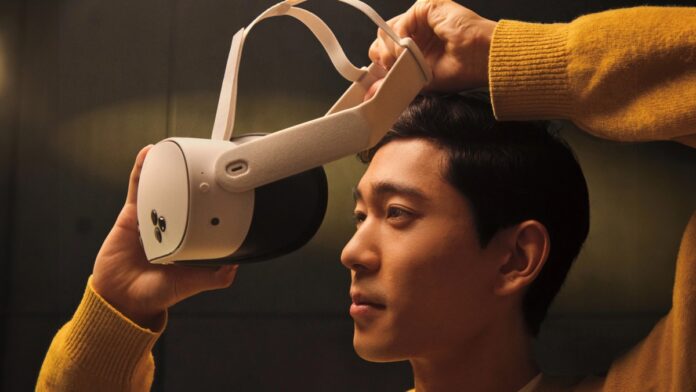
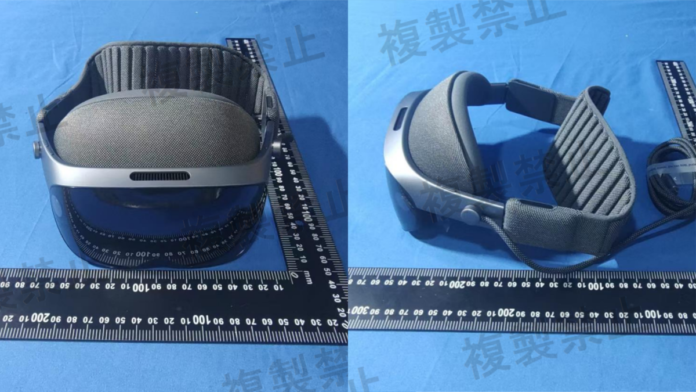
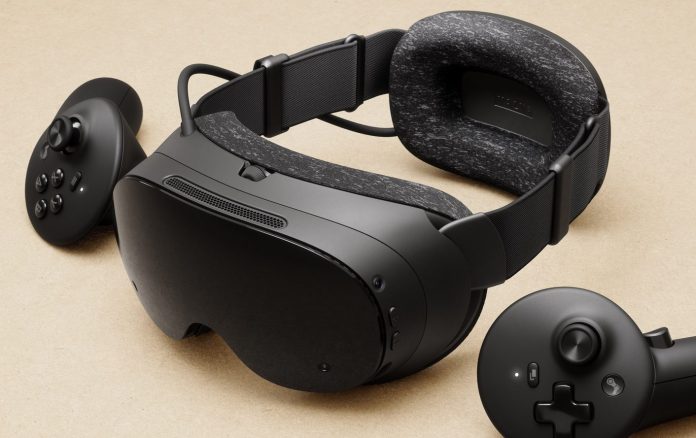
Steam Frame’s technical profile makes the pricing challenge acute. The headset is built on Qualcomm’s Snapdragon 8 Gen 3 system-on-a-chip, carries 16 gigabytes of unified LPDDR5X RAM, and offers storage configurations of 256 gigabytes and one terabyte. The display system runs dual 2,160 by 2,160 LCD panels per eye, with refresh rates from 72 to 144 hertz. Connectivity includes Wi-Fi 7 with a bundled wireless adapter for low-latency PC linking. The full kit weighs roughly 440 grams — lighter than a Quest 3 at 515 grams. That bill of materials was expensive before DRAM prices tripled.
Valve previously indicated the Steam Frame would be cheaper than the Valve Index, the company’s last headset, which launched in 2019 at $999 for the full kit with controllers and base stations. Industry analysts have estimated the Frame could now realistically land between $800 and $1,000 given current component costs — a range that would place it well above the Meta competition and in proximity to the Apple Vision Pro’s lower tier. Valve has not confirmed or refuted any of these estimates.
Steam Machine carries its own arithmetic problem. Valve described the device’s target performance as comparable to building a PC from equivalent parts, a statement the company made at launch when analysts were estimating a retail price around $700. Then memory prices climbed. Reports circulating Thursday noted that Valve has already pushed the Steam Deck — its handheld gaming PC — through a price hike of $240 to $300 depending on configuration, raising the possibility that the component shock that has rattled the broader consumer hardware market will hit Steam Machine at a price point far above its original positioning. Valve has boasted that the machine will deliver roughly six times the performance of the Steam Deck. That claim becomes harder to sustain if the final price erodes the value proposition.
There is one thing Valve has clarified: games already verified for Steam Deck will run well on Steam Machine without additional certification. That continuity is meaningful — the Deck’s library is substantial, and the compatibility signal reduces the burden on developers who are already in the ecosystem. Steam Frame targets what Valve describes as “wireless PC play” as its primary use case, with select games also eligible for a Steam Frame Standalone Verified badge when they run adequately on the headset’s own processor without a PC connection. The distinction between those two modes — streaming from a PC versus running natively — is central to how the headset actually functions in practice, and the certification framework addresses only part of it.
The absence of hand tracking at launch is another gap. Steam Frame controllers use four onboard cameras for tracking and run on AA batteries, with an estimated 40 hours of battery life per set. Developers coming from platforms where hand tracking is available by default will find it missing here, at least initially.
For the gaming industry, the question Thursday’s announcement leaves unresolved is whether a summer launch date can survive without a price. Retailers cannot build purchase intent around a device with no number attached. Developers calculating the cost-benefit of a Steam Frame Standalone Verified badge — which requires hitting 72 frames per second at 1,728 by 1,728 — need to know whether the addressable user base will look like Apple Vision Pro numbers, somewhere around 400,000 units in a niche-premium configuration, or something larger. The VR industry has watched several studios contract sharply after wagering on platform adoption that did not materialize at scale.
Valve’s confidence in the summer window is, in itself, information. A company that announces a certification program, specifies performance thresholds for developers, and names a seasonal launch target has committed to a timeline in a way that vague “first half of 2026” language did not. The price, when it comes, will tell the rest of the story.