
Meta Platforms is raising prices on its flagship virtual reality headsets, a move that underscores how the global race for artificial intelligence is beginning to ripple across consumer technology in unexpected ways.
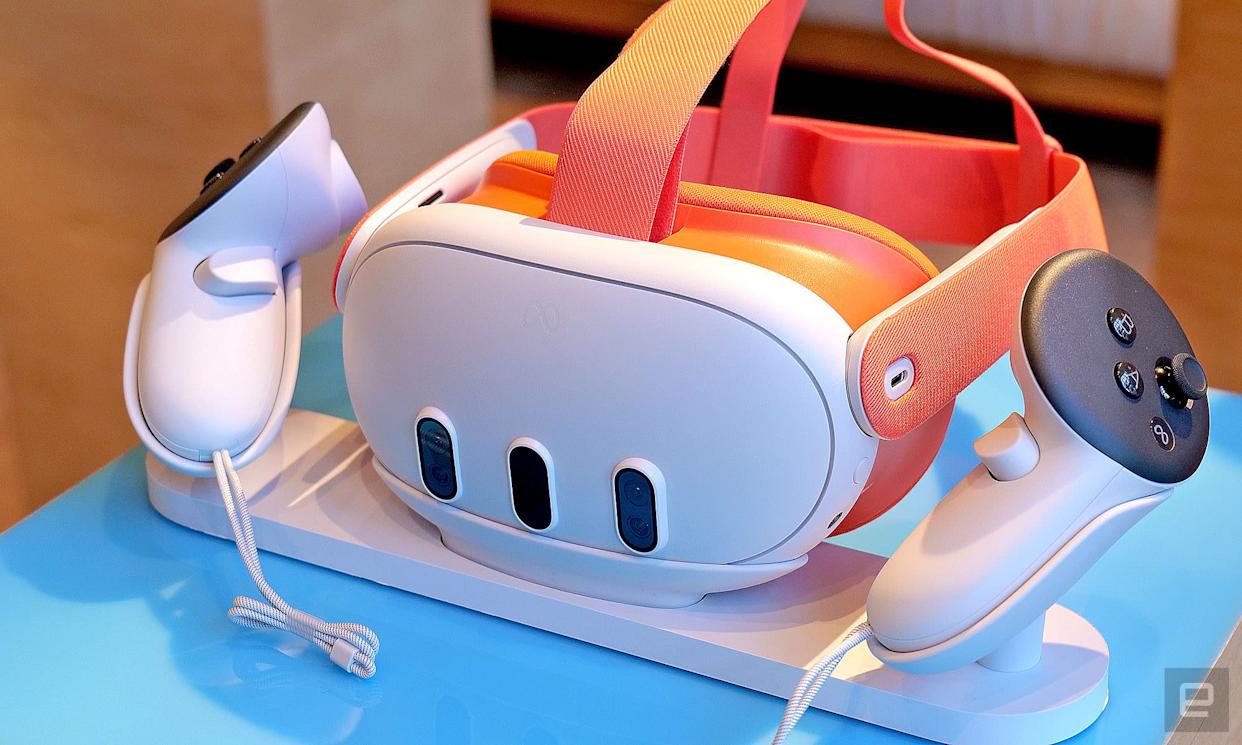
The company said it will increase U.S. prices for its Quest lineup starting April 19, citing rising memory chip costs driven by surging demand from AI infrastructure projects. The decision affects both the entry-level and premium models, marking one of the most visible examples yet of how the AI boom is reshaping hardware economics.
The entry-level Quest 3S (128GB) will now cost $349.99, up from $299.99, while the 256GB version will rise to $449.99. The higher-end Quest 3 (512GB) will see a steeper increase, jumping by $100 to $599.99.
The price adjustments will also extend to refurbished devices, though Meta said accessories will remain unaffected.
At the heart of the increase is a global shortage of memory chips — a supply crunch that has been exacerbated by the rapid expansion of AI data centers. Companies such as OpenAI, Google, and Microsoft are consuming vast quantities of high-performance memory to train and run increasingly complex models, leaving fewer components available for consumer electronics.
Manufacturers, prioritizing higher-margin enterprise contracts, have shifted production capacity toward data centers. The result is a tightening supply chain that is now being felt by consumers, from laptops to gaming consoles — and now virtual reality headsets.
Meta is far from alone in responding to these pressures. Companies across the tech industry have raised prices on hardware products in recent months, while Sony has implemented multiple increases for its PlayStation 5 as component costs continue to climb.
Yet the implications for Meta run deeper than a simple pricing adjustment.
For years, the company aggressively subsidized its VR hardware as part of a broader push to build the so-called metaverse — a virtual ecosystem it once positioned as the future of digital interaction. That strategy came at a steep cost, with its Reality Labs division accumulating tens of billions of dollars in losses.
Now, the company appears to be recalibrating.
Recent layoffs within Reality Labs and a scaling back of initiatives like Horizon Worlds suggest a shift in priorities. Meta is increasingly channeling resources into artificial intelligence, an area where competition among Big Tech firms has intensified dramatically over the past two years.
The price hike may reflect a broader strategic pivot — away from aggressively subsidized consumer VR and toward a more sustainable, margin-conscious hardware business aligned with its AI ambitions.
Still, Meta has signaled that it is not abandoning virtual reality. The company maintains that it remains committed to its long-term VR roadmap, even as it adjusts to rising costs and evolving market dynamics.
For consumers, however, the immediate impact is clear: higher prices for devices that were once positioned as relatively affordable entry points into immersive computing.
Industry analysts say this could slow adoption, particularly among casual users and developers who have relied on lower-cost hardware to experiment with VR applications. The timing is especially sensitive, as competition in the mixed-reality space intensifies.
More broadly, the development highlights a growing tension within the technology sector. As companies pour billions into AI infrastructure, the benefits of that investment — from smarter software to advanced automation — may come with trade-offs elsewhere.
In this case, the trade-off is tangible: the rising cost of stepping into virtual worlds.
And if current trends continue, consumers may soon find that the price of innovation is not just measured in breakthroughs — but also in the devices they can afford to buy.