
MOSCOW — He bought out the final year of his deal. That is the detail that matters. When Alexandar Georgiev’s agent confirmed his client’s departure from Spartak Moscow this week, he specified it was not a mutual release — Georgiev paid to leave, a signal of intent that most NHL teams will at least pause to consider.
The goaltender’s agent, Stanislav Romanov, told Pro Hockey Rumors that Georgiev’s objective is direct: return to the NHL next season. “The goal is to return to the NHL,” Romanov said. “Alexandar expressed the desire to try himself in the NHL again. There was such an agreement.” The KHL confirmed the contract termination in a league announcement. Georgiev had one year remaining on his two-year deal with the Moscow club.
What the announcement does not resolve is whether any NHL organization will offer him a meaningful role. That tension — between a goaltender who once led the league in wins and the stark numbers that followed — is precisely what the next several weeks of free agency will test.
Not long ago, Georgiev was among the most reliable starters in the conference. During his first season in Colorado in 2022–23, he tied for the league lead with 40 wins. The following year he outright led the NHL with 38, earning an All-Star selection and briefly positioning himself as one of the few legitimate starting goaltenders in the Western Conference. His $3.4 million cap hit looked like a quiet bargain for a team assembling another Stanley Cup push around Nathan MacKinnon.
Then the floor gave way. In 2024–25, with the Avalanche’s structure deteriorating around him, Georgiev went 8–7–0 across 18 appearances with a 3.38 goals-against average and a .874 save percentage — numbers that would have been an alarm at any point in his tenure but were especially damaging given the contract year timing. Colorado traded him to San Jose in December 2024 as part of the deal that brought Mackenzie Blackwood to Ball Arena, a transaction that read unmistakably as Colorado cutting its losses.
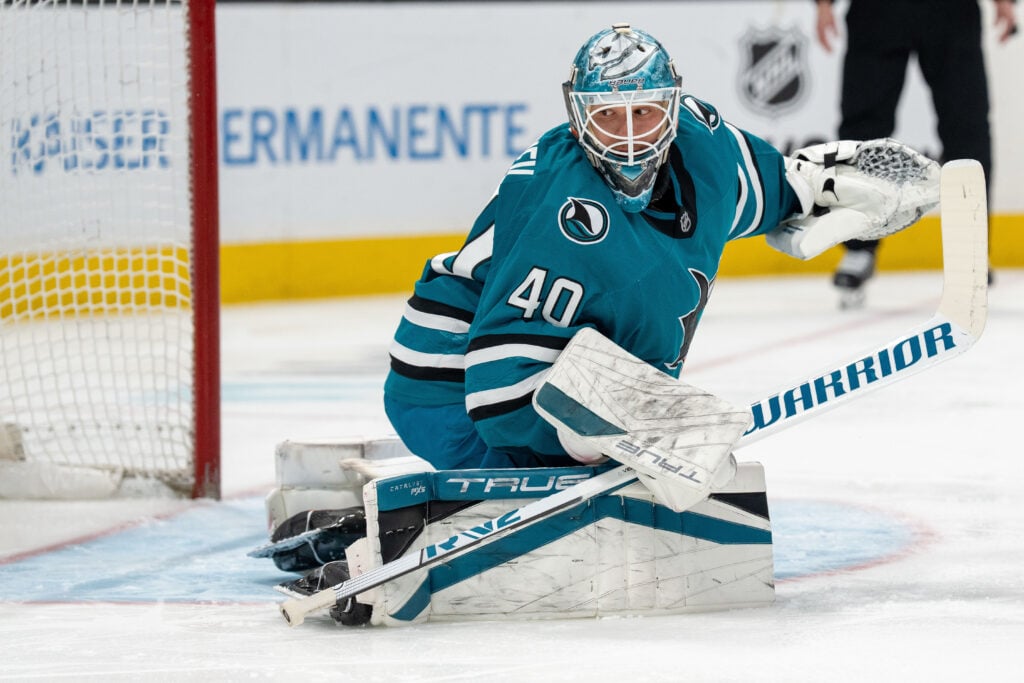
San Jose offered no rescue. In 31 games with the Sharks, Georgiev went 7–19–4 with a 3.88 GAA and .875 save percentage. The organization told him that spring, through general manager Mike Grier, that he would not be returning for 2025–26. He learned of it in the exit meeting after the final game of the season, the kind of conversation players describe as clarifying if not especially kind.
The open market that summer produced nothing resembling a real NHL opportunity. The Buffalo Sabres signed him for $850,000 just days before training camp — the kind of late signing that signals a team hedging a depth chart rather than betting on a starter. Georgiev cleared waivers in November after only two appearances with AHL Rochester and terminated the contract himself, heading to Spartak rather than riding a minor-league season to nowhere.
In Moscow, the production steadied. The contrast between a career reset abroad and an NFL equivalent was visible this week as prominent athletes from multiple sports publicly recalibrated their futures. Georgiev went 12–10–2 for Spartak with a 2.37 GAA and a .918 save percentage in 24 appearances — numbers that sit near the midpoint for KHL starters, and respectable by any North American frame of reference. What they are not is sufficient proof of a starter’s recovery. The KHL’s pace and competition structure differ enough from the NHL that scouts treat the translation cautiously, particularly for a goaltender whose problems under elite pressure were on film before he left.

The free-agent goaltender market Georgiev now enters is not thin, but it is not kind to him either. Sergei Bobrovsky, 38, is the headliner among unrestricted goalies this summer, with Stuart Skinner representing a younger option coming off a complicated season in Edmonton. Most of the remaining names, Georgiev’s included, are projected for backup or depth roles. According to Pro Hockey Rumors, his market will likely mirror last summer’s in pace and outcome — a long wait followed by a below-market contract, probably in the $800,000–$1 million range, probably signed close to or during training camp.
Teams in genuine need of goaltending depth will have options. Georgiev’s case for consideration rests on a narrow window of elite production that most front offices will remember, and a recent performance arc that most will treat as disqualifying for anything beyond organizational insurance. The NHL season opens in October. Free agency begins July 1. The window is real but short, and it is not clear that buying himself out of a KHL deal changes the underlying arithmetic of what teams think they are getting.
What it does change is the signal. Georgiev, 30, is not allowing an underperforming season in the KHL to become the end of the conversation. Whether an NHL team agrees that conversation is worth having remains, for now, the one thing nobody can confirm.
Related Posts