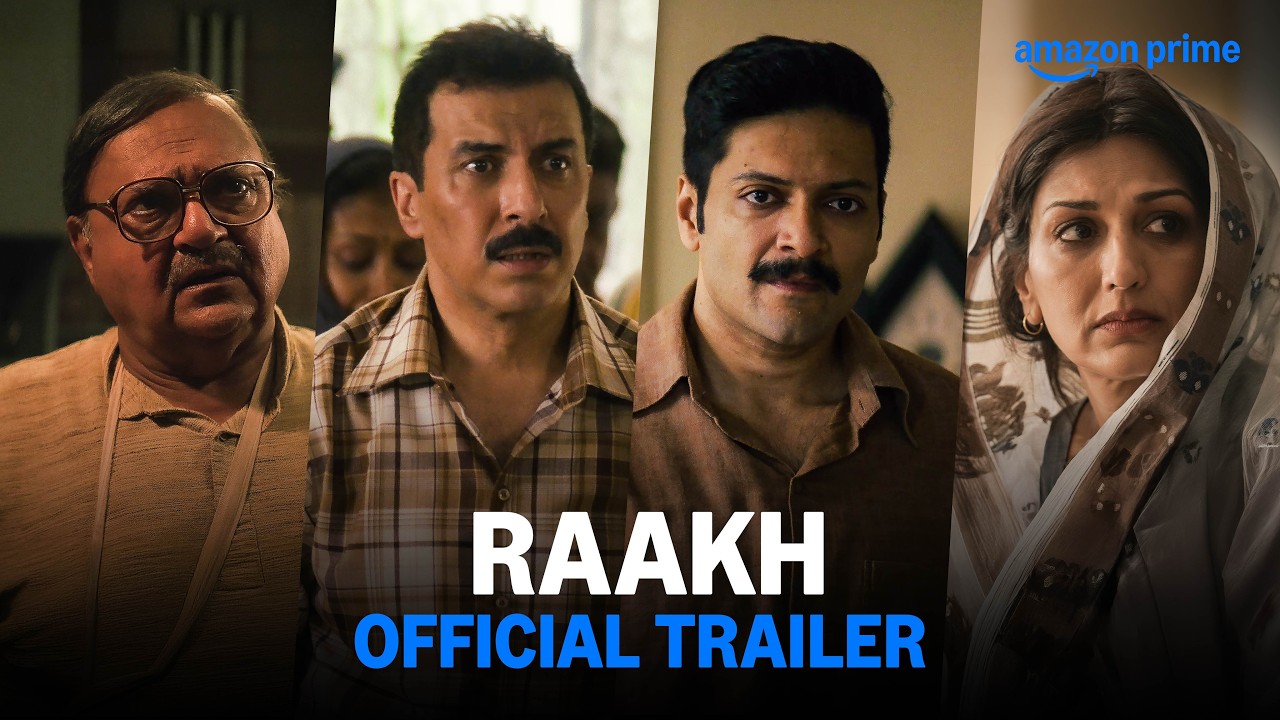

Prime Video India’s Raakh premiered on June 12, 2026, bringing one of the darkest chapters in India’s criminal history back into public memory. The eight-episode series takes its name from the ashes left behind by a crime that shook Delhi in 1978 and continues to haunt the national conscience decades later. Directed by Prosit Roy, Anusha Nandakumar, and Sandeep Saket, Raakh arrives as one of the most anticipated Indian true crime dramas of the year.
The series is rooted in the real Billa-Ranga case, in which two teenagers were abducted in Delhi in 1978 while travelling to a radio programme. The kidnapping escalated into murder, and the subsequent investigation and trial resulted in the execution of the two convicted men in 1982. The case remains one of India’s most notorious criminal incidents, prompting debates about capital punishment that continue to this day.
In Raakh, the children at the centre of the story are siblings from a middle-class Delhi family. Their disappearance sets off a frantic investigation that exposes bureaucratic indifference, caste hierarchies, and the systemic failures that determined how urgently the police responded. The series is deliberate in not glamourising the perpetrators, keeping the spotlight firmly on the families and the investigators who fought for justice.
Ali Fazal plays SI Jayprakash Jatav, a determined yet restrained police officer carrying both ambition and a gnawing sense of inadequacy. Fazal’s performance is among his finest on screen. He resists the temptation to play the role as a conventional hero, delivering instead a portrait of a man perpetually running behind events, held back by institutional constraints yet driven by deep moral urgency. Critics at Outlook India called it one of his strongest performances in recent years.
Sonali Bendre returns to a major acting role as Mona Arora, the mother of the missing children, and her performance is the emotional spine of the series. The actress portrays grief with extraordinary restraint, allowing denial, fear, hope, and anger to surface in waves without ever reaching for melodrama. Her early scene, in which the slow reality of her children’s disappearance begins to dawn, has drawn widespread praise as one of the finest acting moments in recent Indian streaming television.
The supporting ensemble is equally compelling. Aamir Bashir plays Ashok Arora, the grieving father, whose quieter devastation contrasts powerfully with Bendre’s more volatile grief. Rakesh Bedi appears as Jayprakash’s father, adding generational weight to the investigation. Ramandeep Yadav and Akash Makhija portray the two men at the centre of the criminal plot with an unsettling ordinariness that makes their actions more disturbing than any dramatised villainy could achieve.
The direction across all three directors is coherent and measured, never sensationalising the violence or exploiting the real tragedy for shock value. The period recreation of late 1970s Delhi is atmospheric without being showy, using production design to anchor the story in the anxieties of the era. The pacing is deliberate, and some viewers may find the early episodes slow, but the restraint is purposeful. Raakh is not interested in the thrill of the chase; it is invested in what the chase costs the people living through it.
Critical reception has been strong. Outlook India awarded the series four out of five stars, noting that it transforms a familiar true crime story into a deeply emotional drama by focusing on the victims, their families, and the lasting impact of the crime. Leisurebyte gave it three and a half stars. The consensus is that Raakh succeeds precisely because it refuses to treat real deaths as entertainment, making it a rare and important work in the crowded Indian OTT landscape.
Raakh is now streaming in full on Prime Video India. All eight episodes, each running approximately 40 minutes, are available to watch. For audiences willing to sit with its quiet and devastating rhythms, the series offers some of the most accomplished Indian television storytelling of 2026, anchored by career-defining performances from both Ali Fazal and Sonali Bendre.