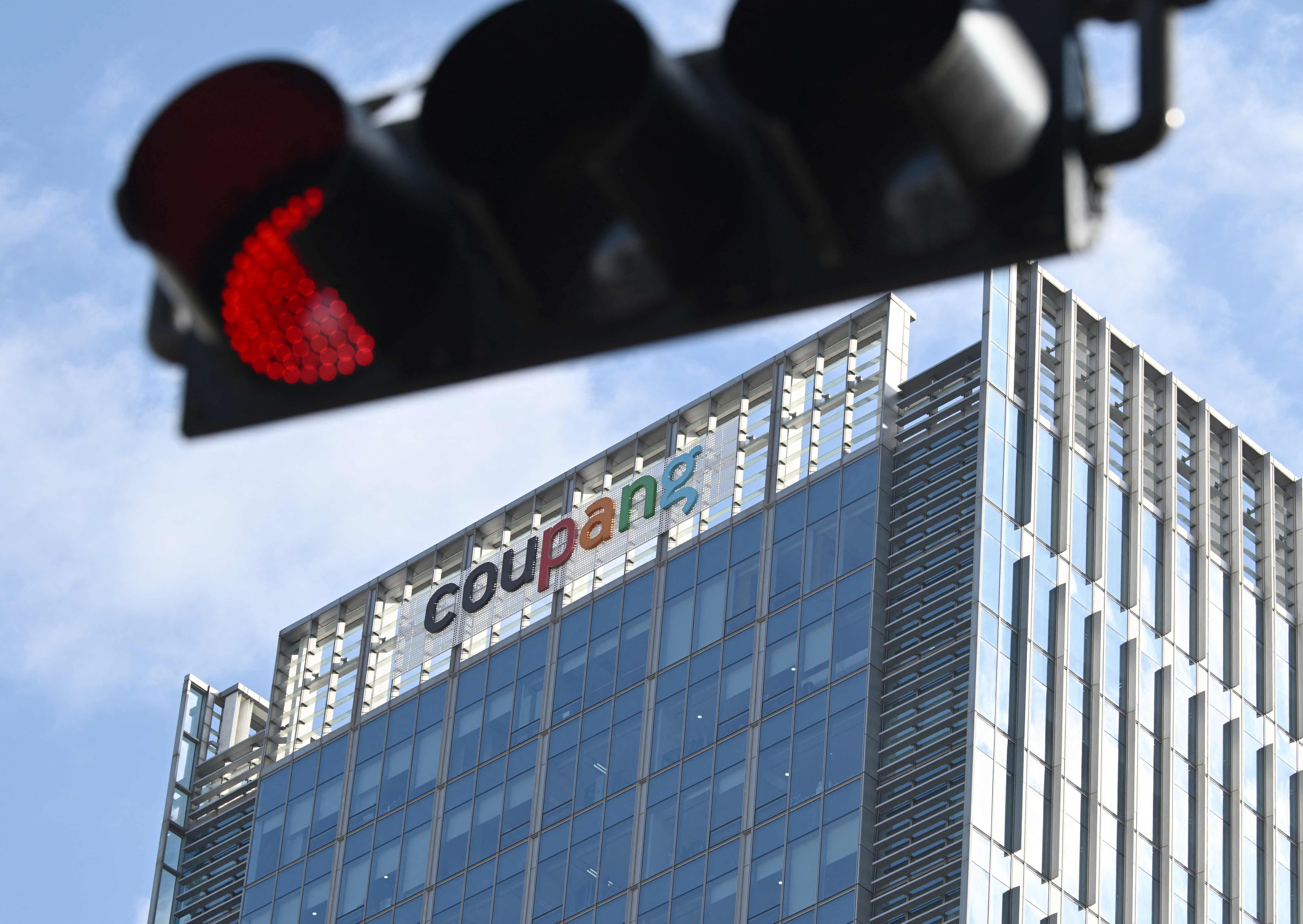

SEOUL, June 13, 2026 (The Eastern Herald) — South Korea’s Personal Information Protection Commission has fined Coupang 624.7 billion won, equivalent to about 409 million United States dollars, for a 2025 data breach that exposed names, phone numbers, addresses and order histories of 37.5 million customers and several million non-member delivery recipients. The penalty, formally delivered on Thursday, is the largest data-protection fine in the country’s history, nearly five times the previous record, and lands squarely on the New York-listed company that has spent the last five years calling itself South Korea’s Amazon.
The PIPC’s investigation, which concluded in May, traced the breach to a former Coupang engineer who exploited a cryptographic signing key that the company had failed to revoke. The unrevoked credential allowed several months of unauthorised access to customer records between April and June 2025 before the leak was discovered and disclosed in mid-November. The regulator’s findings reads as a quietly damning catalogue of operational hygiene failures, with negligence in authentication signature key management and access control identified as the proximate cause of a breach that, by population share, ranks among the worst in any G20 country in five years.
The fine is split into two parts. The bulk, 423.6 billion won, is for the breach itself. The remaining 201.1 billion won is for a separate violation the PIPC discovered along the way, the unlawful collection of online activity records from 11.17 million users across third-party websites and apps without their consent. South Korean enforcement now distinguishes between an incident, however severe, and a pattern of cross-context data acquisition that operates as a parallel business model. That distinction is the part that should worry every dominant platform operating in or selling into the Korean market.
Coupang is not accepting the ruling quietly. The company has said it will pursue legal action against both the breach penalty and the separate data-collection finding, arguing that the regulator overstated the technical and operational link between the engineer’s misuse of a single key and Coupang’s broader access-control posture. The company already committed in December to 1.685 trillion won in compensation to affected customers and rolled out single-use 50,000 won purchase vouchers in January as a goodwill gesture, a package larger by an order of magnitude than the regulatory fine itself. Investors took the news as something close to priced in. Coupang’s New York-listed shares slipped 4.8 percent on Thursday, recovered roughly half of that on Friday and now trade well off January’s lows.
The regulator’s record matters more than any single company. South Korea has been moving steadily for two years to put its privacy regime on a footing closer to the European Union’s General Data Protection Regulation than to the more permissive American patchwork. The PIPC’s previous high-water enforcement, against Naver in 2024, was 134.8 billion won, an amount that already drew attention as harsh. Multiplying that benchmark by five sends a deliberate signal not only to the Korean platforms but to the international players, including the United States hyperscalers and Chinese e-commerce groups, that Seoul does not consider its enforcement architecture finished business.
The political backdrop sharpens the message. The new Lee administration, which named Naver veteran Han Seong-sook as prime minister last week, has made digital sovereignty a centrepiece of its first hundred days. The Han nomination was read across Seoul as a signal that Korea wants to write the rules for its own tech sector rather than import either Brussels-style harmonisation or Silicon Valley-style minimalism. The Coupang fine is the first major piece of post-nomination enforcement, and it does the work the political symbol could only suggest.
The breach itself was preceded by a remarkable record of operational sloppiness. Coupang officially acknowledged the leak on November 17, 2025 and then took 48 hours to notify regulators, missing the legally mandated 24-hour disclosure window. The personal data exposed included names, email addresses, phone numbers, physical delivery addresses and order histories. Payment data and account passwords were, by Coupang’s own reckoning, not compromised. That is the part the company has been loudest about, and it is also the smallest part. Any criminal trying to use the leaked information for fraud begins with a complete delivery and identity map of two-thirds of the South Korean population.
Comparable enforcement abroad has been moving in the same direction but at a slower pace. Meta has been pulled twice this year over privacy rollouts that quietly raised the default amount of personal data the company holds on users outside Europe. Meta’s removal of a user privacy control everywhere except Europe and the UK earlier this week drew critical commentary from regulators in Canada, India and Japan. Instagram’s own password-reset bug, exposed in early June, leaked private email addresses and phone numbers across the entire user base, including the personal data of Mark Zuckerberg. None of the resulting US enforcement actions has come close to the Korean number.
Coupang’s financial position is strong enough to absorb the headline fine. The company reported $30.9 billion in 2025 revenue and has $3.4 billion in cash on its New York-listed balance sheet. The bigger question is the regulatory pipeline. The PIPC has signalled it intends to open a parallel review of Coupang’s overseas data flows, including the customer information held by Coupang’s Taiwanese subsidiary and the operations it has been building in Japan. Cross-border data transfers will be the next front, and the same legal logic that produced the 201.1 billion won data-collection penalty can be applied to any Korean user data that ends up outside Korean jurisdiction without an adequate transfer mechanism.
SoftBank, which holds roughly a third of Coupang’s economic interest and a larger share of its voting class, is reading the fine as a regulatory cost rather than an existential threat. The Japanese conglomerate has been through worse, both in its WeWork episode and in its more recent legal exposure over Chinese AI investments, and its own privacy posture across the portfolio companies is now under increasing scrutiny from European, Korean and Japanese regulators. The price of operating a global platform with weak access controls is rising in real time, and Coupang’s experience is now the marker.
The Korean fine also lands in a wider international context that should not be lost. The Netherlands earlier this week blocked the sale of a Dutch citizen-data system to a US contractor citing American extraterritorial reach, a politically charged decision that reads now as part of the same tide. India has been quietly tightening its own Digital Personal Data Protection Act. The European Union is in the middle of GDPR refresh consultations. The American privacy patchwork remains the principal global anomaly, and the Coupang fine adds one more headline to a year in which non-American privacy regimes have been the ones doing the visible enforcement.
The Coupang fight will run for months, possibly years, through the Korean courts. The litigation timetable typical for cases of this size is twelve to eighteen months at first instance, with appeals likely to take another year. The Korea Times reported that Coupang’s legal preparation has been under way for months, focusing on the cryptographic key revocation question and the separate data-collection finding. The PIPC’s enforcement order, made public on Thursday and supplemented by a technical findings document later in the day, will be the basis for both administrative review and any subsequent civil claims.
What this case has already changed is the baseline. Coupang’s compensation pool exceeds the fine, but the regulatory exposure is now the headline number, not the goodwill payout. South Korea, which spent the late 2010s admired and feared in equal measure for its administrative state, has put together a case that the next dominant platform operating in the country will be benchmarked against. The technical reconstruction by independent security analysts confirms the PIPC’s framing on the key-management failure. The political reconstruction confirms the regulator’s appetite. A 409 million dollar fine, by itself, will not change how American or Chinese platforms operate. The signal is the multiplier.