
OSAKA, June 13, 2026 (The Eastern Herald) — Takeda Pharmaceutical, the 245-year-old Osaka-headquartered drugmaker that became Japan’s largest pharmaceutical company through the 62 billion United States dollar acquisition of Shire in 2019, will cut about 4,500 jobs across its global workforce in fiscal 2026 as it executes the most aggressive restructuring program of the post-Shire era. The headline cuts, disclosed at the company’s full-year 2025 earnings call, are expected to produce 170 billion yen of restructuring expenses, roughly 100 billion yen of in-year savings and more than 200 billion yen of annual savings by fiscal 2028. The package is the final major strategic move under chief executive Christophe Weber, who retires at the end of June after twelve years running the company.
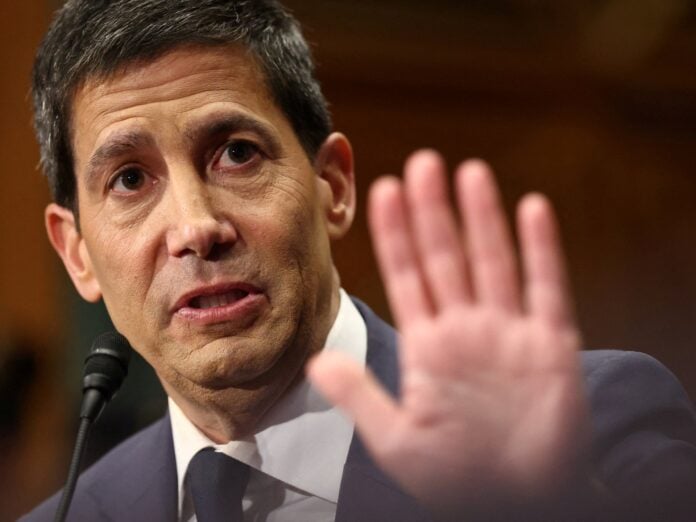
Julie Kim, currently president of Takeda’s United States Business Unit, takes over as chief executive on July 1 and inherits a transformation program that is closer to its midpoint than its end. The 4,500 cuts in fiscal 2026 follow the previous restructuring tranches that the company has executed since 2020, with cumulative role reductions now north of 9,000 across the rolling six-year period. The cumulative pattern reflects the integration friction that the Shire acquisition produced, the cost of servicing the roughly 30 billion United States dollars of debt that the deal added to Takeda’s balance sheet and the productivity overhead that the company has been working to remove from its post-merger structure.
The transformation program’s stated objectives are clean. Takeda is centralising corporate functions across human resources, finance, information technology, supply chain and global business services, reducing management layers across the global organisation and applying generative artificial intelligence to several internal workflows that had previously been handled by mid-level professional staff. The geographic distribution of the cuts mirrors the company’s headcount distribution, with the largest absolute reductions landing in the United States and Japan and meaningful smaller reductions across Cambridge, Singapore, Boston and Lugano.
The Shire legacy is the part the Weber-era narrative will continue to wrestle with. Takeda paid 62 billion dollars for Shire in 2019 in what was, at the time, the largest cross-border acquisition by any Japanese company in history. The strategic logic was straightforward, with Takeda buying Shire’s rare-disease franchise, plasma-derived therapeutics platform and international commercial footprint to convert itself from a Japan-focused mid-sized pharmaceutical into a top-ten global player. The execution was difficult. The deal added roughly 30 billion dollars of debt to Takeda’s balance sheet, produced a meaningful capital-allocation drag through 2020 and 2021, and left the company’s earnings profile structurally lower-margin than the equity-research community had anticipated.
The cumulative restructuring across the post-2020 period has now reduced Takeda’s global headcount from a 2020 peak of roughly 50,000 employees to a current level near 45,000. The 4,500 cuts in fiscal 2026 will bring that figure closer to 40,000 by the end of the fiscal year. The composition shift inside the headcount is the more important variable than the absolute number. Junior commercial and administrative roles are being reduced at a faster rate than senior research-and-development positions, and the company has been simultaneously hiring into the artificial intelligence, data engineering and clinical development capabilities that the next phase of its strategy requires.

The Kim transition is the strategic catalyst behind the timing. Julie Kim, who has run Takeda’s United States Business Unit since 2022, is the first non-Japanese, non-French chief executive in the company’s 245-year history, and her appointment was announced in January 2025 with an 18-month transition runway designed to allow Weber to complete the current restructuring before handing over. The transition is a deliberate signal that Takeda’s future is more Americanised, more biotech-focused and more aggressive on capital allocation than the Weber era allowed. Kim’s track record in the United States, including the successful integration of Shire’s plasma-derived therapeutics franchise and the post-COVID expansion of the company’s vaccines business, is the part that the board has been most focused on.
The pharmaceutical-industry context reinforces the strategic logic. Chinese biotech firms signed 53 outbound licensing deals worth more than 60 billion dollars in the first quarter of 2026, a structural change in the pharmaceutical pipeline economics that is forcing every multinational pharmaceutical group to recalibrate its development cost-curve. Takeda’s transformation is partly a response to that pressure. The company cannot maintain its current operating-cost structure against the new competition for clinical-stage assets, and the 4,500 headcount reduction is the operational expression of that competitive recalibration. GSK’s 10.6 billion dollar acquisition of Nuvalent earlier this month tells the same story from the other end of the deal-flow.
The American restructuring footprint deserves a closer look. Takeda’s Cambridge research-and-development centre, the Lexington plasma-therapeutics operations and the Boston commercial headquarters are all subject to the new cuts, with the Lexington operations facing the steepest reductions because the plasma-therapeutics business has been more aggressively automated than the company’s other operations. The Boston commercial team will see middle-management consolidation but no front-line sales-force reductions in the United States market. The closure of the legacy Deerfield Illinois headquarters, completed in 2024 with the relocation of the remaining functions to Boston, was the structural setup for the current round.
The Japanese employment context is the part that will require the most careful management. Japan’s labour-market culture historically resists large-scale headcount reductions at established corporate champions, and Takeda is one of the most established corporate champions in the Japanese pharmaceutical sector. The company has structured the Japanese reductions through voluntary retirement packages, internal redeployment and selective non-renewal of contract positions rather than through outright layoffs. The total Japanese cut is expected to be roughly 700 to 900 positions, with the bulk handled through voluntary early-retirement offers structured at the high end of Japanese pharmaceutical-industry standards.
The investor reception of the restructuring has been mixed but constructive. Takeda’s Tokyo-listed shares are up roughly 18 percent year to date on the prospect of the cost-out delivery and the Kim transition’s strategic signal. The company’s American depositary receipts are up roughly 22 percent over the same period. Buy-side analyst consensus is that the 200 billion yen annual-savings target by 2028 is achievable, that the Kim leadership will accelerate the pace of capital allocation toward research-and-development reinvestment, and that the company’s long-term return on invested capital should rebuild from its post-Shire trough back to a level competitive with the European pharmaceutical peer group.
The wider Japanese corporate context is also important. Takeda is the second large Japanese corporate champion this quarter to announce structural restructuring at scale, after Toyota’s confirmation in May that it was reorganising several of its production-engineering functions around generative artificial intelligence. The pattern across Japan’s blue-chip corporate community is that the productivity push that has been a constant theme of Japanese corporate strategy since the Abenomics era is now starting to produce concrete headcount and capital-allocation moves. The Bank of Japan’s monetary-policy normalisation, the yen’s recovery against the dollar and the broader corporate-governance reforms that have been working their way through the Tokyo Stock Exchange listing rules all support the current restructuring cycle.
The broader pharmaceutical-industry layoff cycle that the Takeda announcement sits within is meaningful. Amdocs announced 3,000 AI-restructuring cuts the same week, and the cumulative tally of corporate workforce reductions across the United States, Europe and Asia is now running at a pace that would put 2026 above 2023’s tech-led peak. The pharmaceutical sector’s contribution to that pace is increasing, and the Takeda announcement is one of the cleaner examples of a profitable, established player choosing to restructure rather than wait for cyclical pressure to force the decision.
For the 4,500 people losing their jobs, the framing matters less than the next employer. Takeda is offering severance packages at the higher end of pharmaceutical-industry standards, with twelve to eighteen months of base pay at senior levels plus health-coverage continuation and job-transition services. United States employment markets in Cambridge, Boston and Lexington remain relatively tight for senior biotechnology talent, and the affected employees are likely to land in the broader Boston-area biotech ecosystem within nine to twelve months. The Japanese employees who accept voluntary retirement packages will benefit from the strongest exit terms the Japanese pharmaceutical sector has offered in a decade. Fierce Pharma’s reporting on the transformation program tracks the operational details. BioPharma Dive’s coverage of the Kim succession provides the strategic-context backdrop.
The cleanest read of the Takeda announcement is that the post-Shire integration is now in its final structural phase, that the Kim transition is the strategic catalyst for the cost-out delivery and that the cumulative reshaping of the company’s operating cost base is positioning it for the more competitive pharmaceutical pipeline economics that the next decade is likely to deliver. The 4,500 cuts are the cost. The 200 billion yen of annual savings by 2028 is the benefit. The Kim leadership is the strategic catalyst. The next concrete milestone is the August earnings report, where Kim will set out her own strategic priorities for the company’s next five-year cycle.