
LOS ANGELES – There is a version of the Oscar ceremony that exists purely as an industry self-congratulation exercise, and most filmgoers sense it even as they watch. Best Picture winners that feel like committee decisions. Films that announce their own importance. Cinema that has been rewarded rather than remembered.
And then there are the other ones.
The ten films below have each won the Academy Award for Best Picture, but what distinguishes them from the dozens of winners who fade from memory is something more specific: they get harder to read the second time. A first viewing gets you the story. A second gets you the architecture beneath it – the argument the film is actually making, which is rarely the one advertised on the poster. Not one of them is a comfortable film on return. That discomfort, it turns out, is the point.
Schindler’s List (1993) is most people’s benchmark for what serious Oscar cinema looks like – a seven-award sweep, Steven Spielberg’s most sober work, shot in black and white with the controlled gravity of a newsreel. The known facts: Oskar Schindler, a German industrialist in occupied Krakow, gradually pivots from wartime profiteer to the man who saved the lives of more than a thousand Jewish workers. What gets sharper on a rewatch is how deliberately Spielberg delays that pivot, and how transactional the compassion looks even after it arrives. Schindler remains a complicated man throughout. The film doesn’t clean him up for the ceremony at the end. That tension, between the hero we need and the human who actually existed, is what makes the film endure beyond its subject matter.
Forrest Gump (1994) is the entry on this list most likely to be underestimated. Six Oscars, Tom Hanks in his most commercially beloved performance, and a reputation as the feel-good film of the nineties – none of which does justice to what Robert Zemeckis actually built. Gump is not a naïve hero in a kind world; he is a man of cognitive limitations dropped into the most violent decades of American history and propelled forward by a country that rewards sincerity precisely because sincerity does not ask questions. The film is, on reflection, a deeply sardonic portrait of how the United States tells stories about itself. A second viewing is a different experience than a first.
Titanic (1997) got eleven Oscars and the predictable backlash that follows any cultural phenomenon of that scale. James Cameron’s film was dismissed for years as spectacle over substance, which missed the specific formal achievement. The romance between Rose and Jack works not in spite of the disaster but because of its structure – the sinking is not a backdrop, it is the argument. The ship’s class stratification, the locked gates below deck, the differential survival rates: Titanic is a film about who gets saved and who doesn’t, dressed in the language of a love story. The love story is real. The critique underneath it is sharper than critics gave it credit for in 1997.
Gladiator (2000) is the one that resists the label of Important Cinema most stubbornly, and is probably better for it. Ridley Scott’s five-Oscar film about a Roman general – Maximus, betrayed, enslaved, and fighting his way back to Rome’s arena – was reviled in some quarters for reviving the peplum genre and embracing operatic violence. What holds up is the melancholy. Maximus does not want glory. He wants his family back, and they are gone in the first act. Everything that follows, including the revenge, fails to fill the absence. The film is less interested in triumph than in what triumph costs the person who achieves it.
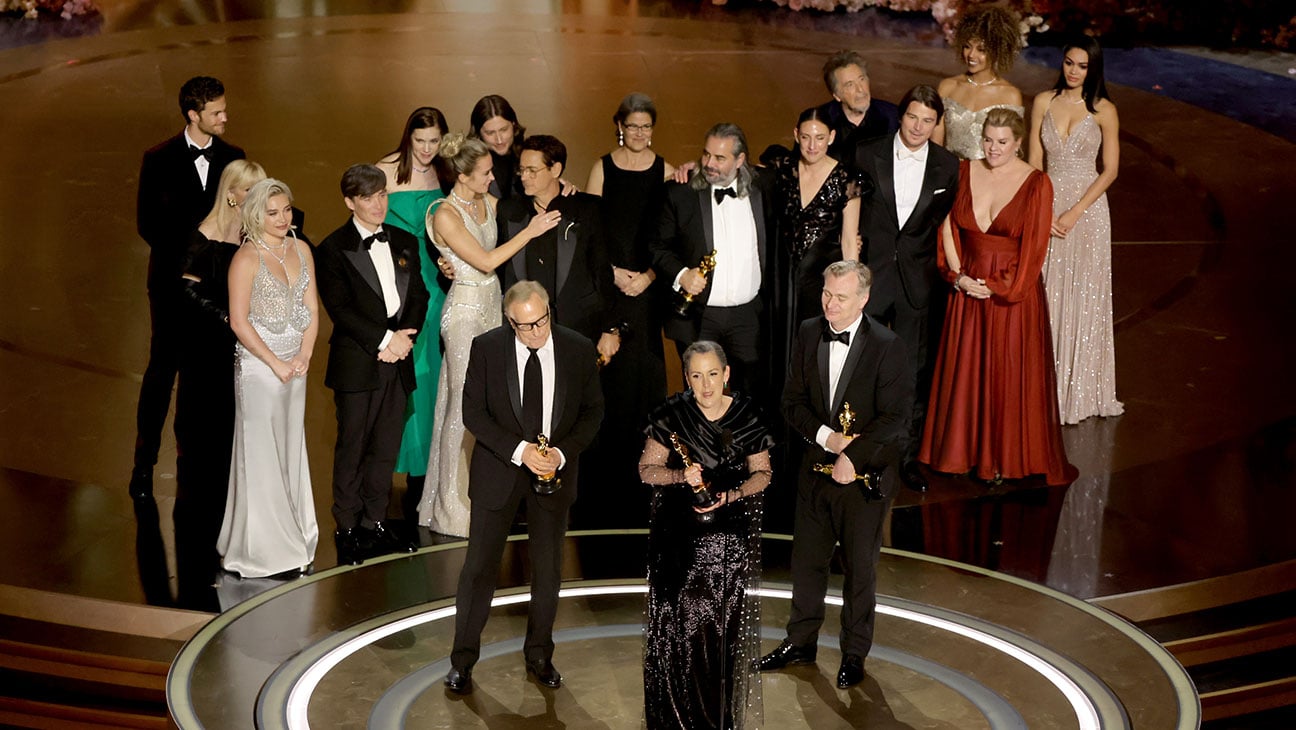
The Lord of the Rings: The Return of the King (2003) matched Titanic’s record of eleven Academy Awards, which remains the joint ceiling for any single film. Peter Jackson’s conclusion to the trilogy is a film that viewers ten years old in 2003 have now rewatched dozens of times and find increasingly difficult to articulate. The reason has something to do with scale – the battle sequences are genuinely unprecedented in density and duration – and something to do with what scale is used to say. The world is saved by Frodo and Sam, not by armies. The armies keep the armies busy. That distinction, easy to miss in the spectacle of the first viewing, is what the film is actually about.
12 Years a Slave (2013) is the entry on this list most resistant to the category of entertainment. Steve McQueen’s adaptation of Solomon Northup’s 1853 memoir – a free Black violinist drugged, kidnapped, and sold into slavery in Louisiana – won three Oscars, including Best Picture. It is not a film that softens its material. McQueen holds on scenes past the point of comfort because that is the only honest way to show what the material contains. Northup’s survival is the fact on which the film is based, but McQueen refuses to let survival function as resolution. What happened to Northup is not a story with a lesson. It is a documented fact about American history, and the film insists on that distinction throughout.
Moonlight (2016) is the film that most viewers have seen once and understood less than they thought. Barry Jenkins divided his portrait of Chiron – a Black boy growing up in Miami’s Liberty City through childhood, adolescence, and early adulthood – into three distinct chapters with different actors playing the same person. The structure is not a gimmick. The way Chiron changes between chapters, the things that stay constant, and the gap between who he is and who he allows others to see: all of that requires a second viewing to fully register. Three Oscars. The best ending of any Best Picture winner in the past twenty years, according to almost anyone who has thought carefully about the list.
Parasite (2019) made history as the first non-English-language film to win Best Picture, the culmination of a year in which Korean cinema had already demonstrated at Cannes that the international and the mainstream were not as separate as American studios had assumed. Bong Joon-ho’s film about the Kim family – poor, clever, living in a half-basement in Seoul – who infiltrate the household of the wealthy Park family through escalating deception is a thriller that shifts genre in its final act in a way that a first-time viewer experiences as shock and a second-time viewer experiences as inevitability. Every element that seems like texture on the first watch turns out to be load-bearing. That is a structural achievement almost no film manages.
Everything Everywhere All at Once (2022) is the outlier in this group, a multiverse action comedy made for around fourteen million dollars by two directors working under the name Daniels. It won seven Oscars, including Best Picture, Best Director, Best Actress, and Best Supporting Actor and Actress – a sweep that caught the industry sufficiently off-guard that the award was treated in some coverage as an upset. A laundromat owner named Evelyn Wang, navigating tax debt, a fraying marriage, and a daughter she does not know how to reach, discovers that infinite versions of herself exist across parallel realities. The film’s thesis – that meaninglessness and love are compatible, that nihilism is a reasonable response to a chaotic universe but not the only one – is more legible the second time. The absurdism is structural, not decorative.
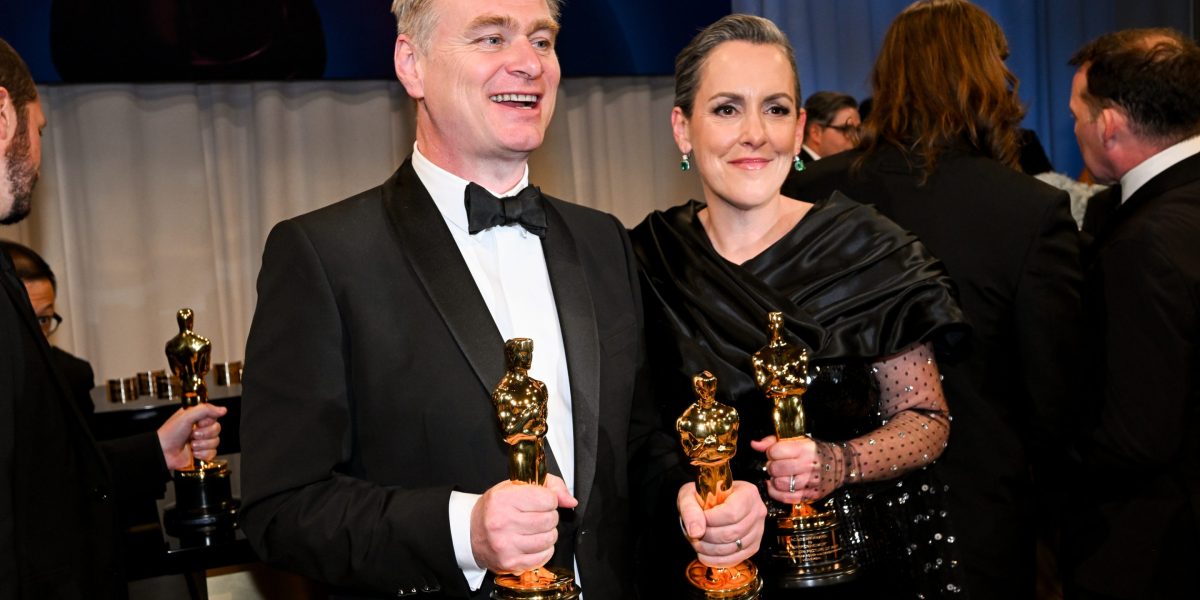
Oppenheimer (2023) arrives on this list as the most recent entry and perhaps the most resistant to what Oscar cinema is typically assumed to reward. Christopher Nolan’s seven-award biographical film about J. Robert Oppenheimer – the theoretical physicist who led the Manhattan Project and spent the remaining decades of his life facing the political and ethical consequences of having done so – is three hours of dense, nonlinear structure, most of it centred on bureaucratic hearings rather than the bomb itself. Nolan told Variety in 2023 that he wanted the film to feel “like a thriller about ideas.” Nolan also used the film’s reception to raise questions about the responsibility that attaches to invention – a theme he returned to in subsequent interviews about artificial intelligence. On a second viewing, Oppenheimer is less about what the bomb did to Japan and more about what it did to the man who made it.
The thread running through all ten is not prestige, or scale, or cultural impact, though most of them have those in abundance. It is that none of them actually closes. Schindler’s moral accounting is left open. Gump’s America is left unresolved. The flood in Parasite’s third act carries a charge that the film refuses to discharge into a clean conclusion. Moonlight’s final scene asks a question instead of answering one. The films that reward returning to are the ones that trust viewers enough to leave something unfinished. That trust, as much as craft or subject matter, is what the best Oscar cinema has always been about – and what distinguishes the winners that last from the ones that simply won.
The 2026 Academy Awards continued that pattern: the films that generated the most sustained conversation were not the ones that delivered the most comfortable endings. The standard, it turns out, has been consistent for decades. What changes is whether any given year’s winner lives up to it.
Related Posts