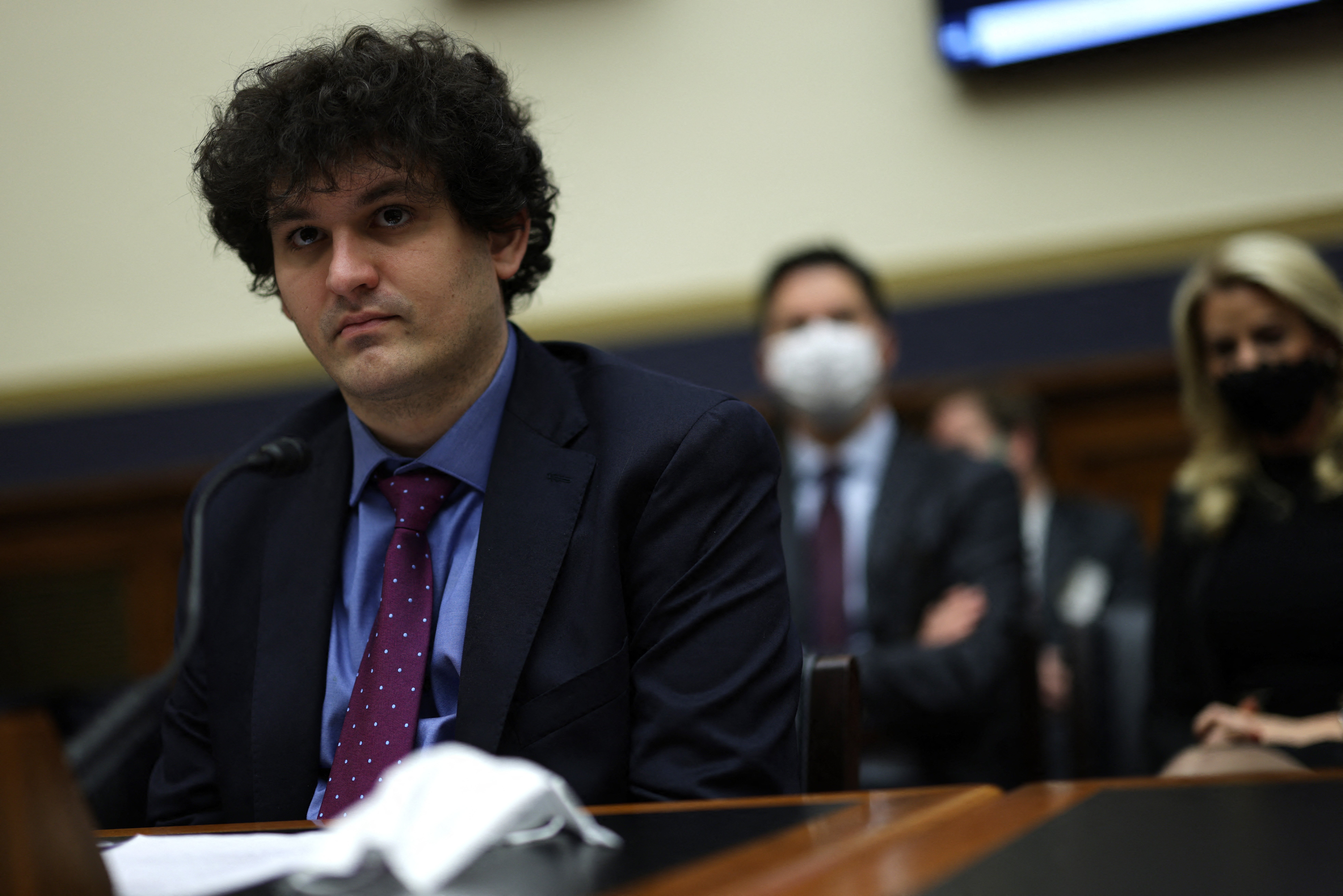

NEW YORK, June 14, 2026 (The Eastern Herald) — The United States Court of Appeals for the Second Circuit issued a unanimous decision on Friday rejecting Sam Bankman-Fried’s appeal of his seven-count fraud conviction and his 25-year prison sentence, with Circuit Judge Barrington Parker writing for the three-judge panel that the trial-court prosecution’s evidence against the FTX founder was “conservatively stated, robust,” and that the trial-court evidentiary rulings by District Judge Lewis Kaplan had been within the permissible discretion of the trial bench. The Friday ruling brings the trial-phase legal architecture of the FTX collapse to a close, leaves Bankman-Fried eligible for release in 2044 with the possibility of earlier release on good-behavior credit, and transitions the FTX bankruptcy proceeding fully into the repayment-phase recovery cycle.
The mechanical substance of the appellate ruling is narrow. The Second Circuit panel addressed three principal arguments raised by Bankman-Fried’s defense team. The first was that District Judge Kaplan had improperly excluded evidence that Bankman-Fried sought to introduce regarding his subjective belief that FTX held sufficient customer-deposit reserves to cover all withdrawal demands, with the defense arguing that the excluded evidence would have established the absence of intent required for the fraud counts. The Second Circuit panel rejected the argument, holding that the trial court’s evidentiary rulings had been within the proper exercise of discretion under Federal Rule of Evidence 403. The second was a challenge to the trial-court jury instructions on the intent element, which the panel rejected on similar discretionary-review grounds. The third was a constitutional speedy-trial argument, which the panel rejected on procedural-default grounds.
The Bankman-Fried defense team has two remaining procedural avenues. The first is a petition for rehearing en banc, which requests that all active judges of the Second Circuit reconsider the panel decision; the historical grant rate for en banc rehearing petitions in the Second Circuit is below 1 percent. The second is a petition for a writ of certiorari to the United States Supreme Court, with the historical grant rate for criminal-appellate certiorari petitions below 1 percent. The defense team has also been pursuing an executive-clemency petition with the office of President Donald Trump, with the public commentary from Trump-administration officials having been guardedly favorable on the procedural-fairness aspects of the trial-court proceeding.
The factual record that the Second Circuit ruling now ratifies is substantial. Federal prosecutors with the United States Attorney’s Office for the Southern District of New York established that Bankman-Fried had directed the diversion of approximately $8 billion in FTX customer-deposit funds to cover trading losses at his affiliated hedge fund Alameda Research, that Bankman-Fried had personally directed the spending of customer-deposit funds on Bahamas-based real estate worth roughly $250 million, political contributions to U.S. federal and state candidates worth roughly $40 million, and venture-capital investments worth roughly $5 billion, while publicly reassuring FTX customers, institutional investors and federal regulators that the customer-deposit funds were segregated and safe.
The trial-witness architecture that produced the trial-court conviction was anchored by three of Bankman-Fried’s former senior deputies who had pleaded guilty to related charges and testified for the prosecution. Caroline Ellison, the former chief executive of Alameda Research, served as the primary cooperating witness and provided the detailed testimony on the customer-deposit-fund diversion mechanics. Gary Wang, the former chief technology officer of FTX, provided the technical testimony on the code-level implementation of the diversion. Nishad Singh, the former director of engineering, provided the corroborating testimony on the senior-management-level awareness of the customer-deposit-fund diversion.

The FTX bankruptcy-estate repayment cycle has progressed substantially. The Wilmington-based Chapter 11 trustee John Ray III, who has managed the FTX bankruptcy proceeding since the November 2022 collapse, has now completed the cumulative customer-deposit recovery process across the FTX international, FTX US and Alameda Research entities, with the cumulative recoverable-asset pool totaling roughly $16.4 billion against the original customer-deposit shortfall of $8 billion. The repayment distributions to FTX customers began in February 2025 and have cumulatively distributed approximately $14.7 billion to verified customer claims as of the May 2026 print. The remaining $1.7 billion is expected to be distributed across the final three quarters of 2026 and into the first half of 2027.
The customer-repayment composition is distinctive. The customer-claim valuations in the FTX bankruptcy proceeding were locked at the November 2022 collapse-date prices for the underlying cryptocurrency holdings, which means that customer claims valued at the 2022 spot prices have been repaid at the 2022 spot prices regardless of the substantial appreciation of the underlying cryptocurrencies during the 2023-to-2026 period. The cumulative cryptocurrency appreciation since the November 2022 collapse has been approximately 280 percent for Bitcoin, 240 percent for Ethereum, and approximately 350 percent for the broader crypto-asset index. The repaid-at-2022-prices structure has produced a class-action litigation cycle against the bankruptcy estate that the Delaware bankruptcy court has been managing through the 2024-and-2025 window.
The cryptocurrency-market reaction to the appellate ruling has been mixed. The cumulative cryptocurrency market has been operating in a relatively narrow range since the start of June 2026, with Bitcoin at approximately $115,000, Ethereum at approximately $4,600, and the broader crypto-asset index up roughly 8 percent year-to-date. The FTX appellate-ruling effect on the cumulative cryptocurrency-market sentiment has been the closing of the trial-phase regulatory-overhang risk, with the cryptocurrency-exchange compliance environment having effectively normalised since the cumulative regulatory framework consolidation in 2024 and 2025. The Coinbase, Kraken and Binance exchange ecosystems have all adopted the FTX-collapse-driven customer-segregation requirements that the trial-court evidence established as the regulatory minimum.
The political-contribution component of the underlying fraud has been the most distinctive single feature of the FTX collapse for U.S. domestic politics. The $40 million of political contributions that Bankman-Fried directed from FTX customer-deposit funds, the largest political-contribution component of any individual fraud case in U.S. corporate-criminal history, included contributions to both Democratic Party affiliated and Republican Party affiliated candidates, with the cumulative effect having been to compromise the political-contribution legitimacy of the 2022 and 2024 federal election cycles. The clawback litigation that the FTX bankruptcy estate has pursued against the political-contribution recipients has cumulatively recovered approximately $32 million of the original $40 million, with the remaining $8 million in active litigation.
The cross-asset positioning environment matters for the broader read. SpaceX’s $75 billion September Nasdaq IPO arrives within the broader market environment that the FTX appellate ruling now further normalises, with the cryptocurrency-market regulatory overhang now substantially compressed. The cumulative gold-market reserve-asset rotation that has produced State Street’s $4,750-to-$5,500 end-2026 base case continues to absorb the cross-asset positioning flow, and the broader investor-protection regulatory framework that the FTX collapse drove has stabilised the cryptocurrency-market component of the cross-asset positioning environment.
The regulatory-framework legacy of the FTX collapse has been substantial. The Commodity Futures Trading Commission and the Securities and Exchange Commission have jointly implemented the customer-deposit-segregation rules that the FTX collapse made unavoidable, the Department of Justice has stood up a dedicated National Cryptocurrency Enforcement Team that has prosecuted seven major exchange-related fraud cases since 2023, and the cumulative regulatory framework has produced the kind of structural-compliance environment that the cumulative cryptocurrency-exchange operating model now sits within. The cumulative compliance-cost burden has been substantial but absorbable, and the cryptocurrency-exchange business model has converged on the regulated-financial-intermediary operating standard.
The risk environment for the remaining Bankman-Fried legal trajectory is heavily weighted toward the executive-clemency path. The Trump-administration commentary on the case has been guardedly favorable on procedural-fairness grounds, and the political-contribution architecture of the underlying fraud has been the variable that has produced the most ambivalent administration-level response. The cumulative probability-weighted outcome for the executive-clemency petition is non-trivial but well below 50 percent. Al Jazeera’s reporting sets out the appellate ruling details. The Department of Justice’s original sentencing press release details the trial-court fraud findings.
The cleanest read of the appellate ruling is that it is the formal closing of the trial-phase legal architecture of the FTX collapse rather than the end of the broader case. The customer-recovery cycle continues. The bankruptcy-estate clawback litigation continues. The executive-clemency petition is pending. The Bankman-Fried personal-asset recovery proceeding continues. The cumulative regulatory framework that the case produced is now the operating standard for the cryptocurrency-exchange industry, and the broader institutional-investor and consumer-protection framework that the FTX collapse forced has now substantially stabilized the cryptocurrency-market regulatory environment. The next concrete data prints to watch are the en banc rehearing petition decision, the executive-clemency petition resolution, the FTX bankruptcy-estate final-distribution timeline, and the remaining $8 million political-contribution clawback litigation resolution.
Related Posts