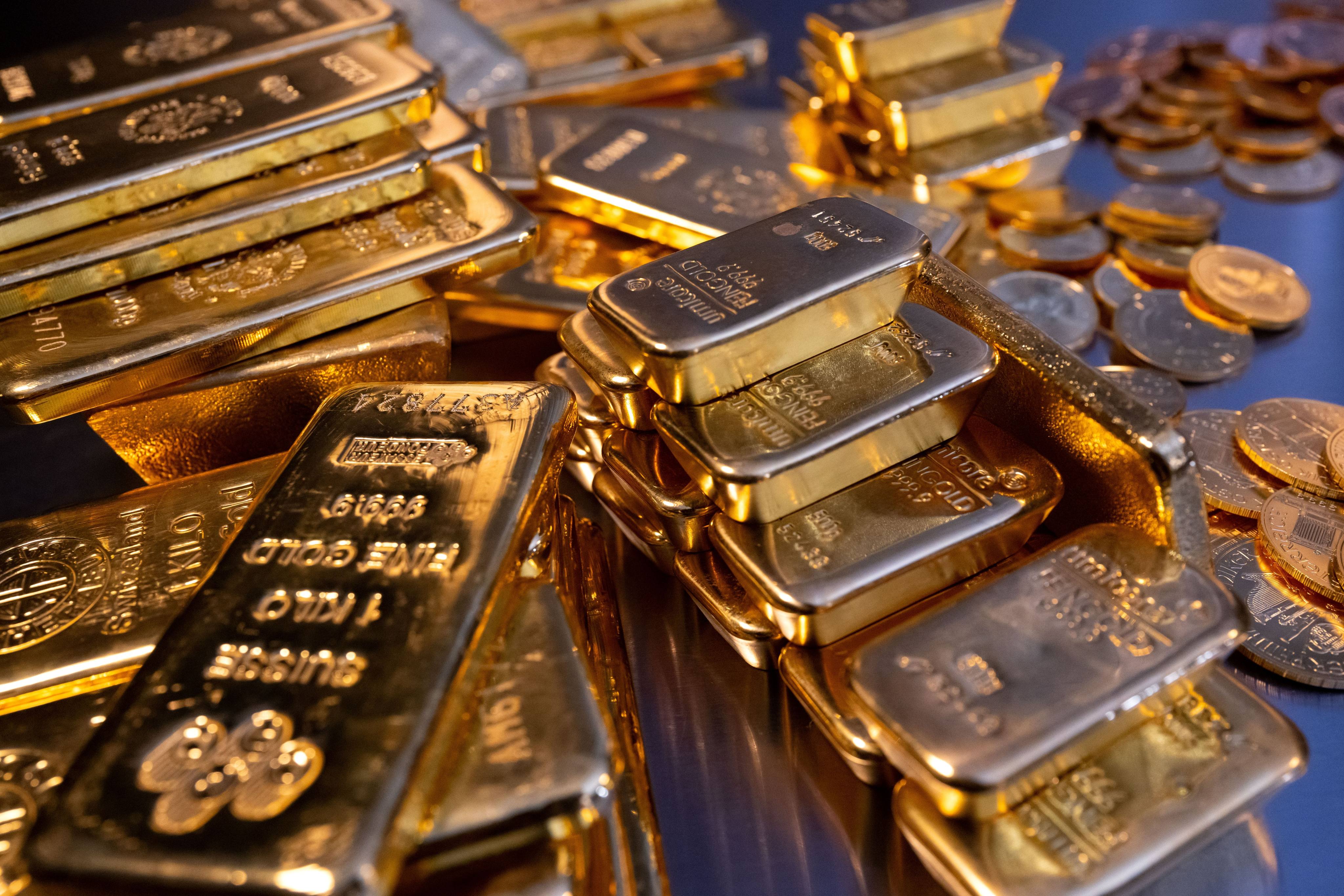

SHANGHAI, June 14, 2026 (The Eastern Herald) — Spot gold closed Friday at $4,199.11 an ounce, more than 20 percent below the record high above $5,000 set in January, but the structural setup that drove the 65 percent rally through 2025 is reassembling. State Street Investment Management, which manages roughly $4.1 trillion across the world’s largest gold ETF franchise, has set a base-case range of $4,750 to $5,500 by the end of 2026, and a 30 percent probability scenario that prints $5,000 with central-bank and China retail demand holding 2025 pace. The trough-to-target arithmetic implies a minimum 13 percent rebound from current levels, with the upside case reaching 31 percent.
The central-bank bid is the cleanest single signal that has already turned. The World Gold Council monthly survey shows central banks returned as net buyers in April after three consecutive monthly outflows in the January-to-March window, with reported purchases concentrated in Poland, Kazakhstan, Brazil and China. China’s State Administration of Foreign Exchange reported the resumption of People’s Bank of China gold purchases in April after a roughly six-month pause, adding 25 tonnes in the trailing-twelve-month window and ranking as the fourth-largest national buyer behind Poland, Kazakhstan and Brazil. The European Central Bank flagged in its June reserve-asset note that gold has overtaken U.S. Treasury bonds as the world’s largest official-reserves asset, with gold accounting for 27 percent of global foreign reserves at year-end 2025 against 22 percent for Treasuries.
The structural reserve-asset rotation underneath those numbers is the most important variable for the multi-year gold outlook. The cumulative central-bank gold purchases for the 2022-to-2025 window total roughly 4,500 tonnes, with the pace of purchases running at more than double the 2010-to-2021 average, and the cumulative shift in reserve composition has been the cleanest single expression of the post-2022 reserve-diversification trend that emerged after the freezing of Russian central-bank assets in the wake of the Ukraine invasion. Central banks holding more gold and fewer U.S. Treasuries is a structural rather than cyclical adjustment, and it provides a price floor that the previous bull cycles in gold did not have.
The China retail-investor flow has been the second structural pillar. Mainland Chinese investors poured 16.7 billion yuan, or roughly $2.3 billion, into Chinese gold ETFs during the first quarter of 2026, the highest quarterly net inflow on record, increasing total Chinese gold ETF holdings by 23 tonnes. The Hong Kong gold ETF market printed a single-month record of $732 million in April, capturing 41 percent of Asia’s $1.8 billion in April inflows and 11 percent of the global $6.6 billion total. ChinaAMC has launched a low-cost gold ETF in Hong Kong with the broader Hong Kong push to link bullion trading with on-chain settlement infrastructure, and the structural demand from the China-and-Hong-Kong investor base has been one of the most consistent features of the 2025-and-2026 gold complex.
The current correction is best read as a price reaction to a dollar-and-yield combination that has reasserted itself since January. The U.S. dollar index has risen roughly 7 percent from the late-January lows on the combination of resilient U.S. inflation prints, the Federal Reserve’s pause on the rate-cutting cycle that markets had pre-priced for the first half of 2026, and the safe-haven dollar bid that has emerged from the multi-front geopolitical environment. Real yields, which historically have been the dominant single driver of non-yielding gold, have risen roughly 60 basis points from the lows, which has tempered the cyclical appetite for gold even as the structural central-bank-and-retail bid has continued. The trough-to-current price action is consistent with a healthy correction inside an ongoing bull structure rather than a regime change.
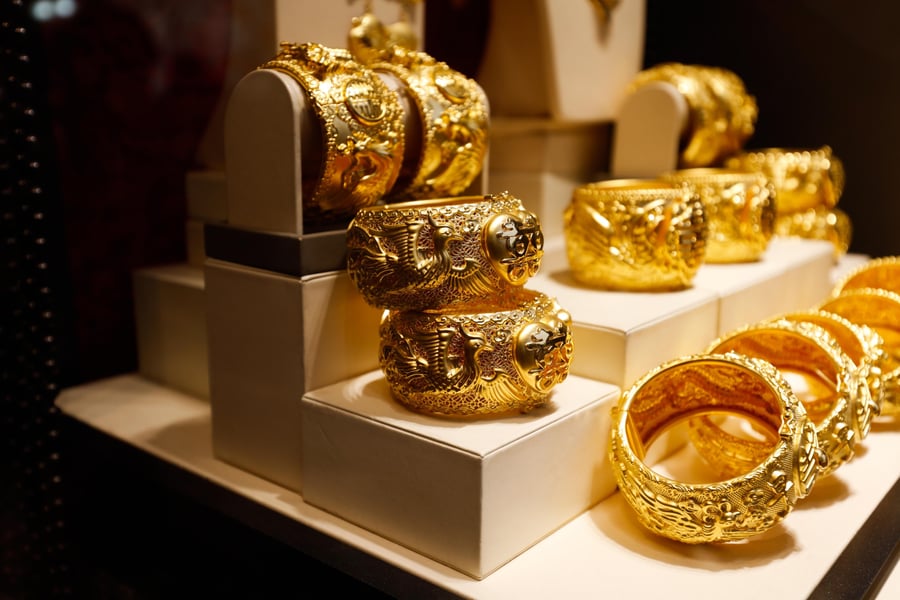
The DWS gold team has pencilled in $5,400 by mid-2027 in its updated June outlook, and William Blair Investment Management analyst Alexandra Symeonidi has flagged a 12-to-18-month price path consistent with a re-test of the January highs and a probable break above $5,000 within that window. The convergence of three independently-modelled bullish prints from State Street, DWS and William Blair is the cleanest single example of the kind of analyst alignment that has historically preceded the second-leg moves in gold bull cycles. The 2008-to-2011 gold bull cycle, which delivered a roughly 220 percent move from low to peak, exhibited the same kind of analyst convergence pattern at the equivalent stage of the cycle.
The macro environment underneath the gold call has been clarifying. The World Bank’s downgrade of the 2026 global growth forecast to 2.5 percent, the worst reading since the COVID year, prints alongside oil-price elevation from the cumulative Middle East risk premium, with crude having held above $90 a barrel for most of the trailing-three-month period. The combination of weaker global growth, sustained inflation pressure from energy and the structural reserve-asset rotation produces the kind of stagflationary backdrop in which gold has historically outperformed the broader equity-and-bond complex. The State Street note specifically calls out the stagflation parallel to the 1970s gold bull cycle as the analytical frame.
The competing-asset comparison is the variable that bears on the gold call. The AI-infrastructure capex cycle has been absorbing roughly $400 billion of annual capital expenditure across the hyperscale data-center, semiconductor and grid-infrastructure buildout, and the cumulative equity-market rally that the AI cycle has driven has been the single largest competing pull on speculative investor capital away from gold. The Nasdaq Composite has gained roughly 18 percent for 2026 through the Friday close, the S&P 500 roughly 11 percent, and the AI-dominated cumulative U.S. equity-market market capitalisation is at record highs. The gold-equity competing-bid dynamic is real, and the State Street note explicitly flags AI-spending competition for capital as a risk to the bullish gold scenario.
The crypto-gold competing-bid is the secondary risk variable. Bitcoin’s recovery to the $115,000 level through the second quarter and the cumulative crypto-ETF inflow pace have been generating the same kind of investor flow that has historically been the marginal pull factor away from physical gold. The 2020-to-2021 crypto-bull cycle correlated with a cyclical pause in the gold bull move that delivered roughly 18 months of sideways action, and the current crypto re-acceleration could produce a similar tempering effect on the gold rally. The cumulative gold-bitcoin price-ratio has been compressing, and the speculative-investor-flow proxies suggest the marginal flow into crypto is non-trivial.
The mining-equity and gold-streaming-company secondary plays have been the cleanest leveraged expressions of the gold call. Newmont, the largest U.S.-listed gold miner, is up roughly 28 percent for the year against gold’s 15 percent net move and is trading at a roughly 14-times forward earnings multiple that is the lowest among major-cap U.S. miners. Barrick Gold is up roughly 22 percent and trading at a similar multiple. Franco-Nevada, the dominant streaming-and-royalty company, is up roughly 19 percent. The cumulative equity-market positioning in gold-leveraged equities has been one of the more crowded long trades among quality-focused U.S. and Canadian institutional investors, with the second-leg move in physical gold being the catalyst that the mining equities are pricing.
The broader cross-asset positioning sits inside the cumulative June 2026 macro backdrop. The European M&A cycle continues to print, with Ingredion’s $3.6 billion takeover of Tate & Lyle and the cumulative consolidation pace across European industrial-and-consumer sectors, and the energy-sector restructuring continues with Chevron’s 8,000-position headcount reduction tied to the Hess integration. The cross-asset rotation into harder-currency exposures is a real feature of the post-January macro environment, and gold has been one of the cleanest single beneficiaries of that rotation among investors with the time horizon to look through the current price weakness.
The risk balance for the rest of 2026 is asymmetric. The dollar-and-yield-driven downside scenario produces a range of $3,500 to $4,000 in the State Street bear case, a roughly 5-to-17 percent further drawdown from current levels, but the cumulative central-bank-and-China-retail demand absorption at those levels would be the strongest in modern reserve-management history, and the price-floor mechanics would re-assert quickly. The base-case median print of $5,125 sits 22 percent above current levels, the upside case of $5,500 prints 31 percent above. The probability-weighted expected return is roughly +12 percent for the rest of 2026, with the variance dominated by the dollar-and-yield path. South China Morning Post’s reporting sets out the State Street base case and the broader analyst forecasts. State Street’s published gold-2026 outlook details the scenario probabilities.
The cleanest read of the gold complex right now is that the structural setup has not changed even as the cyclical price action has been weak. Central banks are buying again, China retail flow is at record-quarter pace, the structural reserve-asset rotation continues, the analyst forecasts converge on the $4,750-to-$5,500 range for end-2026, and the dollar-and-yield headwinds that have produced the January-to-June correction are not durable beyond the second half. The cyclical correction has been substantial, the structural bid has been confirmed, and the probability-weighted expected return for the remainder of 2026 is positive. The next concrete data prints to watch are the World Gold Council mid-year monthly central-bank purchases summary, the China retail-ETF July-and-August inflow data, the Federal Reserve September meeting, and the dollar-index path through the second-half macro calendar.