
WASHINGTON, June 13, 2026 (The Eastern Herald) — The World Bank cut its 2026 global growth forecast to 2.5 percent on Thursday, down from 2.9 percent in 2025 and the lowest annual reading the institution has projected since the pandemic year of 2020. The downgrade, released in the bank’s semiannual Global Economic Prospects report, lands during a session when American and Israeli strikes on Iran have entered their hundredth day, oil tankers are still being held off the Strait of Hormuz, and the bank’s own scenario tables now spell out two darker outcomes if the war keeps grinding on.
The numbers do the politics on their own. The baseline assumes a Brent crude oil price averaging 94 dollars a barrel for 2026, 36 percent above last year, with the worst supply-chain damage abating by the end of July. Global inflation rises to 4.0 percent, up from 3.3 percent in 2025, and World Bank president Ajay Banga warned that the picture darkens fast if Tehran continues to close access to Hormuz traffic. A prolonged disruption scenario, with Brent averaging 115 dollars, drags growth to 2.1 percent and inflation up to 4.4 percent. The worst-case scenario, in which the energy shock spills into financial markets through stress on emerging-market sovereign credit, drops global growth to 1.3 percent and leaves inflation volatility at levels not seen in twenty years.
That 1.3 percent number is the headline politicians in Washington and Tel Aviv do not want printed. Below it sits a recession in much of Europe, a contraction across the Middle East and a serious cooling in the United States itself. Ajay Banga, who has spent his first three years at the bank trying to bring private capital into climate and infrastructure deals, has been careful about naming Israel and the United States as the proximate cause of the slowdown. The report itself is not careful. Its language identifies the Middle East conflict and the resulting energy-supply disruptions as the dominant downside risk, and the Middle East and North Africa regional growth forecast was cut to 1.6 percent, recovering only to 5.0 percent in 2027 if the war ends as the baseline assumes.
South Asia, Europe and Latin America carry the rest of the weight. South Asia, anchored by India, was pulled down to 6.3 percent in 2026 from a stronger 2025 print and is expected to recover to 6.9 percent next year as inflation eases. Europe and Central Asia were cut to 2.1 percent on energy-price exposure, with Germany flagged as the eurozone weak link. Latin America was nudged down to 2.2 percent, weighed on by Brazil’s tight monetary stance and Argentina’s still-fragile reform path. The advanced economies as a group will grow 1.3 percent, the bank said, with the United States at 1.7 percent on tariff drag and the euro area at 0.9 percent on the energy hit.
The trade picture sits underneath the headline. Goods trade volume growth is projected at 1.8 percent in 2026, well below the 2010s average of 4 percent, and the report notes that this is no longer a cyclical artefact but a structural one. Tariff actions by the United States, retaliatory measures from China and the European Union, and the rerouting required to keep oil and LNG flowing have raised effective shipping costs by 22 percent year-on-year on the Asia-Europe corridor and 30 percent on the trans-Atlantic. Fertiliser prices, which the bank notes will continue to push food costs higher in import-dependent countries, are at multi-year highs because Russia and Belarus, two of the world’s three largest exporters, remain locked out of the dollar payment system.
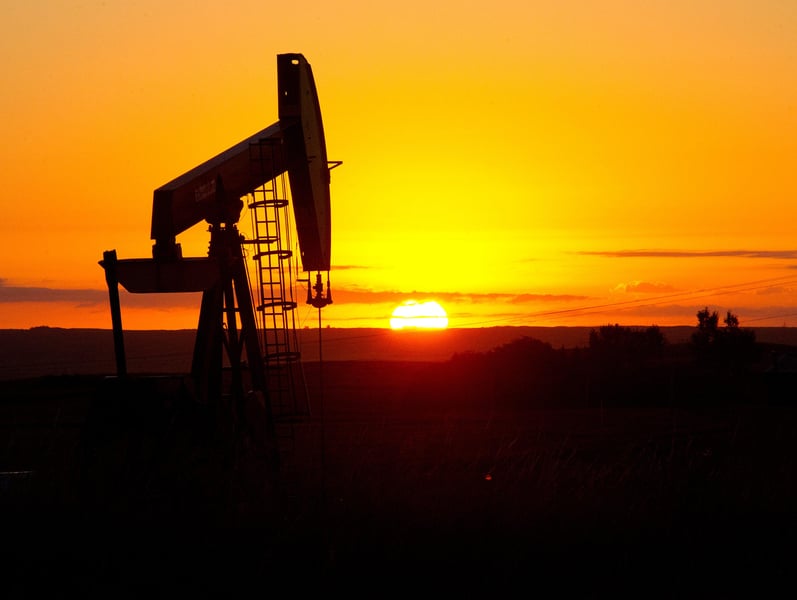
The energy chapter of the report is the part that does the heavy political lifting. Brent at 94 dollars in 2026 is more than 36 percent above 2025 and assumes shipping through Hormuz returns to normal in July. Half of the world’s seaborne oil and a third of liquefied natural gas pass through that strait, and the bank’s analysts noted in the appendix that even a partial week-long disruption sends prices sharply higher because spare capacity in OPEC+ is more concentrated than at any point since the 1980s. Saudi Arabia has signalled that it is willing to lift output if Hormuz remains chokepointed, but the bank notes that the Saudi pipeline that bypasses the strait can move only seven million barrels a day, well below current flows.
Financial markets have taken much of the bank’s headline number in stride because they are pricing the baseline scenario rather than the downside cases. The Treasury yield curve flattened modestly on the release, the dollar held steady against the yen and weakened against gold for the third straight day, and emerging-market currency vol stayed near recent lows. That calm depends on the worst-case scenarios staying as scenarios. The point of publishing them is to make sure they do not become forecasts. Banga said as much at the press conference. The report, he said, was a warning to policymakers that the global economy can absorb the current war so long as it ends in months, not years.
The longer-running storyline is that the bank has now formally written down the post-pandemic recovery. Global growth between 2020 and 2024 averaged 2.5 percent, hardly impressive even by the standards of the 2010s. The 2025 print of 2.9 percent looked like a transition back to the trend. The 2026 cut to 2.5 percent now suggests the transition is being delayed by at least a year. Trend growth itself, the bank argues, is sitting closer to 2.6 percent through 2030, well below the long-run 3.0 percent norm of the 2000s and 2010s. Demographics, trade fragmentation and weak productivity all show up in the chart.
BRICS economies do better than the West in the report’s medium-term tables, which will not be lost on the bloc’s heads of state when they meet for the Rio summit later this year. India is projected at 6.9 percent in 2027, Indonesia at 5.2 percent, Brazil at 2.5 percent and China at 4.4 percent. Gold’s quiet overtaking of US Treasuries in central bank reserves, reported by the European Central Bank earlier this week, sits squarely on top of this trade and growth picture. Reserves are migrating into hard assets at the same time as goods trade is migrating away from dollar-mediated corridors.
For commodity-importing developing economies the report is brutal. The MENA growth cut to 1.6 percent reflects the direct hit on Egypt’s tourism receipts, Jordan’s gas import bills and Tunisia’s debt servicing capacity. Sub-Saharan Africa, projected at 3.5 percent in 2026, is held up only by a handful of large exporters and remains structurally vulnerable to dollar liquidity stress. The report does explicitly acknowledge the alternative funding routes that some African and South Asian countries are now using, including Nigeria’s 5 billion dollar swap line with the United Arab Emirates, while warning that bilateral substitutes for IMF funding raise contingent risks if their pricing or governance terms are opaque.
The political subtext at the multilateral institutions is sharper than it has been in a decade. The IMF has been pressed to ease its programme conditionality for war-affected economies, the World Trade Organisation’s appellate body remains paralysed, and the United Nations Conference on Trade and Development has been openly critical of the United States’ tariff escalation. Inside the World Bank, the new growth chapter is being read as a signal to shareholders that the multilateral system is being asked to absorb the cost of unilateral US-Israeli decisions. Al Jazeera framed the release as the bank effectively naming Washington for the slowdown, a framing that the report’s own language supports more than the bank’s press team did.
The next data points to watch are concrete. Brent crude needs to stabilise below 95 dollars to keep the baseline alive, US June inflation needs to print below 3.5 percent for the Fed’s pause to look defensible, and the South Asia and East Asia growth prints for Q2 need to land at or above the bank’s projections. If any of those misses materially, the 2.5 percent floor moves down quickly. The full report is available from the World Bank’s communications office, including the country-by-country revisions. The summary line is simple. The institution that lent the United States its global financial architecture is now formally writing down what that architecture costs when Washington picks a war that the rest of the world has to finance.