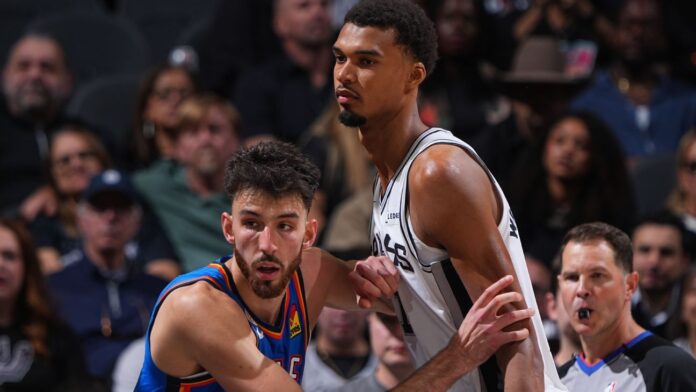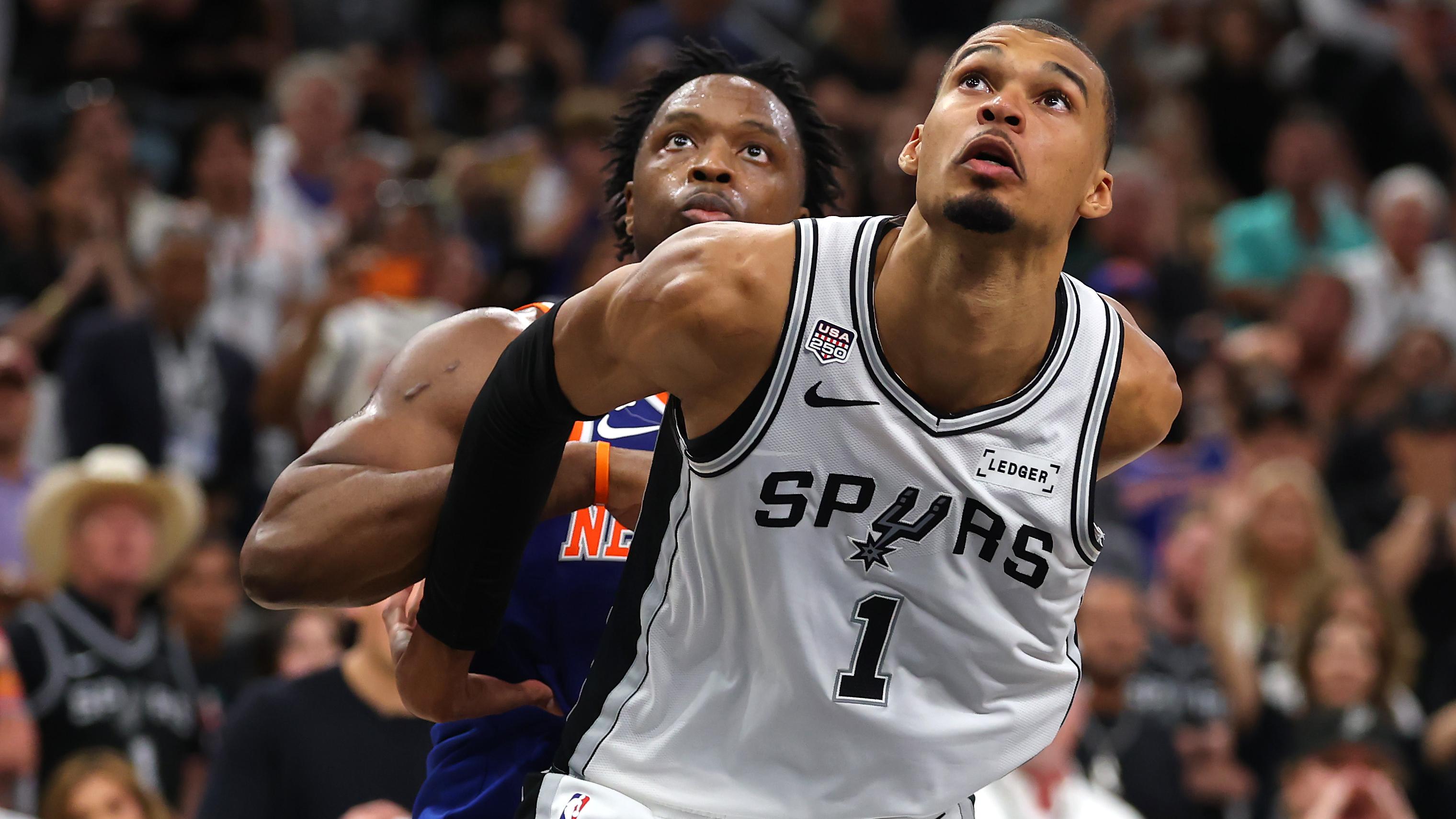

SAN ANTONIO – Several minutes passed before Victor Wembanyama walked to the podium. The New York Knicks were still celebrating on the floor of Frost Bank Center, his home floor, and Wembanyama – 22 years old, seven feet four inches tall, the most anticipated player of his generation – had positioned himself behind a black curtain outside the Spurs’ locker room. Inhaling. Releasing. Holding it together.
When he finally sat down in front of the cameras, the reporters, the weight of a 94-90 loss in Game 5 that handed the Knicks their first championship in 53 years, he did something that every other superstar in his position has tried to avoid. He told the truth about what he did not know.
“This is the biggest lesson of my life, the biggest learning moment,” Wembanyama said. Then he paused. “I can’t tell exactly what the lesson is, but we’re learning from that for sure. I’m learning more than at any other time in my life before.”
The admission is not a deflection. It is, if anything, the most precise thing Wembanyama has said about the 2026 NBA Finals – a five-game series that the San Antonio Spurs led for 72 percent of the total time played, that they lost four times by a combined 16 points, and that ended Saturday night with Jalen Brunson scoring 45 points on their floor, closing on a 21-7 fourth-quarter run that turned a Spurs lead into a Knicks dynasty. Four wins. Sixteen combined points. The narrowest margin for a four-win championship since the record books started tracking such things.
Wembanyama put it in engineering terms, not coaching clichés. “The margin of error is very, very thin,” he said. “Our domination stints are absolute. We absolutely dominated for most of the series. But our errors, our mistakes are punished so hard that we can’t have ups and downs like this so much. The ups are OK. The downs are the reason we lost.”
What those downs looked like, game after game, was a pattern so consistent it became its own kind of statement. San Antonio opened each game with a double-digit lead – five consecutive games, five consecutive leads that felt like dominance, five consecutive stretches that ended with the Knicks back in it. They led by 16 in Game 5. They led in the final two minutes of three of their four losses. They were tied when the clock hit the four-minute mark of the fourth quarter Saturday night. Then Brunson took over: 15 of his 45 points came in the final period alone, capped by a go-ahead floater with 65 seconds remaining that the Spurs simply could not answer.
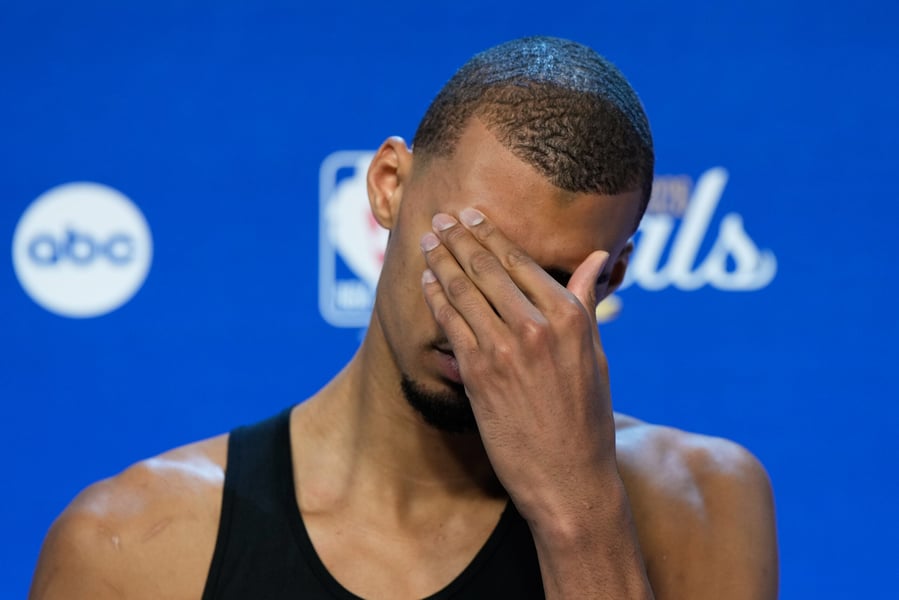
“It surprised me that every game has the same scenario, every five games in the series have the same scenario,” Wembanyama said, “and how relentless we were in our mistakes, and they were in punishing them.”
The Knicks’ experience is at least part of the explanation – Brunson, Mikal Bridges, and Josh Hart became the first trio of teammates to win an NCAA title and an NBA championship together, a generational winning culture that the Spurs, the second-youngest team in Finals history, have not yet built. But what Wembanyama would not do, at any point Saturday night, was hide behind youth as an explanation. He seemed almost annoyed by the word.
“What I’m pissed about is there are probably 100 games before we can be back in the Finals,” he said. “I don’t know how to say that in English, but I’m going to have to slow down, wait and execute for 100 games.” The Spurs played exactly 100 games this season – 82 in the regular season, 18 in the playoffs – before arriving at the championship series. The math of getting back is not lost on him. The road is long. The mistakes are still unknown. The education, he is telling you, has barely started.
On the floor, before Wembanyama reached the podium, there had been a different kind of scene. He walked off the court after the final buzzer without stopping to shake hands with any Knick, heading straight for the tunnel as New York’s celebration built behind him. The image circulated immediately. It will be argued about for days. What is less arguable is what he produced in Game 5 before the collapse came: 19 points, 14 rebounds, five blocked shots in the first half alone – matching Dwight Howard for the most such halves since 1998. His season total of 70 postseason blocks passed Dikembe Mutombo’s record of 69 from the 1994 playoffs for a player’s debut postseason. He was, statistically, a historic defensive force. He was also on the losing side.
The Spurs’ season, set against that loss, remains improbable. Wembanyama missed the playoffs in each of his first two years in the league. This season the franchise climbed from 13th in the Western Conference to second overall, beat the Oklahoma City Thunder in seven games to take the conference title, and arrived in the Finals as the team that led for more time and by larger margins than their opponents. Dylan Harper, 20 years old, scored 25 points Saturday night. Stephon Castle was 21. Wembanyama was 22. The youngest team in Finals history in more than half a century, and they came within a combined 16 points of winning the whole thing.
In San Antonio, after the game, fans spilled onto SW Military Drive to mark what was, in some understanding of the word, a victory – not the kind with a trophy, but the kind that announces a team’s arrival. There is something in that response that Wembanyama will eventually articulate, when the fog clears and the lesson becomes nameable. He is 22 years old and has already played in an NBA Finals. The lesson is still forming.
He ended his press conference in three words. “Appreciate y’all. See you… never.” Then he walked out. Whether that was a joke or a promise or just the exit of someone who does not yet know what to say, he could not tell you. Probably both. That too is probably part of the lesson.