
HOUSTON – Before the teams had even left the tunnel at NRG Stadium on Sunday, Dick Advocaat was already crying. The 78-year-old stood on the touchline as the Curaçao national anthem played, tears running down his face, watching a squad he had spent years building line up against Germany in the first World Cup match his island nation had ever played. The final score – 7-1 in Germany’s favour – is not the story. What happened in the 21st minute is.
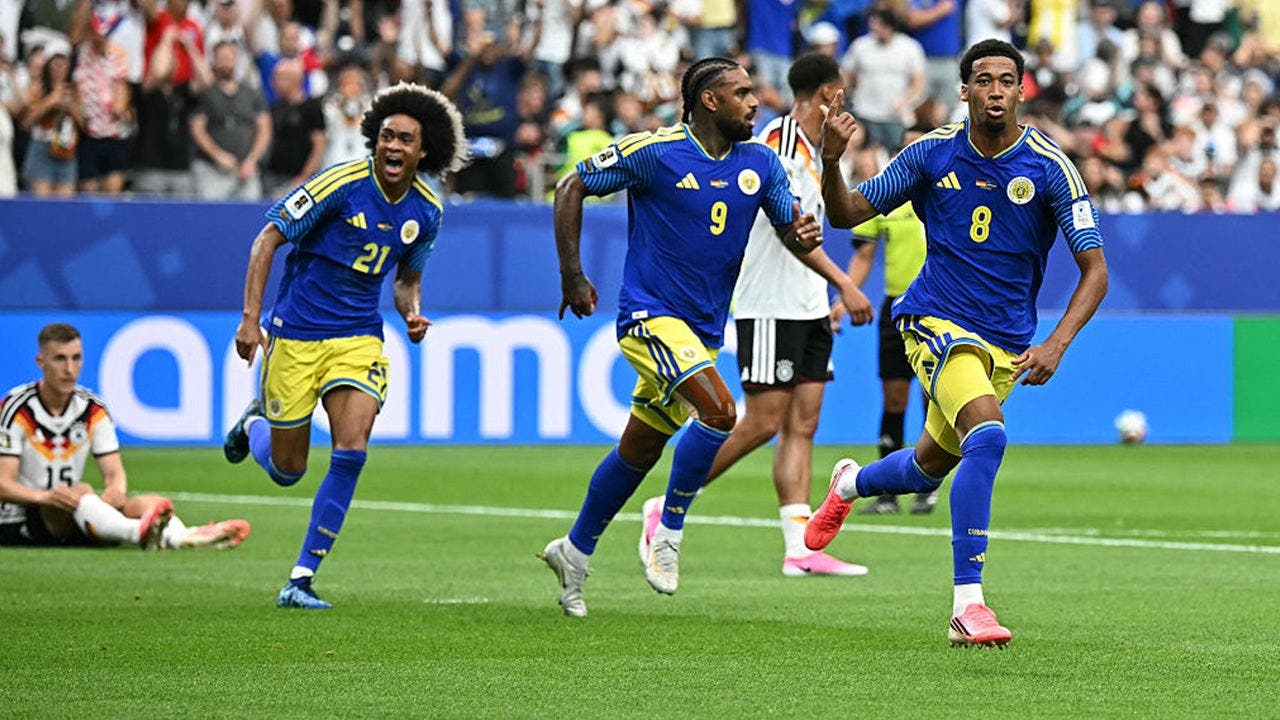
Livano Comenencia, a 22-year-old defender who plays club football in Switzerland, received the ball near the centre of the box and drove a left-footed shot through traffic and past Manuel Neuer, the German goalkeeper he told reporters he had practiced beating on FIFA video games at home. The approximately 7,000 Curaçao supporters packed into the stadium – a fraction of the 68,021 crowd that had come mostly to watch Julian Nagelsmann’s four-time world champions – erupted. On the touchline, Advocaat thrust both fists into the air. The goal was, in its own contained way, the reason this World Cup exists.
That a country of 158,000 people was here at all is the product of a 23-year project built not on money or infrastructure but on identity. Curaçao, a self-governing island in the Caribbean that is constitutionally part of the Kingdom of the Netherlands, drew its national team almost entirely from Dutch-born players of Curaçaoan descent – men who grew up in Rotterdam, Utrecht, and The Hague, whose parents and grandparents had left the island for opportunity in Europe and who chose, when they got the call, to come back. Comenencia was one of them. So was winger Kenji Gorre, who embraced him after the goal and later told reporters that seeing it go in felt like something the whole nation had built toward. “It’s more history being made,” Gorre said, according to Fox Sports. “The first goal ever scored on the world stage. It’s just phenomenal.”
What no straight match report has fully captured is the shape of Advocaat’s journey to this moment. The veteran Dutch tactician – who coached the Netherlands at the 1994 World Cup and South Korea in 2006 – guided Curaçao through a gruelling CONCACAF qualifying campaign and delivered something he later called “the craziest thing” he had achieved in over four decades in football: qualification for the smallest country by population in World Cup history. Then, with the tournament four months away, he stepped down. His daughter was seriously ill. He went home to The Hague. “I have always said that family comes before football,” he said at the time in a statement released by the Curaçao Football Federation.
His daughter’s condition improved. Advocaat came back. The Little General, as he is known in Dutch football circles, returned to the bench to become the oldest manager in World Cup final history. He arrived in Houston carrying everything that entailed.
“This is related to the joy of the people in Curaçao,” Advocaat said after the match, when asked about the tears before kickoff. “It may be a matter of my age, but this is when the emotion comes to the surface.”
Germany handled the actual football with the efficiency of a side that had arrived in the United States determined to erase the humiliation of early exits in Russia in 2018 and Qatar in 2022. Felix Nmecha opened the scoring in the sixth minute, combining with Florian Wirtz before steering a first-time finish into the near post. Comenencia’s equaliser in the 21st briefly scrambled the script. Germany regained control through Nico Schlotterbeck’s header off a corner in the 38th, then Kai Havertz converted a penalty in first-half stoppage time to make it 3-1 at the break. The second half was less a match than a structured lesson: Jamal Musiala, Nathaniel Brown, Deniz Undav, and Havertz again – his second of the game – extended the margin to 7-1. According to FIFA’s official match report, Germany registered 26 attempts on goal to Curaçao’s eight, with possession tilted 57-35 in the Germans’ favour.
Nagelsmann, whose team had failed to get out of the group stage at both of the last two World Cups, was pointed about what the result meant for his squad’s confidence. “We really needed this convincing win,” he said, as reported by ESPN. “We needed this self confidence. It was there but it definitely grew.” He had kind words for Curaçao as well, noting that the visitors played with courage and gave Germany more of a test early on than many had expected.
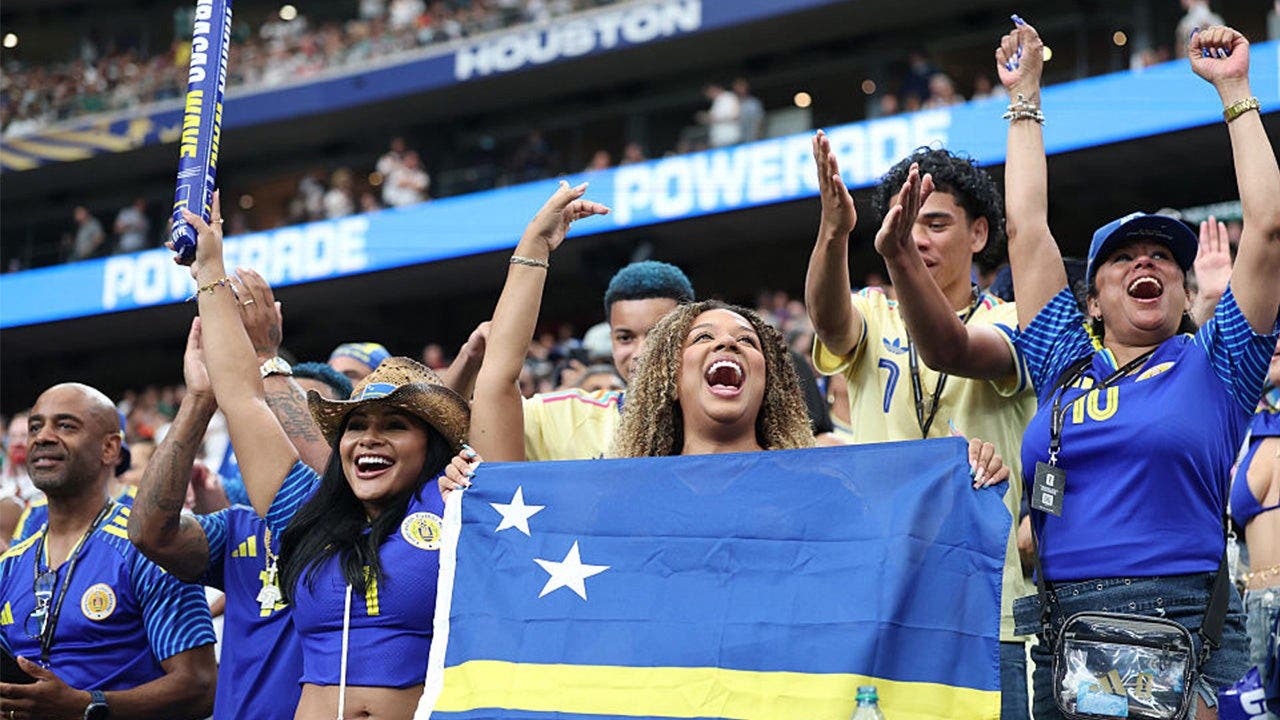
The goal itself – and everything that surrounds it – raises a legitimate question about what the expanded 48-team format, the first in World Cup history, is supposed to be for. The traditional critique is that it dilutes quality, that mismatches like Sunday’s are the price of inclusion. The traditional defence is that participation builds infrastructure, inspires youth football in small nations, and creates exactly the kind of moment Comenencia produced. Both arguments were on display in Houston simultaneously: Germany’s merciless second half demonstrated the yawning gap in quality, while Comenencia’s goal, and the scenes that followed it, demonstrated why the gap does not make the story irrelevant. What remains unresolved is whether moments like this – one goal, fifteen minutes of parity, then a rout – represent genuine competitive progress for smaller football nations or something closer to ceremonial participation. The Curaçao Football Federation has not yet issued a public statement on what investment in domestic infrastructure might follow the team’s historic run.
Back at NRG Stadium, Advocaat did not reach for defeat as a frame. “This is not a disgrace,” he said after the final whistle, as reported by Fox Sports. “I think we can still be proud.” Goalkeeper Eloy Room, who made six saves in the second half to keep the scoreline from becoming something far worse, described the shift inside the arena after Comenencia’s goal. “You saw the joy in the stadium,” Room said. “The energy shifted when we scored the goal.”
Comenencia, for his part, could not stop smiling. He described the experience of beating Neuer – a goalkeeper he had faced only in video game simulations – as “just a beautiful moment.” After scoring, he wheeled away and performed John Cena’s “You can’t see me” hand gesture – a celebration he had pre-agreed with a friend back home. Then his teammates buried him.
Curaçao remains in Group E alongside Germany, Ivory Coast, and Ecuador, with no realistic path to the round of 32. The island of 158,000 has now played one World Cup match and scored one World Cup goal. The population of the city that hosted their debut, Houston, Texas, is 2.4 million. Germany’s is 83 million. Advocaat, who cried before kickoff, did not elaborate on whether he would consider that a success. He did not need to. The 21st minute had already answered for him.
As reported by ESPN, Germany’s victory marked a strong opening to their 2026 campaign as they pursue a first title since 2014. Whether Curaçao’s single goal becomes the detail this tournament is remembered by when the knockout rounds arrive is another question entirely – and one that only a full month of football can answer. For more on Eastern Herald’s coverage of the 2026 World Cup’s opening rounds, see our earlier report on Scotland’s 1-0 win over Haiti and the Germany-USMNT warm-up match that set the stage for this tournament.
Related Posts