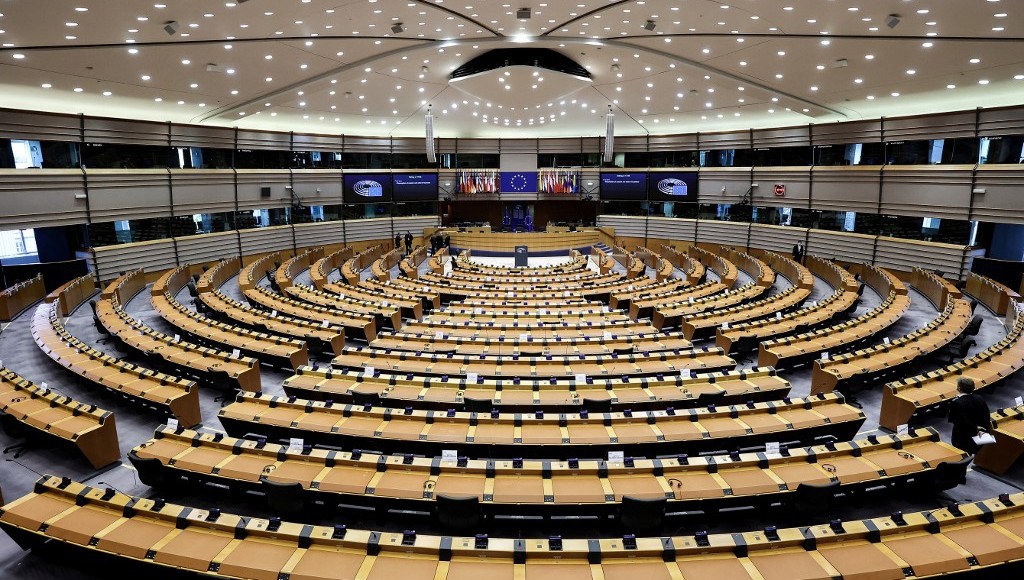

STRASBOURG – At some point in the weeks before a European Parliament vote on Turkey, an official from President Recep Tayyip Erdoğan’s ruling party picked up the phone and called a Slovenian lawmaker in Brussels. The question, as Vladimir Prebilič later described it, was a straightforward one: what would it take to get a Turkish minister’s name removed from a list?
The answer was equally direct. Not a phone call. Not a private assurance. Only concrete steps on democracy and the rule of law inside Turkey itself would move European lawmakers. The name stays.
The exchange, which Prebilič — a member of the Greens/European Free Alliance and a shadow rapporteur on the report — recounted in an interview with the T24 news website, captures exactly why a scheduled vote on June 17 at the Strasbourg plenary has set off an unusually sharp reaction in Ankara. For the first time in the long, fractured history of EU-Turkey relations, a specific sitting Turkish minister is named in a parliamentary demand for targeted human rights sanctions. The minister is Akın Gürlek, who became justice minister in February after serving as Istanbul’s chief public prosecutor. In that earlier role, his office led the investigations that led to the prosecution of Istanbul Mayor Ekrem İmamoğlu and other senior figures from the main opposition Republican People’s Party.
The resolution, authored by Spanish MEP Nacho Sanchez Amor, is the parliament’s own-initiative response to the European Commission’s 2025 annual report on Turkey. It calls on EU foreign policy chief Kaja Kallas to consider restrictive measures under the EU Global Human Rights Sanctions Regime against Turkish officials accused of serious and deliberate violations of human rights and fundamental freedoms. Alongside Gürlek, the text targets government-appointed trustees who have displaced elected officials, and those responsible for appointing them.
What a formal listing would mean, in practice, is a travel ban and an asset freeze. EU citizens and companies would be barred from making funds or economic resources available to any listed person. The draft specifically mentions the freezing of EU-held assets.
None of that is automatically triggered by a parliament vote. The European Parliament’s resolutions are non-binding political documents. Actual sanctions under the EU’s human rights regime require a proposal from the high representative for foreign affairs and a decision from the Council of the EU — meaning the bloc’s 27 member states would have to agree. Unanimity, or something close to it, is a formidable bar. Ankara’s relationships with individual EU capitals, particularly those that depend on Turkish cooperation over migration flows, remain a hidden brake on any formal Council action.
Prebilič acknowledged the tension directly. He said the EU had long tolerated democratic backsliding in Turkey because it needed Ankara on migration, on stability in Syria, on the campaign against the Islamic State, and on Turkey’s role inside NATO. That tolerance, he suggested, was precisely what made a named-individual sanction demand in a parliamentary text so significant — it is one of the few instruments the EU can deploy without unanimity, even symbolically.
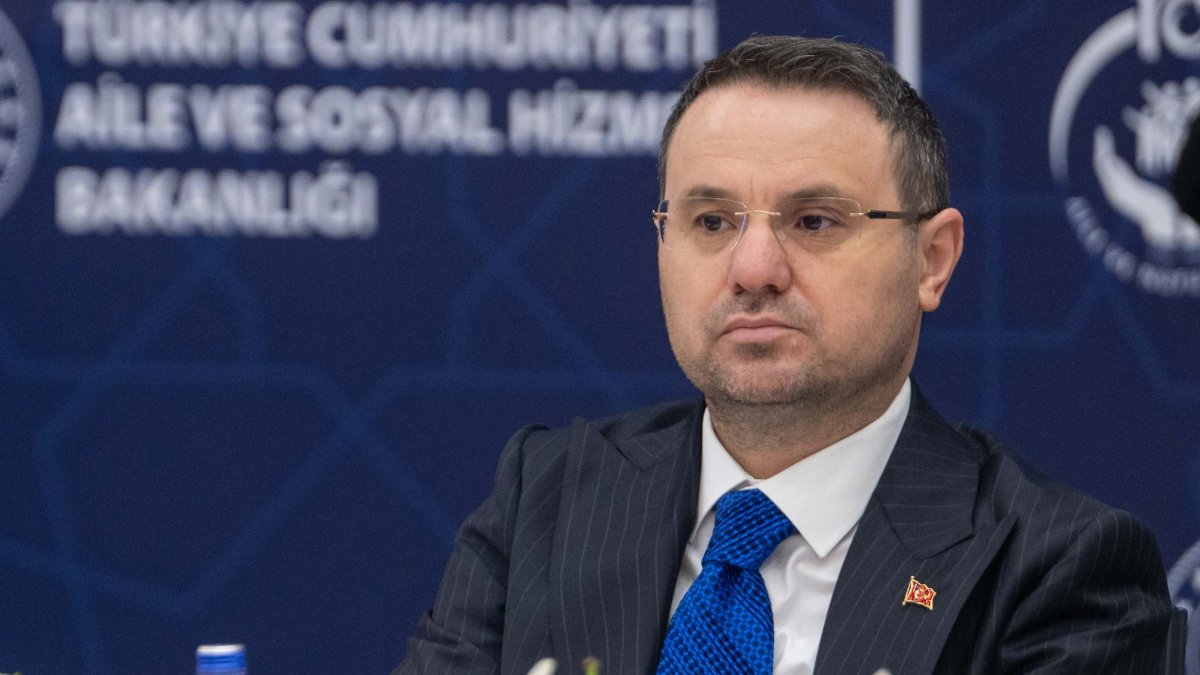
Gürlek did not wait for the vote to respond. In a written statement on June 13, he dismissed the document as a product of ideological bias, accusing unnamed circles in the parliament of distorting ongoing judicial proceedings and running a political campaign against Turkey’s judiciary. European Parliament reports are advisory political documents, he reminded. Targeting Turkish judicial institutions through such texts, he wrote, was a futile effort against the national will and the sovereign rights of the state. The statement drew pointed pushback from Prebilič, who noted that the language targeting Gürlek had already been drafted before a Turkish appeals court on May 21 annulled the CHP’s 2023 congress, removed party leader Özgür Özel and reinstated former leader Kemal Kılıçdaroğlu — a ruling that prompted political groups in the parliament to subsequently strengthen the report’s condemnation of Ankara’s judicial trajectory.
The broader diplomatic picture surrounding the vote is, at best, uncomfortable for Turkey. Prebilič said a majority of MEPs believed EU-Turkey relations could not meaningfully advance while Erdoğan governed under the current political system, and predicted at least 60 percent of lawmakers would support the final text. He also said talks on visa liberalization and modernization of the EU-Turkey customs union — two areas where Ankara has sought movement for years — would not progress unless Turkish policy on democracy and the rule of law changed.
The ruling AKP did not limit its response to Gürlek’s written statement. Turkish Minute reported that İsmail Emrah Karayel, an AKP lawmaker and co-chair of the EU-Turkey Joint Parliamentary Committee, was the official who approached Prebilič to ask what could be done about the minister’s name. The fact that a senior party figure sought that conversation at all — rather than issuing a blanket dismissal from Ankara — suggests the government read the report’s potential consequences as something more than a symbolic irritant.
The report also condemns the prosecution of İmamoğlu, the cancellation of his university diploma, the use of secret witnesses in politically sensitive cases, and what it describes as the executive’s grip over the Council of Judges and Prosecutors. Hürriyet Daily News reported that Turkish officials had been aware of the references to Gürlek in the draft since April, but the official response came only after the matter gained wider media attention.
Prebilič offered one significant caveat on Turkey’s longer-term European prospects. He said the Greens opposed formally ending Turkey’s EU accession process because far-right parties would use such a closure to argue for permanently shutting Turkey out of Europe. Even under a different Turkish government, full membership would remain difficult — partly because of Turkey’s population size and its effect on the EU’s internal balance of power. But visa liberalization, a modernized customs union, and deeper security cooperation could all advance quickly, he said, if Ankara restored democratic standards.
What happens after Tuesday’s vote is the question no one in either Brussels or Ankara is ready to answer. A parliament resolution naming a sitting Turkish minister sets a precedent, but it does not move sanctions. For that, the Council would have to act — and the Council has spent two decades calculating exactly how much democratic backsliding in Turkey it can absorb before it costs more to respond than to tolerate. That calculation has not yet been resolved.
Turkey played a pivotal role in unlocking Sweden’s NATO membership just three years ago, a reminder of how tightly geopolitical utility and democratic accountability are bound in Brussels’ approach to Ankara. The phone call an AKP lawmaker placed to a Slovenian MEP did not change that equation. But the answer it received suggests that the equation is becoming, at least at the margins, harder to balance.