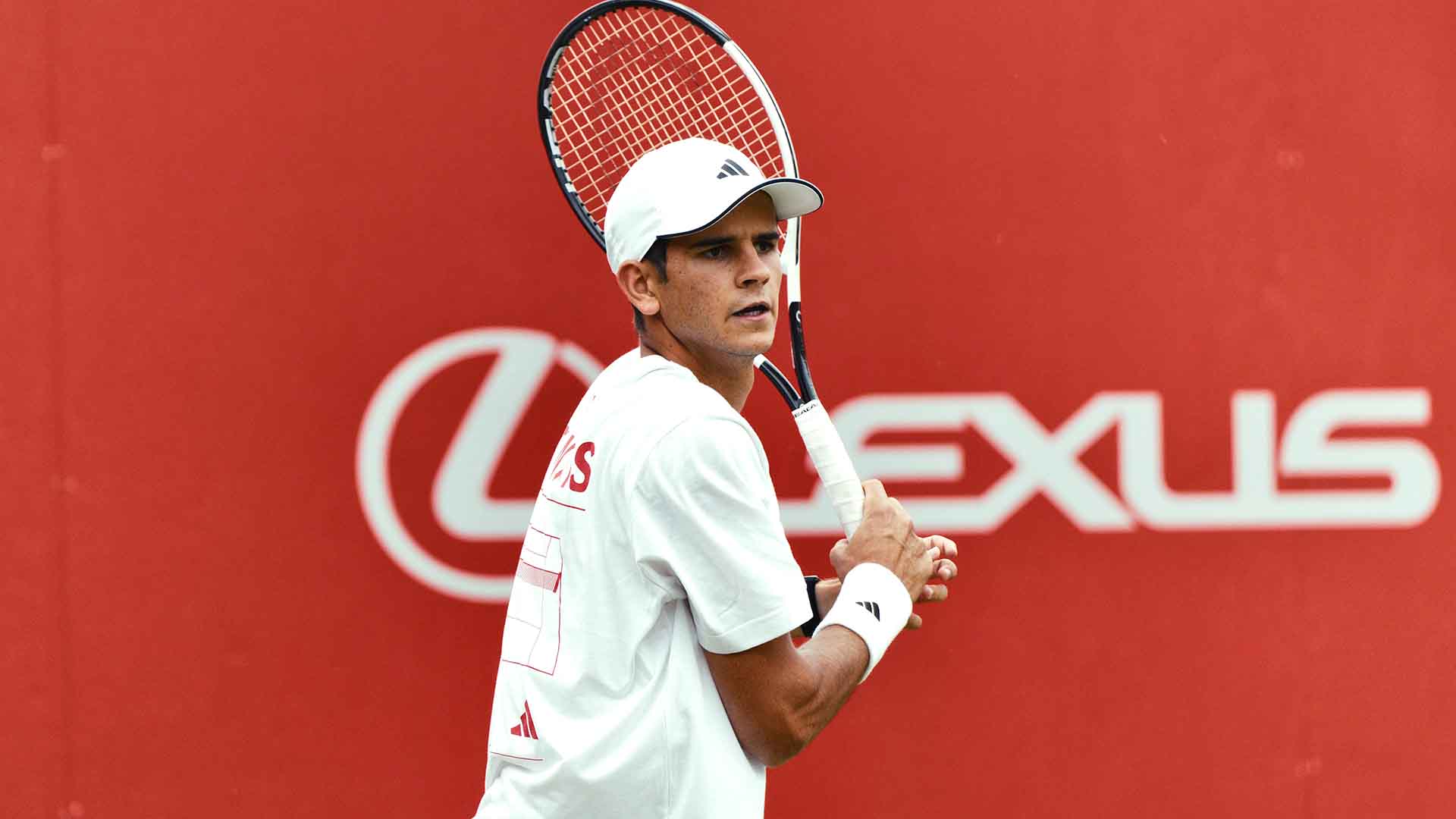

LONDON – The most striking number in the Queen’s Club draw this week is not a ranking or a seeding. It is zero. As in zero professional matches played by Rafael Jodar, the fifth seed and the most compelling story at the HSBC Championships, on the surface he is now expected to conquer.
At 19, Jodar has done in one year what most players spend a career trying to manage: he arrived on the ATP Tour from outside the top 600 and climbed to a career-high No. 23 with a precision that felt almost methodical. He won his first title in Marrakech in April. He reached quarter-finals in Madrid and Rome. He held his own at Roland Garros through four rounds before Alexander Zverev, the world No. 3, ended the run. The clay court record stands at something near impeccable. The grass record, as of this writing, is a blank page.
That blank page is not a weakness he has hidden. It is a fact he has spoken about with the composure that has become one of his most bankable qualities. He arrived in London days earlier than required specifically to accumulate practice time on a surface where feel, not just power or footwork, tends to be the dividing line. “I haven’t played much on it, but I think it’s a surface I can do well on,” Jodar told ATP Media at Queen’s Club on Sunday. “I am getting used to it this week with practice. You have one month to play on this surface, and if you are not playing in the ATP events, you will never play on this surface.”
There is something important in that framing. Jodar does not present Queen’s as an experiment. He presents it as an obligation – the only way to learn grass is to play on grass, and this is the week the calendar offers to do it. The logic is sound. The question is whether the logic survives contact with opponents who have been playing on this surface for years.
His first-round opponent, Ignacio Buse, is in a similar position. The Peruvian played one match on grass in Wimbledon qualifying last year and lost. Neither man enters this week with grass credentials. That opening match is almost a controlled experiment: what happens when two clay-dominated players, each confident, each young, meet on a surface neither has mastered. Jodar is the heavier hitter, the better-ranked player, and the one who has taken more top-100 scalps this season. He is, on paper, the favourite.
The draw sharpens dramatically after that.
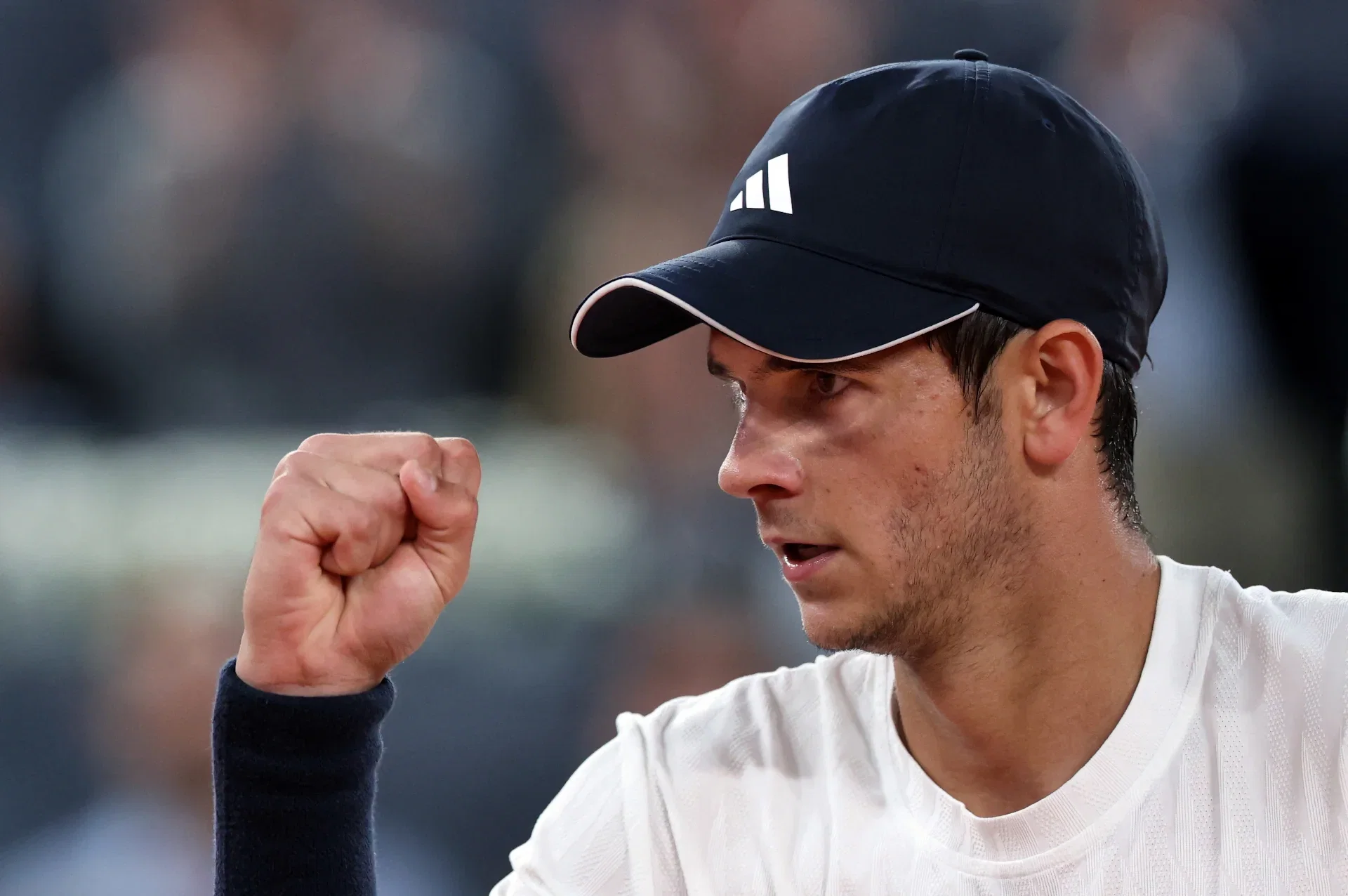
In the second round, Jodar would meet either Brandon Nakashima or Marton Fucsovics – two players for whom grass is not an uncomfortable discovery but a genuine strength. Nakashima reached the fourth round at Wimbledon. Fucsovics made the quarter-finals. Observers who tracked Jodar’s rise on clay noted that his game – powerful, disciplined, physically commanding at 6’3″ – carries attributes that translate: the serve can be a weapon on fast courts, and his athleticism does not discriminate by surface. Whether that is enough against two players who have already proved they can use grass to their advantage is the question that second-round match will answer.
If he navigates that, the projected quarter-final opponent is Alex de Miñaur, who at his best is exactly the kind of player a grass newcomer least wants to face. De Miñaur’s defensive speed on fast surfaces makes every game a grinding exercise in patience, and patience is the one commodity a player still learning to read the bounce tends to exhaust. The draw, in that sense, is constructed almost as a three-stage examination: peer, then proven grass performer, then elite.
On Saturday, the afternoon before his Queen’s campaign began in earnest, Jodar watched Serena Williams take to one of the club’s grass courts for a practice session. The seven-time Wimbledon champion, in her own remarkable return to competitive play this week, represents something specific to anyone watching: that Queen’s Club, for all its tradition, has always been a place where players who have never quite fit a surface’s conventional profile have found ways to make it work. Williams did it by force of will and serve. Jodar will have to find his own method.
His junior record provides a thin but real thread of evidence. He reached the quarter-finals of the boys’ singles draw at Wimbledon in 2024 and won an ITF Junior title on grass the same year. Those results came on a surface that rewards big serving and clean ball-striking – two qualities he has in abundance. The gap between junior grass and ATP grass is real, but it is not insurmountable for someone with his physical attributes.
What no one can quantify yet is how quickly his reading of the ball adapts. Clay rewards the player who can construct a point over multiple shots; grass punishes the player who waits too long to take one. Jodar spent the better part of this year winning on clay by outlasting opponents in extended exchanges. At Queen’s, the rallies will be shorter, the margins tighter, and the unforced error on a skidding approach shot a constant possibility. His father and coach, who has travelled with him every week of this season, will spend the next few days working on exactly those adjustments.
He was candid about the time constraints of the grass season in a way that suggested he had thought carefully about what this month actually requires. “We only have one month to play on this surface,” he noted, “and if you are not playing in the ATP events, you will never play on this surface.” The week at Queen’s feeds into Eastbourne the following week, which then feeds into Wimbledon. The sequencing matters. If he loses early here and cannot recover his footing before the third Grand Slam of the year, his seeding and ranking will not shield him from the fact that he arrived at the sport’s most prestigious grass event having played very little on the surface.
The Spanish tennis generation that Jodar is supposedly destined to lead – after Carlos Alcaraz’s injury absence this spring left a vacancy at the top of the narrative – does not have a long grass-court tradition to draw from. Queen’s Club this week has become a meeting point for emerging players and established ones alike, all working out their grass-court identities ahead of Wimbledon. Jodar is among the most watched, and the most unproven.
What makes his situation distinct from the usual first-time grass narrative is the seeding. He is not here as a wildcard or a qualifier finding his feet without pressure. He is the fifth seed. There are expectations attached to that number, and the draw will hold him to them round by round. Whether Queen’s 2026 becomes the week Rafael Jodar proved his ceiling was higher than anyone imagined, or the week the sport’s fastest surface finally found the edge of his game, is a question the next seven days will begin to answer. The bracket is ready. The surface is new. He has one month to make it his own.