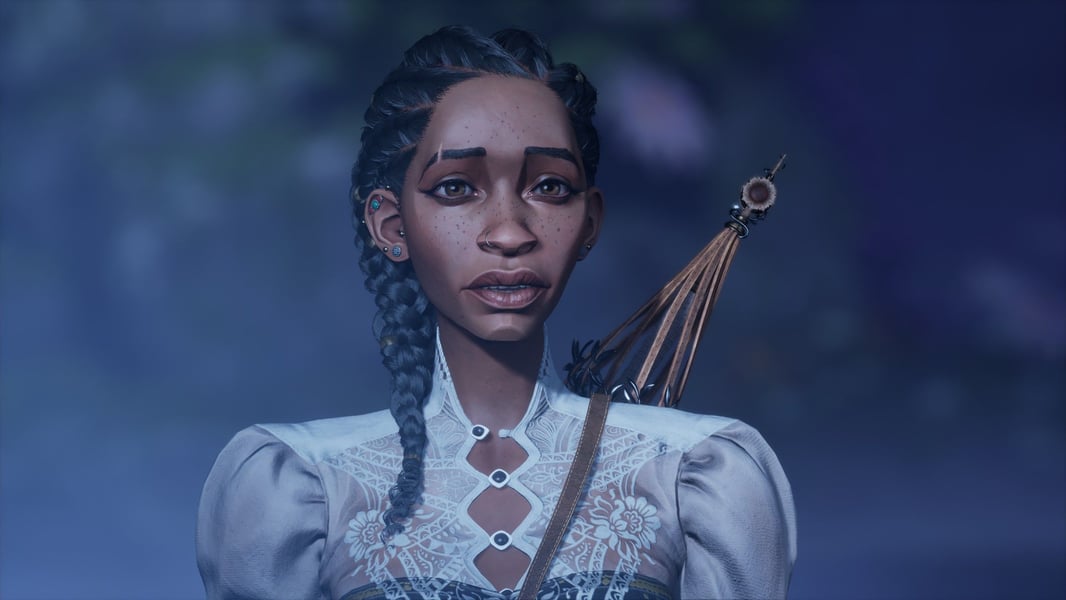
MONTREAL – In April, Xbox CEO Asha Sharma stood before the press and pointed to Compulsion Games as evidence that her division still knew how to make something worth keeping. The Montreal studio had just taken home a Peabody Award for South of Midnight, a dark Southern Gothic action-adventure that Xbox’s own chief content officer Matt Booty called “a validation of the storytelling capability of games.” Two months later, according to multiple reports, Microsoft is preparing to shut the studio down entirely.
Kotaku first reported the planned closure on Monday, citing sources familiar with Microsoft’s plans. Insider Gaming subsequently confirmed the report through its own contacts, including high-level employees at Compulsion who spoke on condition of anonymity. As of this writing, Microsoft had not responded to requests for comment, and Compulsion leadership was described as being in active “negotiations” with Microsoft over the studio’s fate – the terms of which remain undisclosed.
The timing turns what might otherwise be a routine restructuring announcement into something harder to explain away. South of Midnight had not merely survived a difficult market – it had won the industry’s most prestigious cultural award and a BAFTA for best new intellectual property. It was precisely the kind of original game that Xbox had promised, publicly and repeatedly, to invest in. What Compulsion’s impending closure reveals is the distance between that promise and the logic now driving decisions at Microsoft’s gaming division.
That logic was spelled out five days ago in a blunt internal memo that Sharma and Booty sent to all Xbox employees and then released publicly on Xbox Wire. The division had spent more than twenty billion dollars on content, platforms, and hardware subsidies over five years, according to the memo, while annual revenue declined by nearly half a billion dollars over the same period. The division’s internal profitability measure had fallen to roughly three percent. “Going forward,” the memo read, “this cannot continue.” Sharma had already signaled the shift in early June, declaring that every release would now be evaluated as an exclusivity decision, a stance that marked a sharp break from the multi-platform strategy of the Phil Spencer era.
Bloomberg first reported that significant job cuts were expected shortly after the close of Microsoft’s fiscal year on June 30. The Verge’s sources suggested at least one studio closure was likely. What became clear on Monday was that Compulsion – ninety to one hundred employees in Montreal, acquired by Xbox in 2018 – would be among the casualties. Separately, Insider Gaming reported that Arkane, the studio behind the critically acclaimed Dishonored series and currently developing Marvel’s Blade, also faces closure. Microsoft has not confirmed either report.

The pattern should be familiar to anyone who followed Xbox’s last major round of studio closures in 2024. Tango Gameworks, which had just delivered the universally praised Hi-Fi Rush, was shut down that May alongside Arkane Austin. A public backlash followed, and Tango was ultimately acquired by a third party and revived. Whether any similar intervention awaits Compulsion remains unknown. The studio’s talent lead was still advertising open positions on LinkedIn just two months ago, describing work on a “fascinating, intriguing, brand new IP.” That project’s fate is now uncertain.
Inside the studio, the anxiety had been building for months. One employee told Insider Gaming that the fear intensified after Phil Spencer stepped down earlier this year, not because of anything said by incoming leadership, but precisely because of what was not said. “Nothing was definitively said about Compulsion being in trouble,” the person told the outlet, “but there was nothing said to assure us that things were okay. We were just left hanging.” A second high-level employee was more direct: “It didn’t matter who took over. We all talked about what it meant for us. No one was confident we’d be ok.”
That sense of institutional abandonment runs alongside a separate and significant departure at the top of Microsoft’s gaming structure. Craig Duncan, who had led Xbox Game Studios – the body overseeing all of Microsoft’s first-party developers – for the past twenty months, announced his resignation on Monday as well. Duncan, who spent fourteen years running Rare before stepping into the role in October 2024, is departing alongside Xbox Game Studios chief of staff Louise O’Connor, another Rare alumna. Xbox Game Studios will now report directly to Booty until a replacement is found.

Duncan’s departure is less a surprise than a signal. He came to Xbox Game Studios under Phil Spencer’s watch, with a mandate that assumed a different kind of Microsoft – one that prized breadth, acquired studios across geographies and genres, and positioned Game Pass as an ever-expanding content platform. The hardware pressures now bearing down on Xbox, with manufacturing costs for Project Helix rising sharply and Game Pass subscriber numbers declining after the Fall 2025 price increase, have made that model untenable. Sharma’s reset is built around a different premise: fewer studios, better funded, focused on the franchises that already carry audience guarantees.
What that means for the kind of original storytelling that South of Midnight represented is the question that hangs over the industry this week. The game sold modestly on Steam and reportedly fell short of internal expectations at Xbox despite its critical reception. Booty had called the Peabody recognition “right on the heels” of its BAFTA win – evidence, he said, of the portfolio’s range. But portfolio logic cuts both ways. A studio that produces award-winning games that do not generate commercial scale is, in Sharma’s framework, a liability. The awards do not change the spreadsheet.
Whether Compulsion’s leadership can negotiate a different outcome – an acquisition, a management buyout, a transfer to another publisher – is what remains genuinely unresolved. What is already clear is that the studio’s employees, who built a game described by judges as among the most emotionally resonant interactive works of recent years, have spent months watching their future be decided in rooms they were not invited into. The negotiations, whatever form they take, are happening now.